English
 中文简体
中文简体Content
Selecting the right knit fabric is one of the first and most consequential decisions in apparel development. Whether you are building a T-shirt line, a hoodie collection, or a technical sports range, the fabric structure controls how the garment drapes, stretches, breathes, and holds its shape over time.
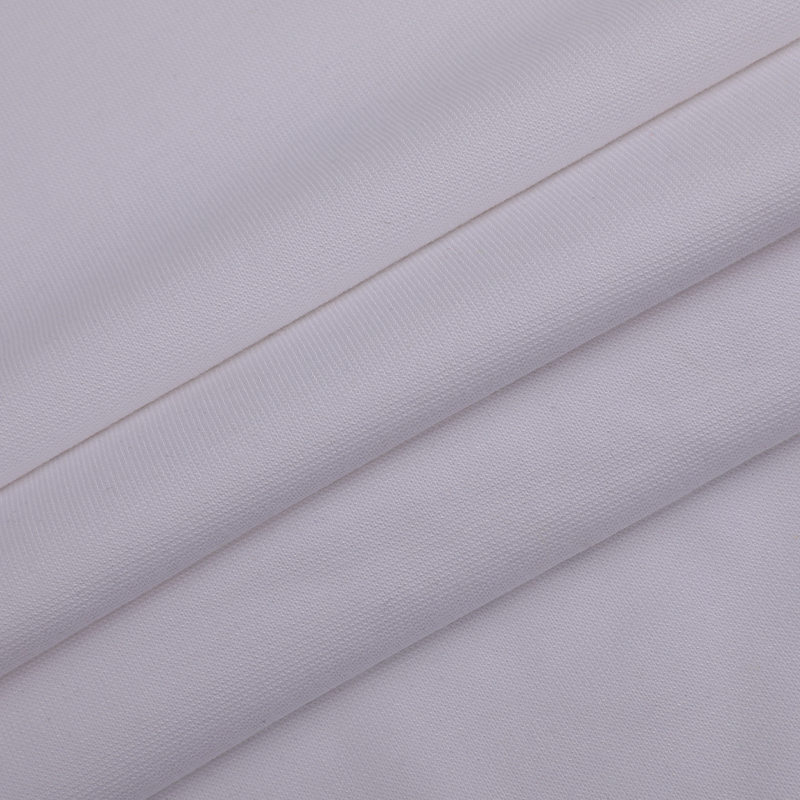
This guide covers the 10 most common knit fabrics from a manufacturer's perspective. For each fabric, you will learn how it is constructed, how it feels, what it is typically used for, and the practical specifications that come up during bulk sourcing.
What Is Knit Fabric and How Is It Different from Woven Fabric?
Knit fabric is made by interlocking loops of yarn. In weft knitting, a single continuous yarn travels horizontally across the fabric and is looped row by row; in warp knitting, parallel yarns are fed vertically and each yarn works with its own needle. The looped construction gives knit fabrics natural stretch and recovery, while woven fabrics, made from warp and weft yarns crossing at right angles, are stable and firm with very little give.
Understanding these two routes explains how the 10 fabrics in this guide are classified:
- Warp knitting: every yarn has a dedicated needle and the fabric is built lengthwise. It produces stable, run-resistant fabrics such as tricot and many performance mesh structures.
- Weft knitting: one yarn is fed across the machine and looped row by row. It produces jersey, rib, interlock, pique, terry, fleece, jacquard, waffle, and most other everyday knit fabrics.
Almost all the fabrics below are weft-knit constructions, because this route dominates apparel production. If you can identify the base structure, you can predict how the fabric will stretch, how it will recover, and what questions to ask your supplier.
The 10 Most Common Knit Fabrics: A Complete Breakdown
The following 10 fabrics cover the majority of knit garments produced in the apparel industry. Each entry looks at the structure, the hand feel, the standard end-uses, and the procurement details that usually come up in factory discussions.
1. Single Jersey Knit Fabric
Single jersey is the fabric behind most basic T-shirts. Knitted on one set of needles, it has a smooth V-shaped face and horizontal loops on the back. The fabric is lightweight, breathable, and soft, but the edges curl and the structure is relatively open. It is the standard choice for T-shirts, vests, dresses, underwear, and sleepwear, with yarn counts typically ranging from 21s to 40s combed cotton and optional spandex for improved stretch.
Procurement tip: confirm the GSM and shrinkage percentage before bulk production. For a snug fit, request a spandex blend — a typical specification is a 40s JC spandex single jersey fabric, which pairs a smooth combed cotton face with 30-denier elastane for stable stretch.
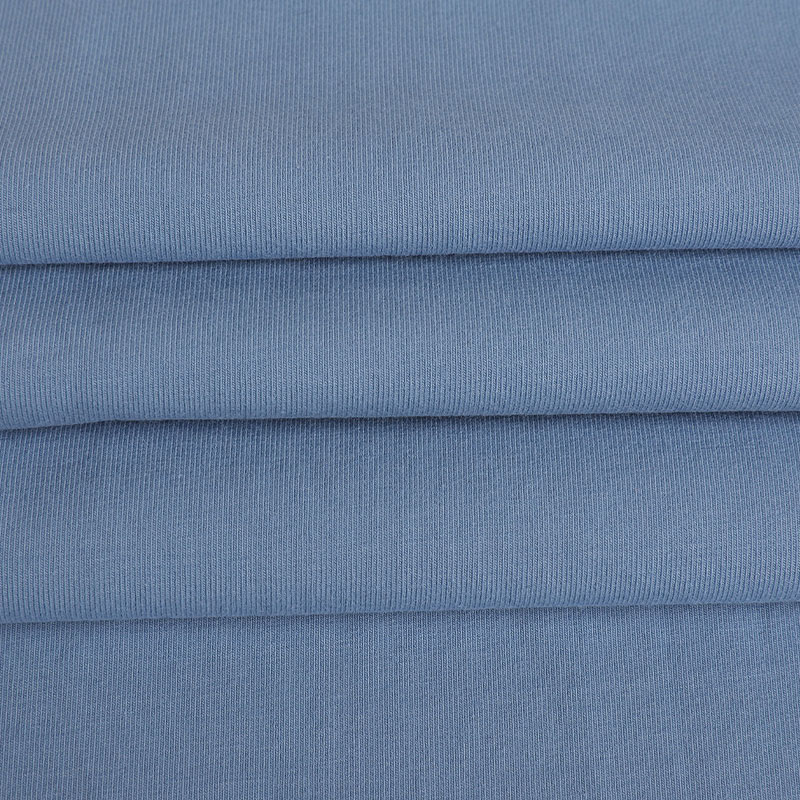 Custom 40s JC + 30D Spandex Single Jersey Fabric Suppliers, OEM/ODM Factory - ToTongxiang Ruicheng Knitting Co., Ltd. is China 40s JC + 30D Spandex Single Jersey Fabric Suppliers and OEM Factory, details:Cotton spande...View Product →
2. Rib Knit Fabric
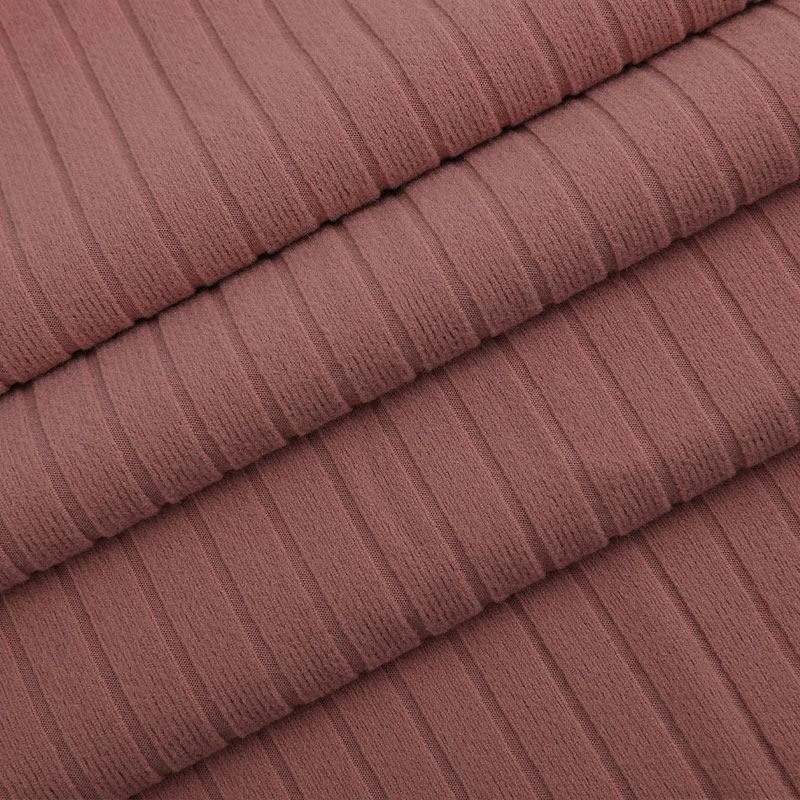
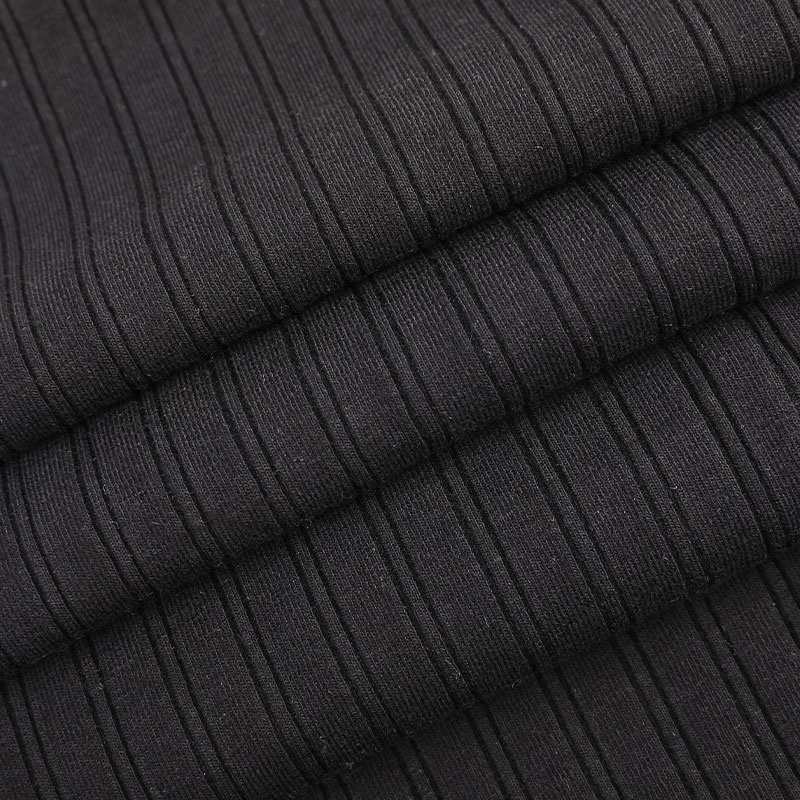
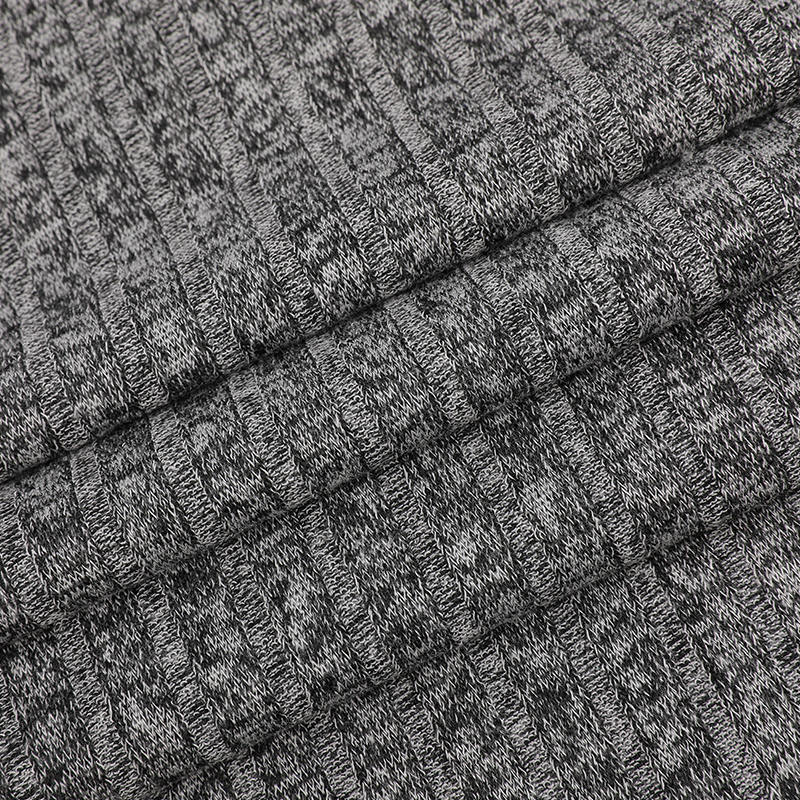
Rib knit is identified by the vertical wale lines on both the face and the back. Alternating knit and purl stitches create a corrugated surface with excellent horizontal stretch and strong recovery, which is why rib is standard for collars, cuffs, waistbands, underwear, and sweaters. The most common structures are 1x1 and 2x2 rib; fullplated versions hide spandex inside the loop so the fabric stretches without showing elastane on the surface.
Procurement tip: state the rib structure, yarn count, and spandex content clearly. For fitted cuffs and waistbands, many brands specify an irregular drop needle spandex rib knit, which creates a subtle surface pattern while maintaining elasticity.
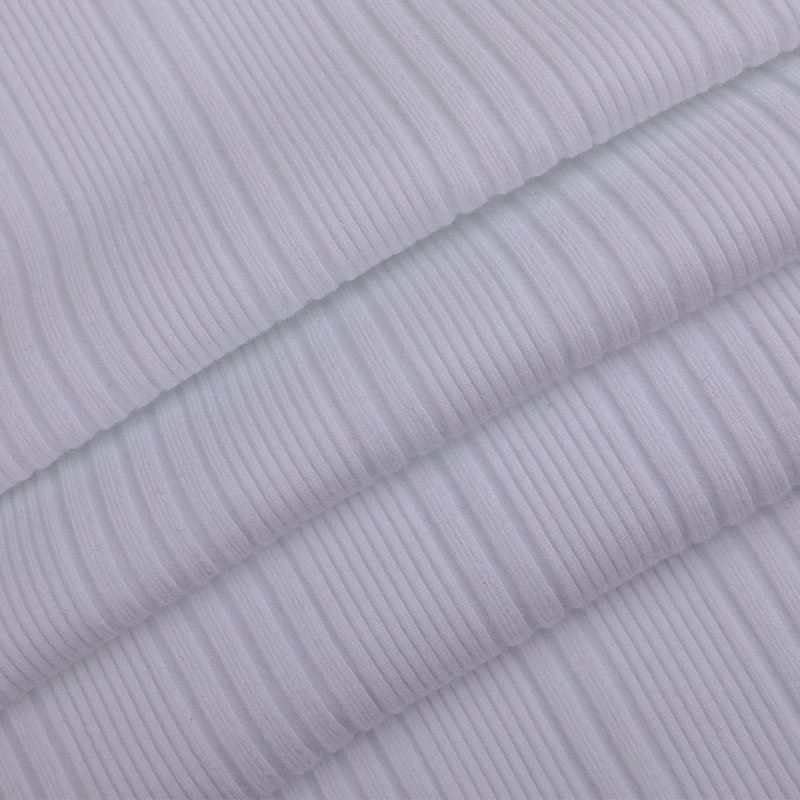 Custom 32s JC + 40D Full-Plated Irregular Drop Needle Spandex Rib Knit Fabric SuTongxiang Ruicheng Knitting Co., Ltd. is China 32s JC + 40D Full-Plated Irregular Drop Needle Spandex Rib Knit Fabric Suppliers and OEM F...View Product →
3. Interlock Knit Fabric
Interlock is a double-knit structure made by interlocking two layers of jersey loops. The face and back look identical, making the fabric reversible, and the double construction creates a thicker, more stable fabric than single jersey. It resists edge curling, holds its shape after repeated washing, and is commonly used for Polo shirts, babywear, thermal base layers, and dresses.
Procurement tip: interlock consumes more yarn than single jersey, so the cost per meter is higher. Confirm the target weight and ask whether the yarn is combed cotton or a CVC blend to balance softness and price. Fullplated spandex interlock adds elasticity for close-fitting styles.
4. Pique Knit Fabric
Pique is the textured knit fabric most associated with Polo shirts. A combination of knit and tuck stitches produces a repeating honeycomb or mesh-like pattern on the surface, and the open structure lets air circulate, making pique a strong choice for warm-weather tops and sporty casual wear. Single pique is lighter, while double pique has a denser surface and more body.
Procurement tip: the final crispness of the garment depends largely on the GSM and the yarn count. Common specifications run from 32s to 40s combed cotton, often with spandex for a pique mesh with better recovery. If the hand feel is too soft or too stiff, adjust the yarn count rather than the structure.
5. French Terry Knit Fabric
French terry has a smooth knitted face and a back covered with uncut loops, giving it a soft, absorbent hand feel without the bulk of brushed fleece. It stays breathable and works well for hoodies, joggers, casual jackets, and loungewear, usually in cotton or a cotton-polyester blend with spandex for recovery.
Procurement tip: the loop height controls the hand feel and moisture absorption. If the garment must pass an absorbency standard, request a loop specification or a physical sample. A common cost-effective blend is 32s combed cotton on the face, 75D filament yarn in the loop, and a 10s CVC ground yarn.
6. Fleece Knit Fabric
Fleece starts as a terry-like construction and is brushed or sheared to raise the back surface into a soft, insulating layer. The raised fibers trap air, making fleece noticeably warmer than French terry and the dominant choice for hoodies, sweatshirts, joggers, and winter jacket linings. The most common garment construction is three-thread fleece, which uses two ground yarns and one loop yarn for density and warmth.
Procurement tip: verify the GSM and pilling rating before ordering. Fleece above 300 GSM suits cold-weather outer layers, while lighter weights work for indoor loungewear. For sustainability-focused projects, ask whether recycled polyester yarns are available for the fleece structure.
7. Jacquard Knit Fabric
Jacquard knit creates patterns directly on the knitting machine. Individual needles are selected by a programmed design, and colored yarns form the motif inside the loop structure, so the pattern is part of the fabric rather than printed on top. The result does not crack or fade with washing, making it suitable for sweaters, dresses, patterned T-shirts, and brand-specific textiles.
Procurement tip: jacquard requires a longer development timeline than plain or rib knits because the pattern must be programmed and the yarn colors chosen before production. Confirm the pattern repeat size, color count, and GSM early, and order a small sample to approve the hand feel.
8. Mesh / Bird's Eye Knit Fabric
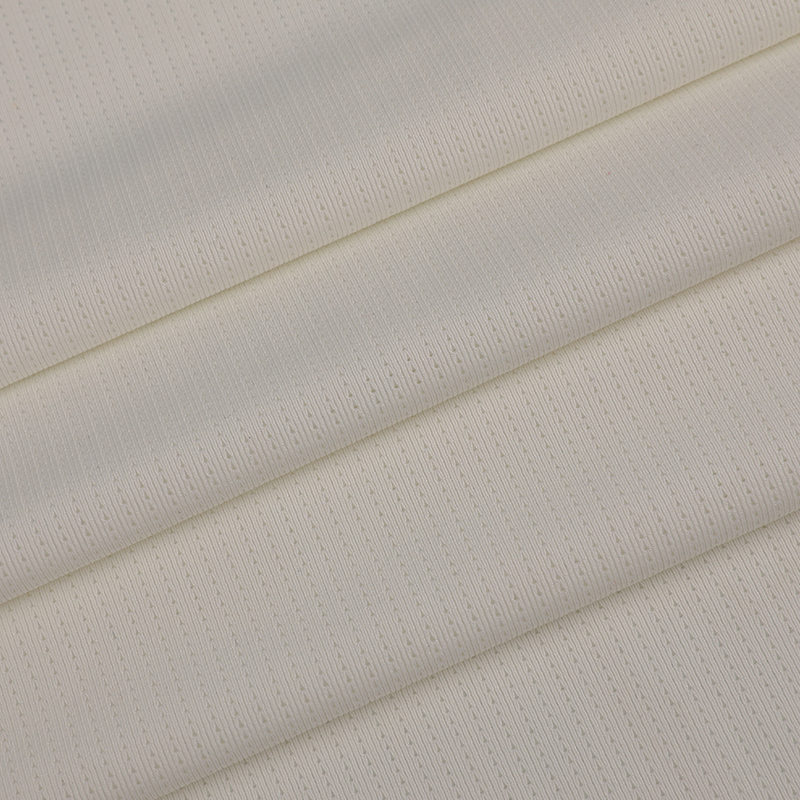
Mesh knit fabrics feature open, net-like structures that let air and moisture pass through quickly. A popular sportswear variant is bird's eye mesh, named after the small dimpled pattern on the surface, which maximizes ventilation and speeds up sweat evaporation. It is widely used for athletic T-shirts, functional underwear, shoe linings, and breathable panels in sports jackets, usually in polyester or nylon.
Procurement tip: specify both the yarn and the construction. A standard sports mesh specification is 75D or 150D textured polyester in a bird's eye structure. If the garment will be used for high-intensity training, check the mesh opening size and air permeability values.
9. Waffle Knit Fabric
Waffle knit has a three-dimensional grid pattern resembling a waffle, created by alternating tuck and plain stitches. The raised cells trap air, giving the fabric more insulation than flat jersey while remaining lighter than fleece. It is common in loungewear, casual shirts, thermal underwear, and winter layering, typically in cotton or cotton-linen blends.
Procurement tip: the depth of the waffle cell controls warmth and hand feel — deeper cells are warmer and more textured, while shallower cells feel smoother. Blends such as linen with spandex create a structured drape that still offers stretch.
10. Air Layer Knit Fabric
Air layer fabric is a double-faced knit with a hollow space trapped between the two outer layers. The trapped air provides insulation without the weight of conventional fleece, so garments look clean and structured while still feeling warm. It has become a preferred choice for jackets, coats, and functional activewear, with common constructions placing combed cotton on the outer face and textured polyester inside, plus spandex for elasticity.
Procurement tip: specify the number of layers and the yarn combination, because the air gap influences both warmth and stiffness. A typical functional specification is a functional air layer fabric with spandex — for example, 40s combed cotton combined with 50D polyester and 30D spandex — balancing structure, comfort, and stretch.
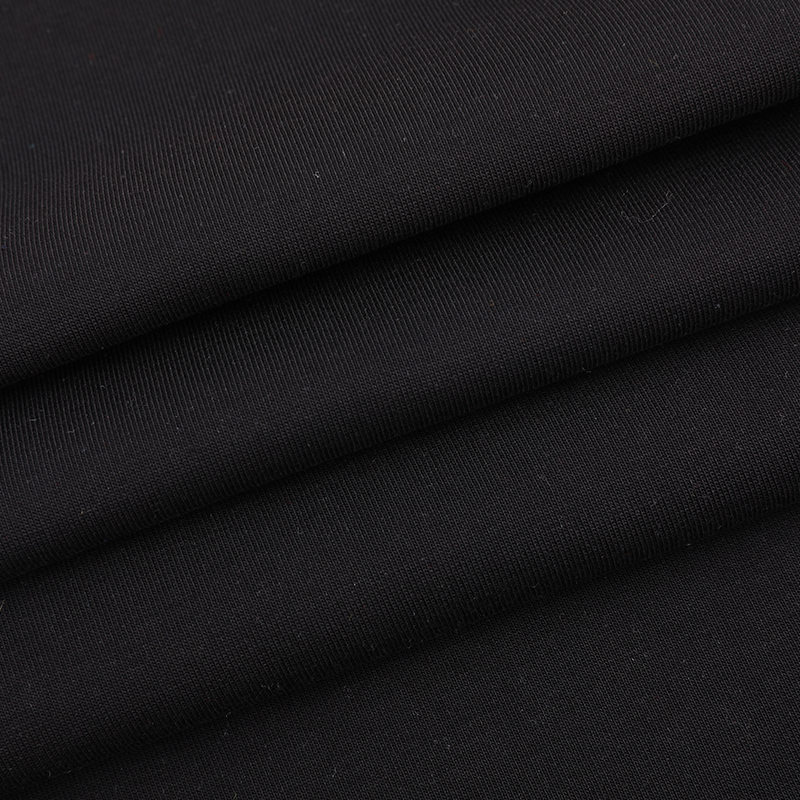 Custom 40s JC + 50D/48F DTY + 40s JC + 30D Spandex Air Layer Fabric Suppliers, OTongxiang Ruicheng Knitting Co., Ltd. is China 40s JC + 50D/48F DTY + 40s JC + 30D Spandex Air Layer Fabric Suppliers and OEM Factory, de...View Product →
Knit Fabric Fiber Options: How Yarn Choice Affects Performance
The fabric structure sets the hand and the stretch, but the fiber content determines how the garment performs day to day. The same single jersey structure behaves very differently in 100% cotton, in a cotton-polyester blend, or in a Lenzing Modal version.
- Cotton: breathable, absorbent, and soft; the baseline for everyday wear.
- Polyester: durable, quick-drying, and shape-retaining; the default for sportswear and performance layers.
- Lenzing Modal and Tencel: smooth and draping with a silky hand feel and good moisture management.
- Bamboo fiber: soft and breathable with a naturally smooth texture.
- Wool: warm and odor-resistant; well suited to winter knitwear.
- Linen: crisp and cool in hot weather, though lower in elasticity.
Blends are the standard industrial solution. CVC, a blend with a cotton majority and polyester, lowers cost while keeping cotton comfort; cotton-modal improves drape and softness. These combinations let manufacturers adjust price and performance without changing the fabric structure.
For brands with environmental targets, the same structures can be produced in Lenzing fibers, bamboo, recycled polyester, or biodegradable fiber options. Sustainability is decided at the fiber level early in development, not as an afterthought at the finished-fabric stage.
How to Choose the Right Knit Fabric for Your Garment
Start from the end product rather than from the fabric. Define the garment type, the season, and the performance requirements first, then match those requirements to a structure and a fiber content.
Quick selection guide:
- T-shirts and underwear: single jersey or rib knit, with spandex for fitted styles.
- Polo shirts: pique for texture and airflow.
- Hoodies and sweatpants: French terry for moderate warmth; fleece for cold weather.
- Activewear: mesh or bird's eye for ventilation; interlock with spandex for recovery.
- Jackets and coats: air layer for a structured look with thermal insulation.
- Winter layering: waffle knit for lightweight warmth.
| Garment category | Recommended knit fabric | Key performance criteria |
|---|---|---|
| T-shirts / underwear | Single jersey, rib knit | Breathability, stretch, shrinkage control |
| Polo shirts | Pique | Texture, structure, airflow |
| Hoodies / sweatpants | French terry, fleece | Warmth, softness, absorbency |
| Activewear | Mesh / bird's eye | Ventilation, quick-drying, lightweight |
| Jackets / coats | Air layer | Insulation, shape retention, wind resistance |
| Winter layering | Waffle knit | Thermal insulation, flexibility |
Beyond the structure, the three parameters that matter most in sourcing are fabric weight (GSM), fiber composition, and finishing. GSM controls the drape and weight; the fiber composition sets the care and performance; finishing such as brushing, mercerizing, or anti-pilling treatment controls the surface feel and durability.
Always request a physical sample before bulk production. The hand feel cannot be judged from a photograph, and the final characteristics depend on the specific yarn, dyeing, and finishing processes.
Conclusion
The 10 knit fabrics covered in this guide — single jersey, rib, interlock, pique, French terry, fleece, jacquard, mesh, waffle, and air layer — account for most knit garments produced in the apparel industry. Each structure exists for a reason: jersey for comfort, rib for elasticity, pique for texture, fleece for warmth, mesh for ventilation, and air layer for structured insulation.
The practical takeaway is to work backward from your product. Define the performance, season, and price point, then select the structure and fiber that match. If your project is at the sourcing stage, share your target garment details and required specifications with a knit fabric manufacturer, and request samples to confirm the hand feel before mass production.