English
 中文简体
中文简体Content
- 1 What Is Cotton Knit Fabric? Understanding the Material Before You Sew
- 2 What You Need to Sew Cotton Knit Fabric: Tools and Setup
- 3 Step-by-Step: How to Sew Cotton Knit Fabric on a Regular Sewing Machine
- 4 Common Problems When Sewing Cotton Knit Fabric (and How to Fix Them)
- 5 Choosing the Right Cotton Knit Fabric for Your Sewing Project
You do not need a serger, a special machine, or years of practice to learn how to sew cotton knit fabric. You need to understand what you are working with. Cotton knit is built from loops, not woven threads, so it stretches, curls at the edges, and behaves under the presser foot very differently from woven cotton. As a knit fabric manufacturer, we see the same mistakes from home sewists and small studios again and again, and nearly all trace back to three things: the needle, the stitch, and how the fabric is supported through the machine. This guide covers each one, and explains how specifications such as yarn count and spandex content change the way you should sew.
What Is Cotton Knit Fabric? Understanding the Material Before You Sew
Cotton knit fabric is made from a continuous yarn formed into interlocking loops. When you pull a knit, the loops open; when you release, they close. Woven cotton, by contrast, is built from warp and weft yarns crossing at right angles, which is why a woven shirt with no stretch pulls at the shoulder while a knit T-shirt simply moves with you.
That loop structure explains everything you will notice at the machine: cotton knit curls at cut edges, stretches under the presser foot, and needs a needle that slides between the loops instead of piercing them. Five constructions matter for sewing:
- Cotton jersey: single-sided, smooth face and textured back, light to medium weight, good crosswise stretch. For T-shirts, dresses, and sleepwear.
- Cotton rib: vertical columns with very high stretch and recovery. For neckbands, cuffs, and fitted tops.
- Cotton terry: jersey base with looped pile on one or both sides. For sweatshirts, hoodies, and loungewear.
- Cotton interlock: double-knit with the same look on both sides, thicker and more stable than jersey. For babywear, polo shirts, and structured tops.
- Cotton air layer: a sandwich structure with a smooth face, smooth back, and a spacer layer between. For jackets and heavier sweatshirts.
Cotton knit is also described by yarn count, and this is where a manufacturer's perspective helps. A label such as 21s, 32s, or 40s tells you yarn fineness: the higher the number, the finer and lighter the fabric. A 40s jersey is a fine T-shirt weight; a 21s jersey is thicker and easier for a beginner to handle. For more detail, read our complete guide to jersey cotton.
Why Cotton Knit Behaves Differently from Knits with Spandex
Pure cotton knit has elasticity but weak recovery. The loops open when you pull and close only partially when you release, which is why a cotton T-shirt without spandex can stretch out permanently at the neckline. That is why manufacturers add spandex (elastane). A T-shirt fabric such as 40s combed cotton with 30d spandex single jersey — 30d is the fineness of the spandex yarn — stretches 60-100 percent across the width and returns almost fully to its original shape.
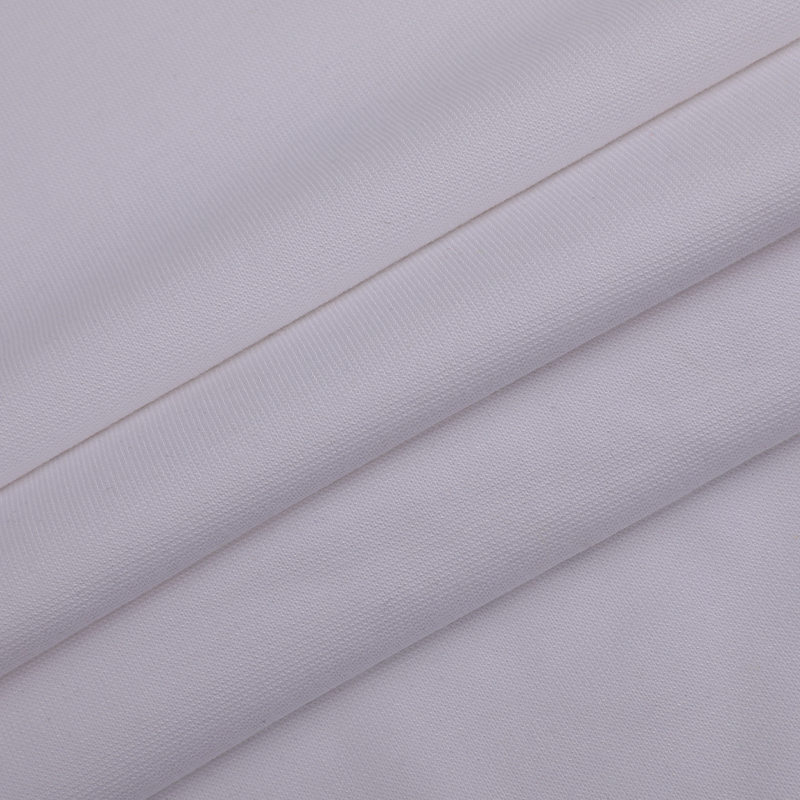
 Custom 40s JC + 30D Spandex Single Jersey Fabric Suppliers, OEM/ODM Factory - ToTongxiang Ruicheng Knitting Co., Ltd. is China 40s JC + 30D Spandex Single Jersey Fabric Suppliers and OEM Factory, details:Cotton spande...View Product →
That recovery changes how you sew. The stitch must stretch at least as much as the fabric, or the seam will break when the wearer bends forward. And the fabric is easier to pull out of shape while stitching, because the spandex adds length that you only notice later as a wavy seam.
Pure cotton knit fails in the opposite direction: it does not snap back, so accidental stretching under the presser foot becomes permanent, showing up as a stretched shoulder or dipping hem. The fix is handling: support the fabric front and back, lower presser foot pressure, and never pull the fabric toward you.
What You Need to Sew Cotton Knit Fabric: Tools and Setup
Do you need a serger? No. A regular domestic sewing machine sews cotton knit well once you choose the right needle and an elastic stitch. A serger is faster and neater, but it does not solve skipped stitches or stretching; those are solved by the needle and stitch.
- Ballpoint needle (75/11 or 90/14): the rounded tip slips between the loops; a sharp universal needle pierces the yarn, causing skipped stitches and sometimes permanent holes.
- Stretch needle: a finer needle with a deeper scarf for elastic cotton and spandex knits; use when a ballpoint still skips.
- Polyester thread: it has a little give. Cotton thread has almost none and snaps when the seam stretches.
- Twin needle: two needles on one shank for hems. The top shows two parallel rows and the back a zigzag, so the hem stretches.
- Walking foot or knit foot: optional, but useful on terry and air-layer fabrics because it feeds from the top and bottom and reduces waviness.
Fit a fresh needle at the start of every knit project and replace it every 8-10 hours of sewing, or at the first skipped stitch.
How to Test Stretch and Recovery in Cotton Knit Fabric
Patterns state a stretch requirement, but fabric can feel stretchy and still lack recovery. Test before you cut using the 4-inch method.
- Fold the fabric so the crosswise direction is easy to grip.
- Place two pins exactly 4 inches apart across the width, close to the fold.
- Hold the pins and stretch the fabric as far as it will go without tearing.
- Measure the length at full stretch, then release and watch the return.
Good recovery means the fabric returns to within about 10 percent of its original length; if 4 inches stays stretched, the garment will bag out at the elbows and knees. Test the lengthwise direction too, because most knits stretch more across the width than along it.
As a rule, a cotton and spandex jersey with 30d spandex gives 60-100 percent crosswise stretch, while a pure cotton jersey may give less than 40 percent. Relaxed T-shirts work with either, but fitted patterns with negative ease need the spandex blend.
Step-by-Step: How to Sew Cotton Knit Fabric on a Regular Sewing Machine
Here is the full sequence for how to sew cotton knit fabric on a regular machine, from prewash to reinforcement.
- Prewash the fabric. Cotton knit shrinks in the first wash, and slippery finishing agents make stitching harder. Wash and dry it as you will treat the finished garment.
- Cut without stretching. Let the fabric relax flat, use a rotary cutter or tissue paper so it does not slide, and spray curling edges lightly with starch before pinning and cutting.
- Choose an elastic stitch. A straight stitch breaks under stretch. Use a narrow zigzag (width 0.5-1.0, length 2.5) or the stretch stitch on your machine, then test on a scrap: stretch the sewn seam and check that the thread gives and returns.
- Adjust the machine. Lower the presser foot pressure if possible, reduce the upper tension slightly, and slow the speed. These steps stop the feed dogs from stretching the fabric.
- Sew the seam. Guide the fabric with both hands, one in front of the presser foot and one behind, and let it feed at its own pace. If the seam waves, stop and recheck the needle, stitch, and pressure.
- Hem with a twin needle. It produces the professional two-stitch hem of a store-bought shirt while the zigzag on the inside keeps the hem stretchy. Shorten the stitch length and sew slowly.
- Reinforce stress points. Shoulders, necklines, and armholes take the most strain, so sew clear elastic into these seams or fuse knit interfacing on the inside.
Sewing Cotton Rib Knit for Neckbands and Cuffs
Cotton rib knit stretches far more along its length because of its vertical columns, which makes it ideal for neckbands and cuffs: it snaps back into shape when stretched. The same elasticity makes it easy to distort while sewing.
Cut the rib band at 75-85 percent of the length of the edge it joins, so a 50 cm neckline gets a band of about 40-42 cm. Pin at quarter points and let the machine feed it; never pull the rib to force a match, because overstretching creates wavy necklines. Use a four-thread overlock or a narrow zigzag. For standard necklines and cuffs, a dependable choice is 28s combed cotton 1x1 rib knit, which provides the recovery that keeps a neckline in place.
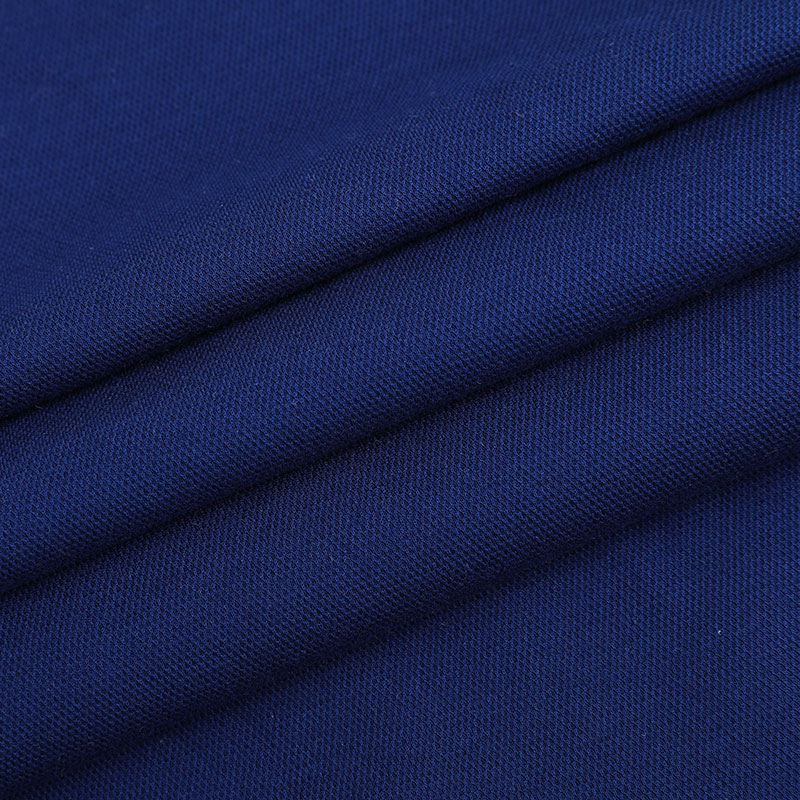
 Custom 28s JC 1x1 Rib Knit Fabric Suppliers, OEM/ODM Factory - Tongxiang RuichenTongxiang Ruicheng Knitting Co., Ltd. is China 28s JC 1x1 Rib Knit Fabric Suppliers and OEM Factory, details:1*1 ribbing is composed of a...View Product →
Common Problems When Sewing Cotton Knit Fabric (and How to Fix Them)
Most cotton knit problems have a short list of causes. Check in this order when a seam misbehaves.
| Problem | Most likely cause | Quick fix |
|---|---|---|
| Skipped stitches | Dull needle or the wrong needle type | Fit a fresh ballpoint or stretch needle, and slow down over thicker seams |
| Wavy seams | Presser foot pressure too high, tension too high, or stitch too short | Lower presser foot pressure, loosen the upper tension, lengthen the stitch, and try a walking foot |
| Curling edges | The loop structure naturally rolls the cut edge inward | Spray lightly with starch, sew promptly after cutting, or run a narrow zigzag just inside the edge to stabilize it |
| Popped seams | Non-elastic stitch or unreinforced stress point | Switch to a zigzag or stretch stitch and add clear elastic at shoulders and neckline |
| Snags and holes | Sharp needle piercing the yarn | Use only ballpoint or stretch needles, and keep the fabric clean and dry |
Change one variable at a time and test on a scrap; most problems resolve within minutes.
Choosing the Right Cotton Knit Fabric for Your Sewing Project
The construction you choose determines how the garment drapes, stretches, and holds its shape. Match the cotton knit type to the project, then check the specification.
| Fabric | Best for | Sewing notes |
|---|---|---|
| Cotton jersey | T-shirts, dresses, sleepwear | Light and drapey; support it well so the presser foot does not stretch it |
| Cotton rib | Neckbands, cuffs, fitted tops | High stretch from the lengthwise columns; cut bands at 75-85 percent |
| Cotton terry | Sweatshirts, hoodies, loungewear | Thick; use a walking foot and a 90/14 ballpoint needle |
| Cotton interlock | Babywear, polo tops, structured tops | More stable than jersey; cuts and sews like a firm knit |
| Cotton air layer | Jackets, oversized sweatshirts | Spongy thickness; use a walking foot, a longer stitch, and test seams on scraps |
Read cotton knit specifications the way a manufacturer does. Yarn count tells you weight and hand feel: 21s is sturdy, 32s midweight, 40s fine and soft. Spandex content tells you recovery: 30d gives everyday stretch, 40d or more adds pull for sportier fits. If a supplier lists these details clearly, you can predict how the fabric will sew before you order.
Understanding how to sew cotton knit fabric is half the skill; choosing the right fabric is the other half. A thicker jersey slides and curls less and forgives mistakes, so a 21s BCI cotton single jersey is a sturdy, sustainable option that sews calmly and still produces a soft everyday T-shirt.
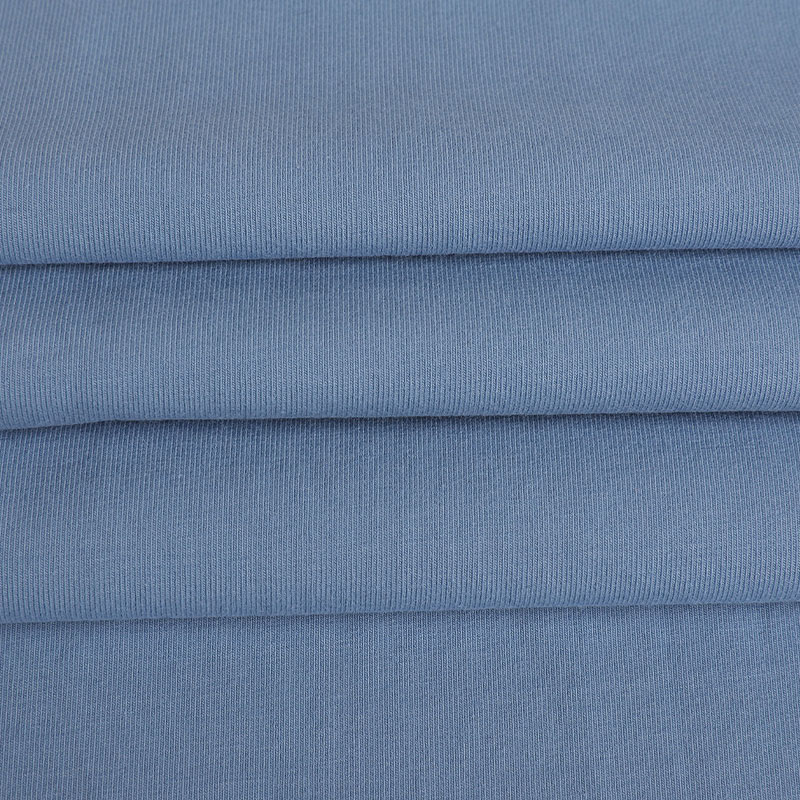
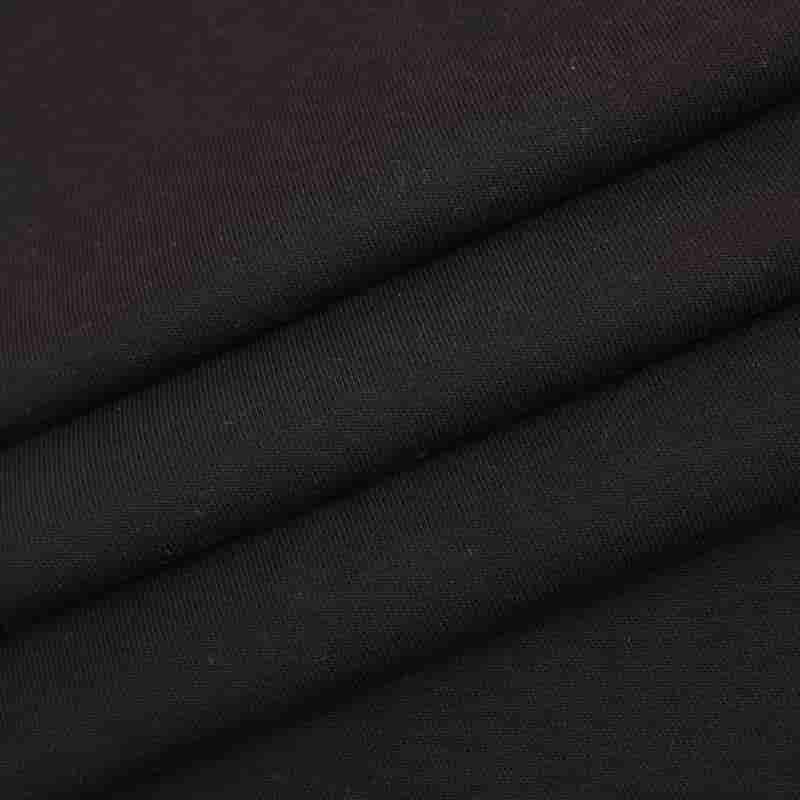 Custom 21s JC BCI Imported Yarn Single Jersey Fabric Suppliers, OEM/ODM Factory Tongxiang Ruicheng Knitting Co., Ltd. is China 21s JC BCI Imported Yarn Single Jersey Fabric Suppliers and OEM Factory, details:This prod...View Product →
If you are weighing cotton against other natural fibers, the comfort story changes with the fiber. Read more about natural knit fabrics and comfort to compare cotton, modal, and Tencel in similar constructions.