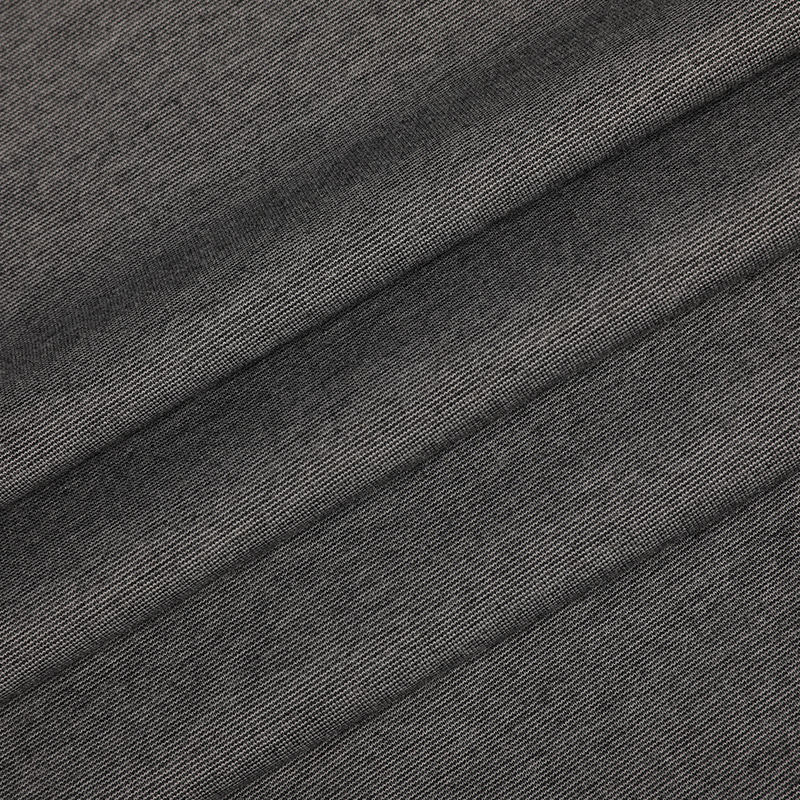
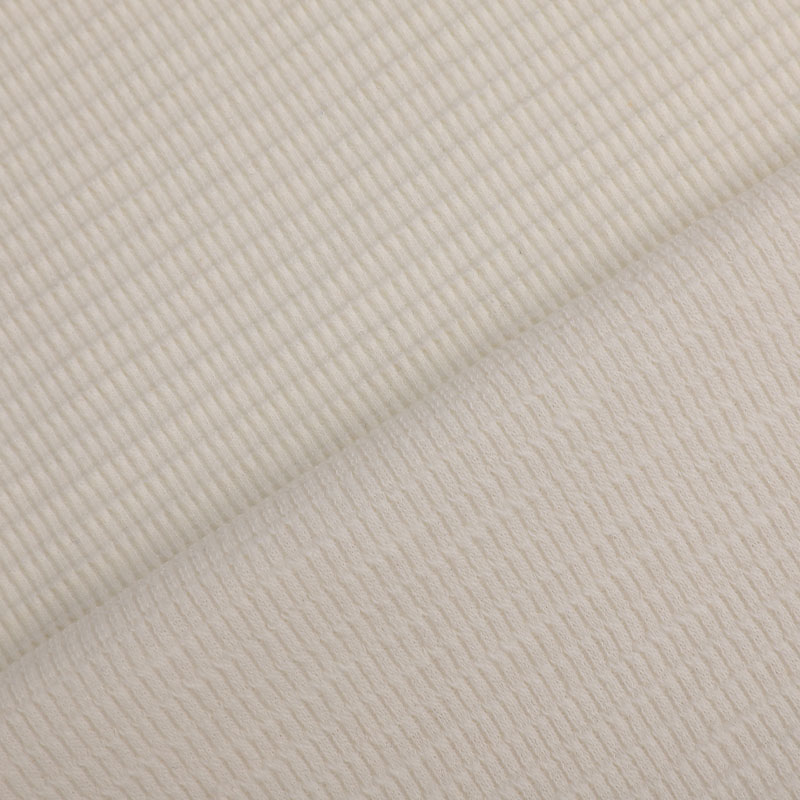
English
 中文简体
中文简体Content
- 1 What Jersey Knit Cotton Fabric Is in Structural Terms
- 2 How Jersey Knit Cotton Fabric Is Made, Step by Step
- 3 Specifications Buyers Compare Before They Order
- 4 Jersey, Rib, Interlock, Pique and Terry: How to Tell Cotton Knits Apart
- 5 How Cotton Content and Blends Change Hand Feel, Cost and Behaviour
- 6 Shrinkage, Torque, Pilling and Colour Fastness: The Numbers That Decide Reorders
- 7 Finishing Options and What Each One Does to the Hand
- 8 What to Fix Before a Sample Is Knitted
- 9 Where Jersey Knit Cotton Fabric Is Used
- 10 Lower-Impact Fibre Choices and What They Change
- 11 Quality Control and Paperwork Worth Requesting
- 12 Frequently Asked Questions About Jersey Knit Cotton Fabric
- 12.1 Is jersey knit the same thing as cotton jersey?
- 12.2 Does jersey knit cotton fabric stretch?
- 12.3 What weight is jersey knit cotton fabric normally made in?
- 12.4 Why does cotton jersey shrink after washing?
- 12.5 What is the difference between CVC and 100 percent cotton jersey?
- 12.6 Is jersey knit cotton fabric suitable for summer garments?
- 12.7 Can jersey knit cotton fabric be dyed or printed to a Pantone reference?
- 12.8 How do I check quality when the shipment arrives?
- 13 Before You Place the Order: What to Send
A Portuguese buyer sends a 40-metre sample request with one line attached: what is jersey knit cotton fabric, and can you knit it at 180 gsm? That single question usually hides three more. How much will it shrink after three home washes? How much will it stretch across the width? Will the tenth container match the lab dip and hand feel of the first sample? The definition matters, but the behaviour that follows from the definition matters far more.
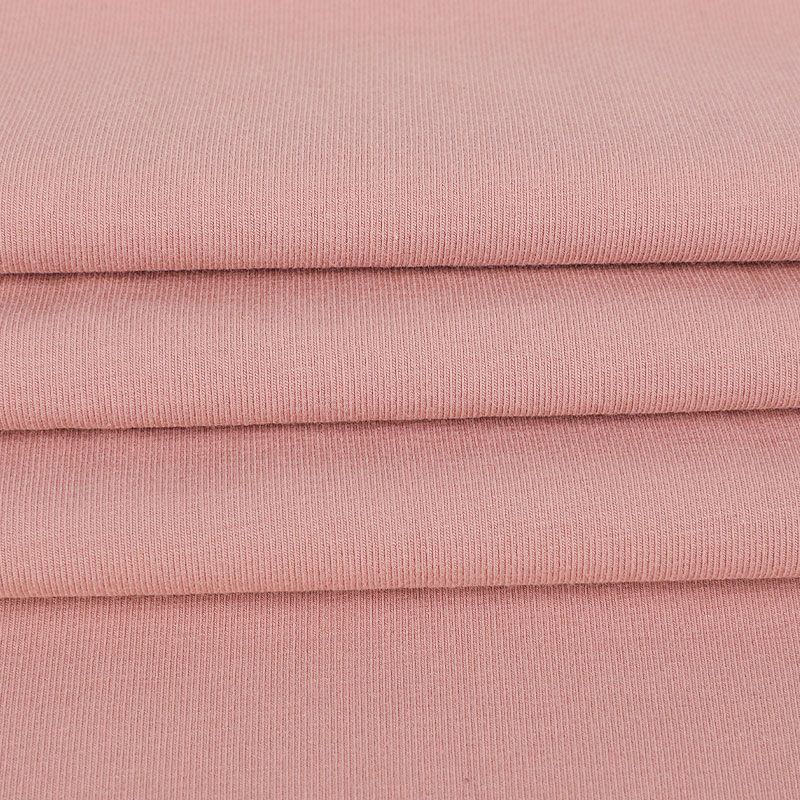
Here is the short answer before the detail. Jersey knit cotton fabric is a single-knit cotton fabric produced on a circular weft-knitting machine, where one set of needles forms a single continuous path of loops, each new loop drawn through the loop of the course below it. Cotton, or a cotton-rich blend, supplies the fibre; jersey is the structure. One face of the cloth shows flat vertical V-shaped stitches; the other shows small curved loops. Because those loops open sideways easily but resist opening lengthwise, the fabric stretches across the width and stretches very little along the length.
That structural fact explains nearly everything a buyer will notice: the soft drape, the light weight, the crosswise stretch, the slight curl at cut edges, the tendency to skew after washing, and the shrinkage that every roll of cotton jersey must be finished out of before it leaves the mill. It also explains why jersey is the most widely knitted structure in apparel, and why it is normally the first sample a brand approves.
We are Tongxiang Ruicheng Knitting, a knitted fabric mill in Chongfu, Tongxiang, Zhejiang, in the Yangtze River Delta between Shanghai, Hangzhou and Suzhou. Cotton jersey is the structure we run most: 21s, 26s, 32s, 40s and 50s yarns in 100% cotton, CVC, cotton/spandex, and cotton blended with Lenzing Modal, Lenzing Tencel, linen, bamboo fibre, Sorona and recycled polyester. What follows is the same briefing we send to buyers before a sample is knitted.
What Jersey Knit Cotton Fabric Is in Structural Terms
Knitted fabric is built from loops, not from interlaced warp and weft threads. In weft knitting, yarn is fed horizontally and formed into loops course by course. A jersey structure uses one set of needles and one yarn path, so the loops on the technical back lean in one direction only and the technical face shows the legs of the loops lined up as vertical V shapes. Those vertical columns are called wales; the horizontal rows are called courses. Counting wales and courses per centimetre is the fastest way to compare two jersey samples that look identical on a table.
The name jersey is generally traced to Jersey, one of the Channel Islands, where knitted woollen goods were produced and traded for centuries, and the term stayed with the structure long after wool gave way to cotton. In modern trade, "jersey" describes the stitch, not the fibre. A jersey can be wool, polyester, viscose, bamboo or cotton; a cotton jersey can be single jersey, cotton/spandex jersey, cotton pique, cotton terry or cotton interlock, depending on how the needles and sinkers are set. If you need the wider family of loop structures explained in one place, the complete guide to knit fabric structures covers the technical background.
Four properties follow directly from the single-knit construction, and they are the four points buyers test first.
- Crosswise stretch: the loop legs straighten under load in the course direction, so a plain 100% cotton single jersey typically gives roughly 12 to 18 percent elongation at low load, and recovers only part of it.
- Lengthwise stability: opening a loop in the wale direction would require breaking the interlocking chain, so lengthwise stretch is small, usually below 8 percent.
- Edge curl: because loop legs on the two faces are unbalanced, cut edges roll, which is why converters either keep the fabric tubular, add spandex, or rely on compacting and heat setting to settle the selvedge.
- Different faces: the flat face takes print and embroidery cleanly; the looped back is softer against skin, which is why the looped side is often worn inward on underwear and babywear.
It is worth repeating one point that causes a lot of back-and-forth in sampling: jersey is a structure, and "cotton jersey" is a structure plus a fibre. When a specification reads "180 gsm cotton jersey," it is still incomplete. Yarn count, blend ratio, gauge, width form and finishing route are all still open, and each of them changes the final fabric.
How Jersey Knit Cotton Fabric Is Made, Step by Step
The route from cotton bale to finished roll has five stages, and every quality problem a buyer meets later can be traced back to one of them. The first is yarn. Carded cotton is cheaper and slightly rougher; combed cotton removes short fibres and gives a cleaner, stronger yarn that holds up better on fine gauges. That is why 32s and 40s jersey for retail programmes is almost always combed, while heavier 21s constructions may run carded or combed depending on the target price and the surface the designer wants.
The second stage is knitting. Jersey is knitted on circular machines, commonly 30 to 34 inches in diameter, running two to four feeders per inch of diameter, at gauges from 20 to 32 needles per inch. Gauge has to match yarn count. Knitting a fine 40s cotton on a coarse 20-gauge machine yields an open, unstable surface with poor cover; forcing a thick 21s yarn onto a 32-gauge cylinder invites needle damage and drop stitches. Loop length, controlled by positive yarn feeders and measured as course length, is the single most sensitive variable on this machine. A change of roughly 0.2 mm in loop length can shift finished weight by several percent and move shrinkage and width with it, which is why mills lock the course length for a repeat order rather than adjusting it loosely to hit weight.
The third stage is pre-treatment and dyeing. Cotton jersey is normally singed to burn off surface fibre, desized if the yarn was sized, scoured, bleached, and then dyed with reactive dyes by exhaust or cold pad batch. Mercerizing, a caustic treatment under tension, is optional but changes the fabric substantially: it increases lustre, improves dye uptake and depth, raises tensile strength, and reduces the tendency to shrink. For fine 40s and 50s jersey used in premium tops, mercerizing is often the difference between an ordinary hand and a silk-like one.
- Yarn preparation: combing or carding, spinning, doubling where needed, and waxing or clearing for fine counts.
- Knitting: circular single jersey with locked course length, recorded machine by machine for repeatability.
- Pre-treatment: singeing, desizing, scouring, bleaching, optional mercerizing.
- Dyeing and finishing: reactive dyeing, washing, softening, drying, compacting or calendering, slitting or leaving tubular.
- Inspection and packing: four-point inspection, roll length control, moisture and pH checks, bagging for shipment.
The fourth stage, finishing, is where most of the commercial risk is managed. Compacting, sometimes called mechanical shrinkage control, deliberately compresses the fabric lengthwise so that the residual shrinkage after washing stays inside the buyer's tolerance. The fifth stage is inspection. A four-point inspection system scores defects by length against a fixed number of points per 100 square yards or metres; a normal commercial requirement for cotton jersey sits between 20 and 28 points per 100 square yards, with no single defect over a defined length. Ask for the inspection report with the shipment, not after the cutter opens the roll.
Specifications Buyers Compare Before They Order
Weight and yarn count set the character of the cloth more than any other pair of numbers. Heavier 21s and 26s jersey feels dense and dry, holds shape in a heavy t-shirt and prints well with plastisol; finer 40s and 50s jersey feels fluid, drapes close to the body and suits underwear, linings and summer tops. Width is quoted either as open width in centimetres after slitting, or as tubular width, which is the flattened half-circumference. Confusing the two is a classic costing error, because a 68 cm tubular equals roughly 136 cm of circumference, not 136 cm of usable width.
| Yarn count | Typical finished weight | Usual open width | Hand feel | Common end use |
|---|---|---|---|---|
| 21s combed cotton | 180 to 210 gsm | 165 to 175 cm | Dense, dry, firm | Heavy t-shirts, childrenswear, sweatshirting bases |
| 26s combed cotton | 165 to 185 gsm | 165 to 180 cm | Medium, balanced | T-shirt bodies, polo panels, sleepwear |
| 32s combed cotton | 150 to 170 gsm | 170 to 180 cm | Smooth, soft, even | Standard t-shirts, dresses, tops |
| 40s combed cotton | 130 to 150 gsm | 165 to 180 cm | Fine, silky, light | Light tops, underwear, linings |
| 50s combed cotton | 110 to 130 gsm | 160 to 175 cm | Very fine, fluid | Premium underwear, sheer tops, babywear |
Weight tolerance is the second number to fix. Most programmes accept plus or minus 5 percent on finished weight per square metre, measured after relaxation. On a 160 gsm fabric that is a 16 gsm window, which is tighter than it sounds once dyeing and compacting are involved, because both processes move weight. If a brand needs a heavier hand without changing the yarn, the usual solutions are a longer loop length, a coarser gauge, or a slightly heavier blend - not a promise from the supplier.
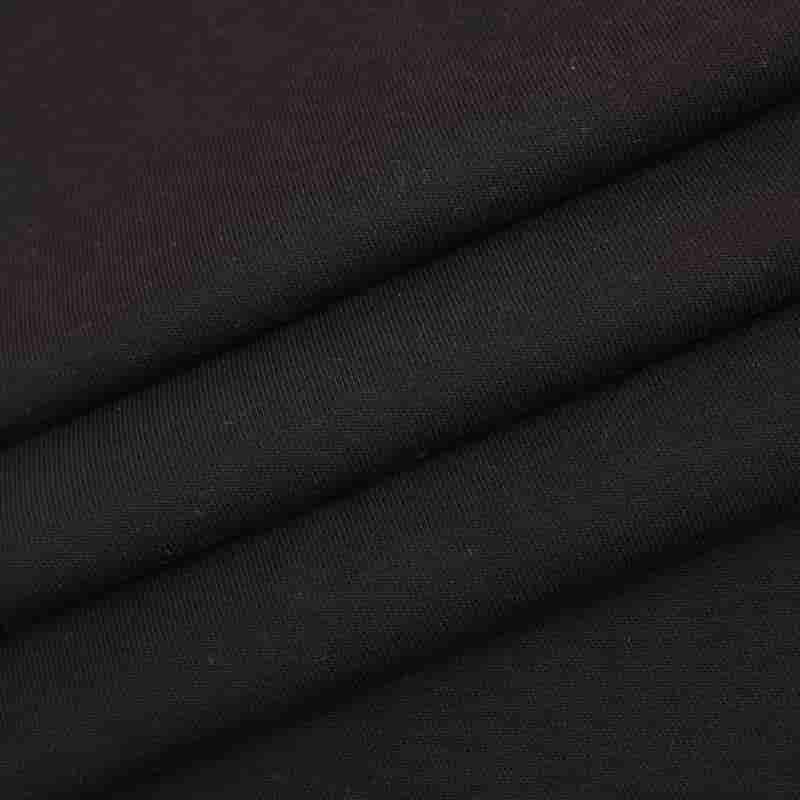 21s JC BCI Imported Yarn Single JerseyThis product is made of 100% cotton fiber and uses imported yarn certified by BCI. It meets the social responsibility standards of reducing environmental impact and im...View Product →
One practical note from the knitting floor: 32s cotton jersey at 160 gsm is the workhorse of the range, and it is also the specification most often asked for by buyers who have never seen a knitting machine. It is a good default because it balances cover, drape, print quality and cost. It is not automatically the right choice for a 220 gsm streetwear tee or a 120 gsm inner layer, and stretching it to either extreme almost always ends in a compromise on shrinkage or hand feel.
Jersey, Rib, Interlock, Pique and Terry: How to Tell Cotton Knits Apart
Buyers mix these names up constantly, and the cost of the confusion lands in the sample room. All of them can be knitted from cotton yarn on circular machines, and all of them can be dyed in the same shade, so a photo will not separate them. The differences are in needle arrangement, stretch behaviour and weight range, and they are easy to verify with your hands in under a minute.
Stretch a swatch sideways. If it gives a moderate amount and the surface shows fine vertical lines on both faces, it is a single jersey. If it opens like a concertina and shows clear vertical columns of raised loops, it is a rib. If it barely moves and both faces look identical, it is an interlock, a double-knit structure with two sets of yarns. If the surface has a small diamond texture and the fabric feels firmer, it is a pique. If one side is looped and plush with a thicker yarn behind it, it is terry, and if the loops are cut or brushed it is fleece.
| Structure | Loop arrangement | Stretch direction | Edge behaviour | Typical weight | Common use |
|---|---|---|---|---|---|
| Single jersey | One set of needles, one yarn path | Crosswise only | Curls at cut edges | 110 to 210 gsm | T-shirts, tops, underwear, linings |
| 1x1 rib | Alternating knit and purl wales | Both directions, high | Relaxed, minimal curl | 180 to 320 gsm | Cuffs, collars, body-hugging tops |
| Interlock | Two sets of needles, two yarns | Crosswise, low | Stable, no curl | 180 to 260 gsm | Heavier tees, babywear, sportswear |
| Pique | Knit and tuck loops in a pattern | Crosswise, low to medium | Firm, slight curl | 170 to 240 gsm | Polo shirts, structured tops |
| Terry or fleece | Ground yarn plus loop or brushed yarn | Crosswise, medium | Stable, thick | 220 to 400 gsm | Sweatshirts, hoodies, winterwear |
The practical implication for costing is simple. If a design needs recovery, rib or cotton/spandex jersey is the answer. If it needs a flat, stable surface for cut-and-sew panels with minimal seam distortion, interlock or pique behaves better. If it needs drape, printability and low cost per metre, single jersey wins, and the buyer accepts edge curl and modest crosswise stretch as part of the deal.
How Cotton Content and Blends Change Hand Feel, Cost and Behaviour
On the same machine, with the same 32s yarn count, the fibre blend can change the fabric more than the gauge does. A 100% combed cotton jersey is soft, breathable, dyeable to deep shades and easy to print, but it wrinkles, it shrinks unless compacted carefully, and it has no elastic recovery. Add 5 to 8 percent spandex at 20D or 30D and the same cloth becomes a fitted jersey with strong recovery, better shape retention and a different price point.
CVC, short for chief value cotton, usually means a cotton-rich blend such as 60/40 or 65/35 cotton and polyester. It is stronger, shrinks less, pills less and costs less than 100% cotton, at the price of a slightly drier hand and less moisture absorbency. Fine-gauge 40s CVC reads almost like cotton in the hand, while coarse 21s CVC can feel distinctly synthetic, so the yarn count and the blend ratio have to be decided together rather than one after the other.
For softness without losing the cotton story, Lenzing Modal and Lenzing Tencel blends are the usual route. A 40s cotton/Modal or 30s Tencel/cotton jersey drapes more, feels cooler on the skin and resists pilling better than plain cotton, and it takes reactive dyeing to the same shade family. The trade-off is cost and a slightly lower tensile strength in the fine counts. Bamboo fibre blends sit in a similar comfort range, with a very smooth surface that suits underwear and babywear.
Indicative crosswise stretch at low load, by jersey type
Spandex denier is worth understanding before a specification is written. A 20D spandex gives a lighter, more delicate stretch and is common in fine underwear jersey; a 30D or 40D spandex gives firmer control and is used in fitted tops and childrenswear. The spandex is normally plated with the cotton yarn rather than blended in the yarn itself, so the cotton stays on the face and the comfort story survives, while the elastic sits inside the structure.
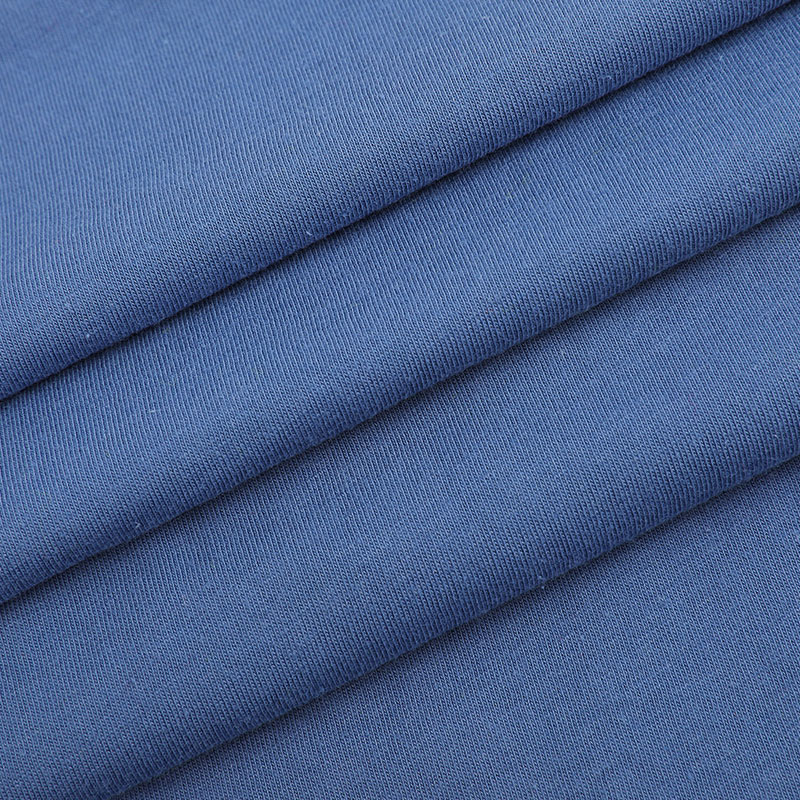 32s CVC Single JerseyThe blended fabric of cotton fiber and polyester fiber is a composite material that combines the advantages of natural and synthetic fibers. Cotton fiber is soft, skin...View Product →
Price ranking follows the same logic. Carded cotton is the cheapest entry; combed cotton follows; CVC sits close to combed cotton on weight but lower on fibre cost; cotton/spandex and cotton/Modal are the middle tier; fine-gauge cotton/Tencel, mercerized cotton and branded sustainable fibres sit at the top. Buyers who compare quotations without normalising yarn count, blend ratio and finishing will always get a misleading answer, because the cheapest quote usually hides a coarser count and a lighter weight.
Shrinkage, Torque, Pilling and Colour Fastness: The Numbers That Decide Reorders
Most first orders are approved on hand feel and shade. Most reorders are lost on shrinkage and skew. Cotton jersey moves after washing because the loops are under tension from knitting and from wet processing, and the fibre itself swells in water. Compacting removes part of that tension mechanically, but no mill can remove all of it, so the buyer and the mill have to agree on a test method and a tolerance before dyeing starts, not after.
Torque, also called spirality or skew, is the second structural issue. Single jersey naturally wants to twist because the loop legs lean to one side, and twist liveliness in the yarn makes it worse. The signs are a garment leg that twists around the body after washing or a striped panel that bows. Remedies include low-twist or two-fold yarn, alternating S twist and Z twist yarns in a plaiting arrangement, low-tension open-width processing and heat setting when spandex is present. If a programme uses stripes or engineered placement prints, skew tolerance should be written into the specification from the start.
| Test item | Common requirement | Usual method | Practical note |
|---|---|---|---|
| Dimensional change after washing | Within 5 percent length and width | Home laundry test cycles | Agree wash temperature, cycles and drying method in advance |
| Spirality or skew | Within 5 percent, tighter for striped styles | Wash and measure against a marked square | Improves with compacting and low-tension finishing |
| Pilling resistance | Grade 3-4 or better | Martindale or pilling box | Bio-polishing lifts the result noticeably |
| Colour fastness to washing | Grade 4 change, 3-4 staining | Standard laundry fastness test | Deep black and navy need longer washing off |
| Colour fastness to rubbing | Grade 4 dry, grade 3 wet | Crockmeter test | Pigment prints are the usual failure point |
| pH value | Between 4.0 and 7.5 | Water extract test | Relevant for skin contact and babywear |
| Formaldehyde content | Under 75 ppm, under 20 ppm for babywear | Standard extraction test | Controlled through resin-free finishing |
Weight uniformity across the roll is a quieter risk. Because jersey is knitted with feeders running around the cylinder, a small difference between feeder tensions shows up as bands or as weight variation from head to tail of the roll. Mills control this by locking course length per feeder and by checking weight at the start, middle and end of every batch. Buyers who only weigh a hand sample from the first two metres can be surprised by the last twenty.
Finishing Options and What Each One Does to the Hand
Finishing is where a commodity jersey becomes a programme fabric. The same greige roll can be turned into a crisp, dusty cotton or a soft, slightly peached surface, depending on which of the following routes is applied. None of them is free, and each one affects shrinkage, shade and hand feel, so the finishing route belongs in the specification sheet, not in a verbal agreement.
Singeing
Surface fibres are burned off before dyeing, giving a cleaner face for print and embroidery and reducing the fuzz that causes pilling later in wear.
Mercerizing
Caustic treatment under tension adds lustre, deepens dye uptake, raises strength and reduces shrinkage. It is the main reason fine mercerized cotton jersey feels silkier.
Bio-polishing
Cellulase enzymes gently remove protruding fibres, producing a smoother, softer surface with a one-grade improvement in pilling resistance on many cotton qualities.
Compacting
The fabric is fed under controlled overfeed to compress lengthwise, cutting residual shrinkage to the agreed tolerance and stabilising width at the same time.
Silicone softening
A softener finish improves glide and hand feel. Too much silicone feels slick and can interfere with printing adhesion, so the level has to be balanced.
Brushing and shearing
Used on terry and fleece to raise or trim the pile. It creates the peach hand of a winter jersey but must be tested for pilling and weight loss.
Two finishing details cause more arguments than any other. The first is shade continuity: a reactive-dyed black jersey that measures correctly in the lab can still look different under retail lighting if the finishing temperature or the washing-off is inconsistent. The second is hand-feel drift after compacting, because compacting changes the thickness of the cloth slightly. Both are controlled by keeping the finishing route identical between the sample, the first bulk, and every repeat order - not by reworking the recipe each time.
What to Fix Before a Sample Is Knitted
Sampling is fast when the specification is complete and slow when it is not. Most delays come from four missing items: yarn count, blend ratio, weight tolerance and shrinkage target. Send those four with the enquiry and a mill can knit a meaningful sample in one pass. Leave them out and the first sample becomes a guessing game, which is expensive for everyone.
- Fibre composition with exact percentages, for example 95 percent cotton and 5 percent spandex, or 60/40 CVC.
- Yarn count and spinning type, such as 32s combed ring spun, 21s carded, or 30s slub.
- Finished weight with tolerance, quoted in gsm after relaxation.
- Width and form, stated clearly as open width in centimetres or tubular half-circumference.
- Structure and gauge preference, or a swatch that shows the required surface.
- Stretch and recovery target, especially if spandex is included and the garment is fitted.
- Shrinkage target with the washing method that will be used to judge it.
- Colour reference and light source, plus whether a lab dip or a strike-off is required first.
- Hand-feel reference, ideally an approved previous sample with a signed reference tag.
- Test report requirements, listing which standards the end customer accepts.
Where a specification is genuinely open, it is worth asking the mill for a two-metre strike-off in two or three weights rather than one. Comparing 150 gsm, 165 gsm and 180 gsm of the same construction on a fitting dummy settles a design argument faster than any written description, and it costs far less than re-knitting a bulk batch.
Where Jersey Knit Cotton Fabric Is Used
Because it is light, soft, printable and cheap to knit, cotton jersey appears in more garment categories than any other knit structure. The weight, not the name, decides which category a given roll belongs to. A 120 gsm jersey is an inner layer, a 160 gsm jersey is a summer t-shirt, a 200 gsm jersey starts to behave like a light sweatshirt, and a 240 gsm interlock or pique belongs on a polo or a heavier top.
- T-shirts and tops, where printability and drape matter more than recovery.
- Underwear and loungewear, usually in fine 40s or 50s cotton, sometimes with a small spandex content and the looped face worn inward.
- Childrenswear and babywear, where softness, a low formaldehyde limit and generous stretch are the priorities.
- Dresses and skirts, where drape and crosswise stretch shape the silhouette without darts.
- Sleepwear and pyjama sets, often mercerized or bio-polished for a cool hand.
- Linings and pocketing, where low weight and a smooth face reduce bulk in the garment.
- Sport and athleisure bases, where cotton/spandex jersey and cotton/Modal jersey provide moisture comfort with shape retention.
 40s JC BCI Imported Yarn + 30D Spandex Single JerseyCotton-spandex jersey deftly combines the soft comfort of cotton with the elastic properties of spandex. This blend gives the fabric both good breathability and moistu...View Product →
For fitted garments, cotton/spandex jersey at 40s with 30D spandex is the most common answer, because the cotton face keeps the comfort story while the spandex supplies the recovery that plain cotton lacks. For loose summer styles, a plain 32s or 40s single jersey keeps cost down and lets the print carry the design. For winter, the same jersey base is often laminated or brushed into a heavier cloth, which changes the weight range entirely without changing the underlying loop structure.
Lower-Impact Fibre Choices and What They Change
Sustainability requirements now arrive with the technical specification rather than in a separate conversation. Several fibre options reduce impact and change the fabric at the same time, so the choice should be made with the hand-feel target in view.
- BCI cotton. Cotton sourced through the Better Cotton programme, traceable at the bale level, with the same spinning and knitting behaviour as conventional cotton.
- Organic cotton. Grown under certified organic rules and usually supported by a transaction certificate; slightly softer in the fine counts and more expensive.
- Recycled polyester. Typically from post-consumer bottles, often certified under a recycled content standard; useful in CVC blends and in fleece, with the same processing behaviour as virgin polyester.
- Lenzing Modal and Lenzing Tencel. Regenerated cellulose fibres with a soft, cool hand and good pilling performance; they increase drape and price in equal measure.
- Bamboo fibre. Very smooth and absorbent; any antibacterial claim should be supported by a test report rather than marketing language.
- Sorona. A partially bio-based polymer used in small percentages to add soft stretch and resilience to cotton and polyester blends.
- Biodegradable polyester types. Designed to break down under specific conditions; the claim must be documented, and the end-of-life conditions should be stated clearly.
One caution for sourcing teams: fibre claims travel with paperwork, not with the fabric. If a programme states recycled content, organic cotton or a branded fibre, the mill should be able to provide the relevant certificate, transaction certificate or invoice trail. Suppliers who cannot produce the documents usually cannot produce the fibre either.
Quality Control and Paperwork Worth Requesting
A mill that runs cotton jersey daily still has to prove quality roll by roll. The documents below are standard in serious programmes and cost nothing to ask for at the enquiry stage, although they may reveal that a supplier does not have the systems behind them.
- A four-point or ten-point inspection report per shipment, with the points per 100 square yards or metres stated.
- Dimensional stability test results, including the exact wash cycle and drying method used.
- Colour fastness reports for washing, rubbing, perspiration and, where relevant, light.
- Pilling and abrasion results, especially for brushed and fleece-finished cotton knits.
- pH, formaldehyde and restricted substance test reports for skin-contact and childrenswear.
- Fibre composition test results, particularly where blend percentages are contractual.
- Lab dip records and shade continuity notes for repeat orders.
- Weight and width records taken at the head, middle and tail of each roll.
Two habits separate reliable jersey suppliers from unreliable ones. They record the knitting parameters of every batch so a repeat order can be reproduced rather than re-invented, and they test the finished fabric rather than relying on the greige. Everything else - price, lead time, flexibility - is easier to manage once those two habits are in place.
Frequently Asked Questions About Jersey Knit Cotton Fabric
Is jersey knit the same thing as cotton jersey?
No, and the difference matters commercially. Jersey is the loop structure; cotton is the fibre. The same jersey structure can be knitted in polyester, viscose, wool or bamboo. When a specification says cotton jersey, it usually means a single-knit cotton or cotton-rich fabric, and the exact blend still has to be confirmed.
Does jersey knit cotton fabric stretch?
Yes, but mainly in one direction. Plain cotton jersey stretches roughly 12 to 18 percent across the width at low load and much less along the length. Adding 20D or 30D spandex raises crosswise stretch and, more importantly, improves recovery so the garment returns to shape.
What weight is jersey knit cotton fabric normally made in?
Most apparel cotton jersey sits between 110 and 210 gsm. Light 40s and 50s qualities at 110 to 150 gsm go into underwear and summer tops; 32s at 150 to 170 gsm is the standard t-shirt weight; 21s and 26s at 180 to 210 gsm suit heavier tops and childrenswear.
Why does cotton jersey shrink after washing?
Knitting and wet processing put the loops under tension, and cotton fibres swell in water. Compacting during finishing removes much of that tension, so most well-finished cotton jersey stays within 5 percent in both directions. Washing at a higher temperature than the test standard will always produce more shrinkage.
What is the difference between CVC and 100 percent cotton jersey?
CVC is a cotton-rich blend, commonly 60/40 or 65/35 cotton and polyester. It is stronger, more stable and cheaper per kilogram, and it shrinks less. In the hand it feels slightly drier and less absorbent than 100 percent cotton, and the difference is more obvious in coarse counts than in fine 40s qualities.
Is jersey knit cotton fabric suitable for summer garments?
It is one of the best choices, provided the weight is right. A 130 to 160 gsm cotton or cotton/Modal jersey breathes well, drapes loosely and prints cleanly. Heavier 200 gsm jersey traps more heat, and 100 percent cotton in a fitted style loses shape through the day unless a small amount of spandex is added.
Can jersey knit cotton fabric be dyed or printed to a Pantone reference?
Reactive dyeing can match most Pantone targets closely, but the match depends on the fibre, the light source and the depth of the shade. Deep blacks and navies need longer washing-off to hold fastness. For prints, the base fabric should be approved first, since the same print on 150 gsm and 200 gsm jersey reads differently.
How do I check quality when the shipment arrives?
Weigh and measure three rolls at the head, middle and tail to confirm gsm and width, then wash a one-metre swatch with the agreed cycle and measure shrinkage and skew against a marked square. Compare shade with the approved standard under the same light source, and read the inspection report before cutting.
Before You Place the Order: What to Send
The fastest way to close a jersey development is to send four things in one message: a swatch or a clear photo of the required surface, the finished weight with tolerance, the fibre composition with percentages, and the end product with its test requirements. Add the target shrinkage and stretch figures if the garment is fitted, and the colour reference with the light source you will judge it under. With those in hand, a mill can propose a concrete construction instead of a range of possibilities.
Our knitting floor at Tongxiang Ruicheng Knitting runs cotton jersey, cotton/spandex jersey, CVC jersey, cotton pique, cotton rib, cotton interlock, cotton terry and fleece, together with Lenzing Modal, Lenzing Tencel, linen, bamboo, wool blend, functional and biodegradable fibre knits, in counts from 21s to 50s. If you are comparing weights for a specific garment, send the specification and the end use, and we will come back with the yarn count, gauge, weight and finishing route that fit the target rather than the closest thing on the shelf.