English
 中文简体
中文简体Content
- 1 Ten Knit Fabric Types: The Short Answer
- 2 Why Knitted Structures Behave Differently
- 3 The Ten Types of Knit Fabric, One by One
- 4 Fibre Choices That Change the Whole Equation
- 5 Specifications to Agree Before the Order Is Confirmed
- 6 Testing and Quality Control on Knitted Fabric
- 7 Sourcing Risks and How to Reduce Them
- 8 Matching Knit Structure to the End Product
- 9 Frequently Asked Questions
- 9.1 What are the 10 types of knit fabric in simple terms?
- 9.2 Which knit fabric type is the most durable?
- 9.3 Is 160 gsm a good weight for a T-shirt?
- 9.4 How can I tell whether knit fabric quality is good?
- 9.5 What is the difference between single jersey and rib?
- 9.6 Do knitted fabrics shrink more than woven fabrics?
- 9.7 Can the same knit structure be made in different fibres?
Ten Knit Fabric Types: The Short Answer
Ask ten mills to name the ten types of knit fabric and you will get ten slightly different lists. The list used here is the one that maps onto real production floors: single jersey, rib, interlock, pique, terry and fleece, ponte de Roma, waffle, bird's eye mesh, air layer and jacquard. Every one of them can be knitted from cotton, polyester, viscose, modal, Tencel, linen, wool or bamboo, which is exactly why a fibre name on its own tells a buyer almost nothing.
The loop structure decides stretch, recovery, weight and drape. A 1x1 rib at 240 gsm stretches far more than an interlock of the same weight, and the two will not behave the same way on a cutting table, under a needle, or inside a domestic wash cycle. That gap comes from how the loops interlock, not from the yarn that feeds them.
So the practical order of decisions is: structure first, then fibre, then gram weight, then finishing. Getting that order wrong is the most expensive habit in knit fabric sourcing, because a fabric that passes every lab test can still fail on the sewing floor when its stretch recovery does not match the pattern it was bought for.
| Knit type | Loop structure | Usual weight | Stretch behaviour | Common end use |
| Single jersey | One set of needles, continuous loops | 130-200 gsm | Around 35% across, 20% along | T-shirts, base layers, printing |
| Rib | Alternating face and reverse wales | 180-320 gsm | Above 80% across with strong recovery | Collars, cuffs, fitted tops |
| Interlock | Two needle beds knitting alternately | 180-260 gsm | Moderate, low curling | Polos, dresses, sleepwear |
| Pique | Long and short loops forming a diamond mesh | 170-240 gsm | Limited, breathable | Polos, uniforms, sport shirts |
| Terry and fleece | Loops plus floating yarn, sometimes brushed | 220-400 gsm | Low, bulky handle | Sweatshirts, joggers, winter wear |
| Ponte de Roma | Double knit with a bonded face | 240-380 gsm | Low, firm and structured | Dresses, trousers, jackets |
| Waffle | Grid jacquard with raised squares | 200-320 gsm | Slight, textured surface | Robes, loungewear, blankets |
| Bird's eye mesh | Fine interlocking eyelet holes | 120-200 gsm | Moderate, highly air permeable | Sportswear, linings, summer tops |
| Air layer | Two faces joined by a binding yarn | 220-360 gsm | Low, insulating and bulky | Outerwear, hoodies, padded looks |
| Jacquard | Pattern floats knitted into the ground | 160-340 gsm | Varies with pattern density | Patterned knits, swimwear, sleeves |
Why Knitted Structures Behave Differently
Weft knitting bends a single yarn into a row of loops, then links each row to the one below it. Because the yarn is bent rather than interlaced straight, the fabric can open up in any direction where there is spare loop length. That is the whole source of knit stretch, and it is also why knits recover differently from wovens after laundering.
Two numbers describe a knitted construction more precisely than any trade name. Courses per centimetre measure how many loop rows sit in one vertical centimetre. Wales per centimetre measure the vertical columns across the width. Raise both and the fabric gets denser, heavier and less extensible; drop both and it turns lighter, softer and more open. When a buyer and a mill disagree about "the same fabric", it is almost always because these two figures were never agreed.
Yarn count then sits on top of the structure. A 21s cotton single jersey knits at roughly 190-200 gsm. The same structure in 32s CVC lands near 160 gsm, and 40s combed cotton comes in around 140-150 gsm. Polyester and nylon are quoted in denier instead, so 100D and 150D filament single jerseys sit in the 130-170 gsm band. Spandex is quoted by the denier fed into the knitting zone, and 20D, 30D and 40D produce noticeably different recovery in the finished roll.
Count decides hand feel
Higher yarn count means finer yarn, closer loops and a smoother surface. It also means higher yarn cost and a slower knitting speed for the same weight.
Denier decides stretch
Spandex denier and draw ratio drive recovery. Going from 20D to 40D spandex adds power but also adds cost, and it changes how the fabric behaves in a hot wash.
Finishing decides stability
Pre-setting, compacting and stentering control residual shrinkage and width stability far more than the knitting machine does.
The Ten Types of Knit Fabric, One by One
1. Single Jersey
Single jersey is where every knit programme starts. One set of needles forms continuous loops, so the face shows smooth vertical wales while the back shows horizontal sinker loops. That is why the same roll looks like T-shirt fabric on one side and a faint ridged texture on the other. Weight depends entirely on yarn count: 32s CVC around 160 gsm, 40s combed cotton near 145 gsm, 21s single jersey up to 200 gsm, and 100D or 150D polyester filaments between 130 and 170 gsm.
Lengthwise stretch runs near 20% and widthwise near 35%, which is enough to shape a garment but not enough to hold a body-hugging silhouette. T-shirts, base layers, print grounds and sleepwear all rely on it. Three risks matter in production: edges curl, tubular fabric can spiral after washing, and gram weight drifts when the yarn has room to shrink before finishing.
how jersey knit cotton fabric is structured and sourced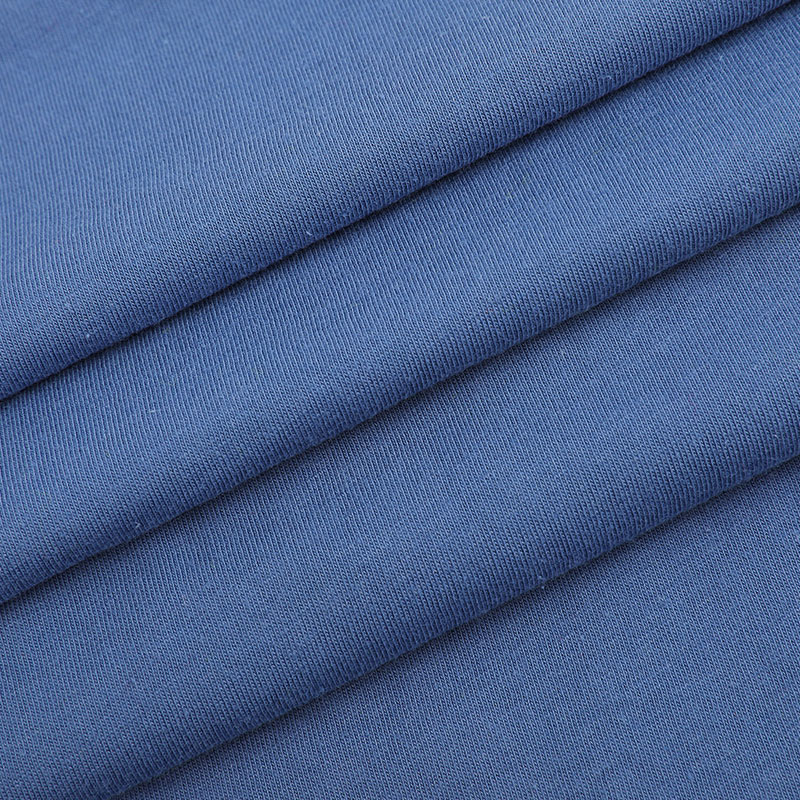 Custom 32s CVC Single Jersey FabricA custom 60% cotton, 40% polyester single jersey with listed 179 width and 159 weight, suited to T-shirts, base layers, and print grounds.View Product →
2. Rib Knit
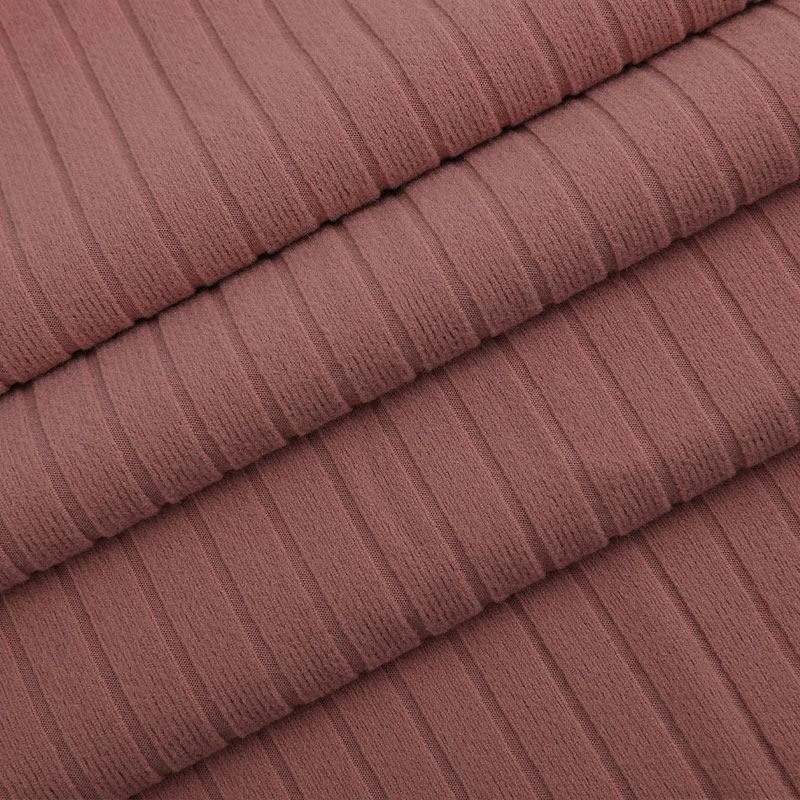
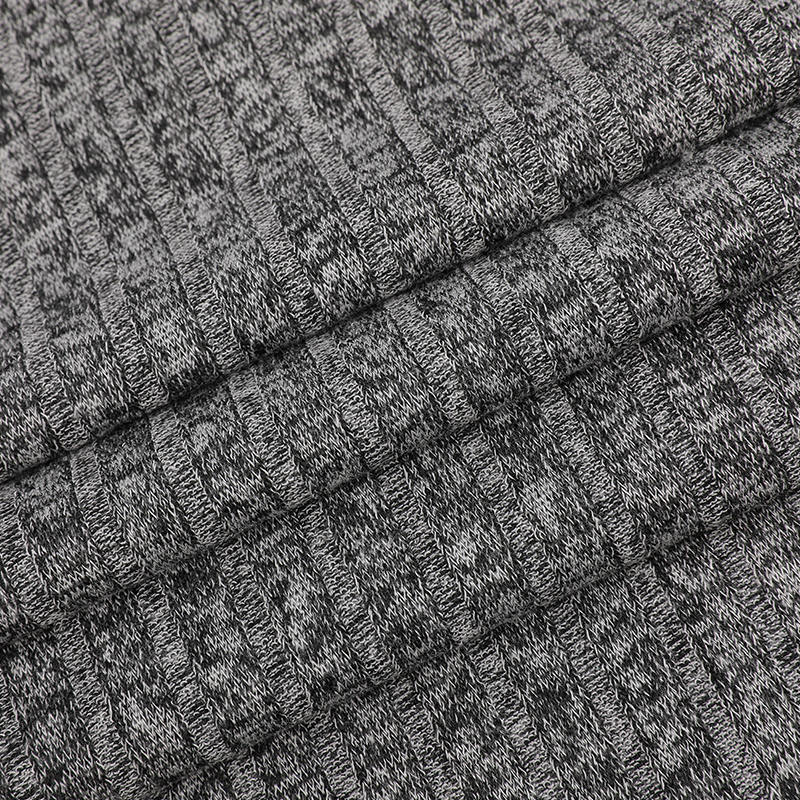
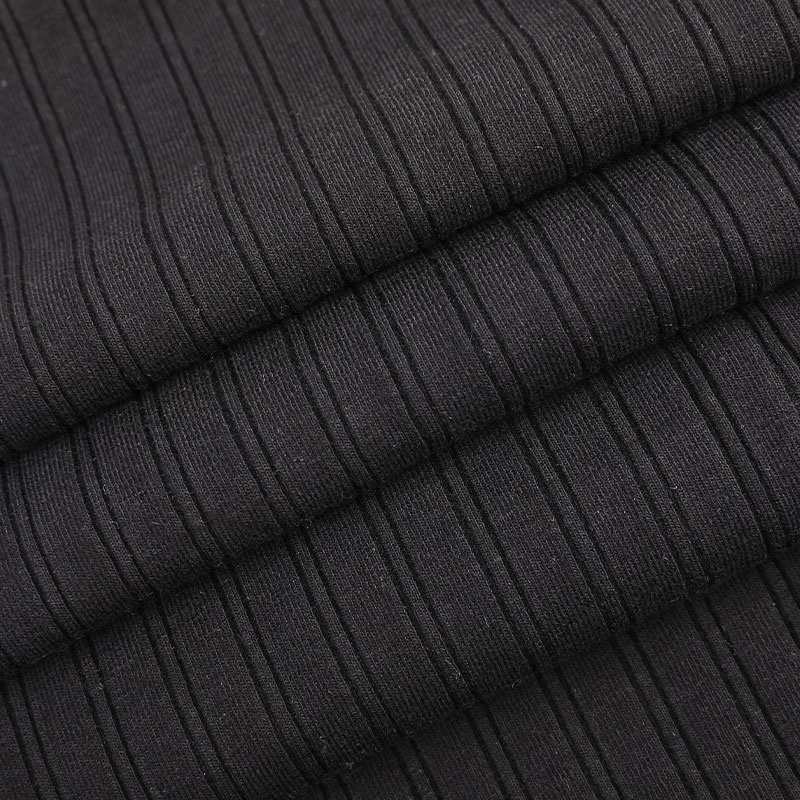
Rib alternates face and reverse wales, so the surface shows vertical channels that can open and close. The narrowest version is 1x1; 2x2 is chunkier and more stable; full-plated spandex runs elastane through every course for stronger return. A 32s CVC full-plated 40D 1x1 rib lands around 220-260 gsm. Widthwise stretch easily exceeds 80%, which is why collars, cuffs, waistbands and fitted bodies lean on this structure.
The trap is elastane loading. Too much gives a collar that feels like rubber; too little gives a neckline that relaxes after two washes. Spandex denier matters as well, since 30D and 40D full-plated ribs feel completely different on the same body pattern. Drop-needle and striped versions add surface interest, and irregular drop needle in particular gives a subtle wavy line without any printing.
3. Interlock
Interlock knits on two needle beds that alternate, so both faces look identical and the fabric does not curl at the edges. Dimensional stability is better than single jersey and spirality is far less of a problem, which shortens the cutting room headaches on panel-heavy styles. A 40s combed cotton interlock with 30D spandex and a mercerised finish sits around 200-230 gsm, and a 32s CVC interlock is a workhorse for value programmes.
Because it needs two loop-forming systems, interlock costs more per kilogram than single jersey at the same weight. Buyers should watch the upper limit: above roughly 280 gsm the fabric becomes heavy for a top and belongs in outerwear or structured dresses instead.
4. Pique
Pique uses long and short loops in a diamond arrangement, so small openings appear across the surface. Air moves through those openings and the fabric feels drier than a single jersey of equal weight. Yarn can be two-ply or single; a 32s combed cotton two-ply pique mesh with 70D spandex typically lands between 190 and 220 gsm, while a 40s two-ply with 150D/96F DTY builds a heavier double pique for structured polo programmes.
Polo shirts, uniforms and sports tops are the natural applications. Pique snags more easily than jersey and it is fussier to dye, because the mesh reflects light unevenly and any barrel variation shows up in the holes first.
5. Terry and Fleece
Terry keeps loops on both faces of the cloth; fleece adds a shearing or brushing pass that opens the back surface into a soft pile. Weights across the sweatshirt family run from about 220 gsm to 400 gsm. A three-thread fleece combining cotton face yarn with a cotton ground gives the right balance of body and warmth, and a sheared, brushed twill fleece builds the loft that consumers associate with premium sweatshirts.
Shrinkage is the recurring problem, so pre-setting and compacting belong in the specification rather than in a verbal promise. Terry is also where blended constructions shine: a 32s CVC with 75D Sorona and a 16s or 21s cotton ground delivers both bulk and a softer, more elastic hand than all-cotton pile.
6. Ponte de Roma
Ponte de Roma is a double knit with a bonded face, usually built from viscose blends or polyester blends, and it holds shape far better than jersey while offering limited stretch. Weights cluster between 240 and 380 gsm. A 30s cotton-linen Punto di Roma combines the dry touch of linen with a structured body, which is why it appears in dresses, tailored trousers, skirts and simple jackets.
Its stability makes cutting and sewing easier than a light single jersey, but printed designs lose definition on a tight ponte surface. Colour also reads deeper on ponte, so a shade that looks elegant on jersey can look flat here.
7. Waffle
Waffle is a grid jacquard, with raised squares created by shifting knit stitches between neighbouring wales. Weight usually falls between 200 and 320 gsm when cotton or linen blends are used. A 32s linen with 40D spandex waffle brings texture and light stretch together, and a bold stripe linen waffle pushes the pattern further without changing the base structure. Robes, loungewear, blankets and casual tops are standard applications.
Waffle has little widthwise stretch on its own, so any fit requirement must be built into the pattern. Friction is another consideration: raised squares abrade first, so dark shades show pale patches at cuffs and hems sooner than a flat knit would.
8. Bird's Eye Mesh
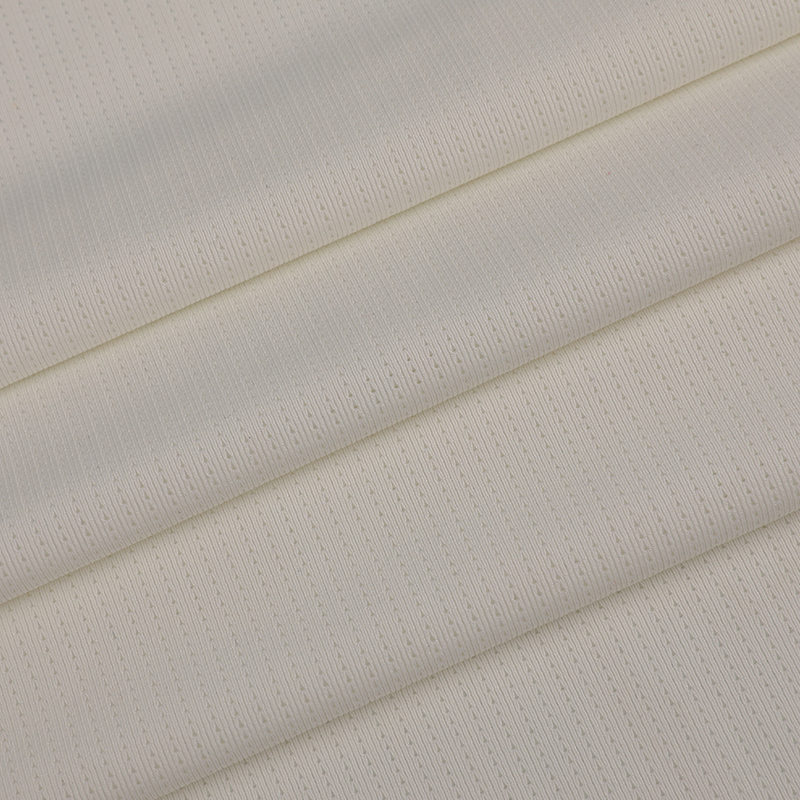
Bird's eye mesh builds a dense field of small eyelet holes that gives the surface a fine dotted texture. Weight runs 120-200 gsm, breathability is high, and the fabric drapes lightly, which suits sportswear, linings, summer polos and active tops. A 32s T/C 37.5C with a 21s combed cotton double-sided bird's eye construction pairs moisture management with a stable hand.
When a single dye bath has to colour two different fibres, cationic yarns allow tone-on-tone or contrast effects in one pass. The risk is that mesh holes distort if the fabric is over-stretched during finishing, so width control matters more here than on a solid knit.
9. Air Layer
Air layer fabric joins two knitted faces with a binding yarn that crosses the gap between them. Insulation comes from the trapped air pocket rather than from weight alone. Typical weights sit between 220 and 360 gsm, and a 40s combed cotton face with 50D/48F DTY and 30D spandex builds a dense, warm, structured cloth for outerwear and heavy hoodies. A 75D/72F with 20D spandex air layer gives a lighter, more technical version.
The binding yarn is the weak point. Knit it too loose and the two layers separate visibly after washing; knit it too tight and the fabric loses the softness that justified the structure in the first place. This is a specification worth pinning down in writing before bulk.
10. Jacquard
Jacquard knits the pattern into the cloth instead of printing it on top. Weight varies with the design, commonly 160-340 gsm, and pattern detail is carried by floats of yarn that travel behind the ground. A 32s CVC jacquard striped rib shows how structure and pattern can share one fabric, delivering a two-tone effect with no dyeing difference risk between the stripes.
Long floats snag, so pattern geometry has to respect a maximum float length. Complex jacquards also run slower on the machine, which is why a patterned knit usually costs more than a solid of equal weight.
Fibre Choices That Change the Whole Equation
Structure sets the physical behaviour; fibre sets the comfort story, the price and the sustainability claim. The same single jersey construction can be sold as a basic cotton tee or as a premium Lenzing Tencel-blend garment, and the difference in landed cost per kilogram is substantial.
Cotton remains the reference point: 21s BCI imported yarn for heavier jersey, 40s combed cotton with a mercerised finish for a silk-like sheen, CVC blends for value. Polyester covers the technical end with DTY, cationic and recycled low-stretch yarns, and 100D/96F recycled yarn blended with 75D Sorona gives stretch and a soft hand without elastane. Lenzing fibres split into viscose, modal and Tencel, each with a different drape and lustre. A 32s Lenzing modal on a 2x2 spandex rib gives a fluid, cool-hand fabric for dresses, while a 30s Lenzing Tencel with BCI cotton and a mercerised finish delivers a clean, semi-matte jersey.
Linen and bamboo round out the natural side, and natural knit fabrics in this group often carry the strongest consumer story. On the more technical end, bio-based options such as Celese blended with recycled polyester build terry and jacquard fleece constructions with a lower fossil content, and functional finishes can add odour control or insect repellence directly into the yarn rather than onto the surface.
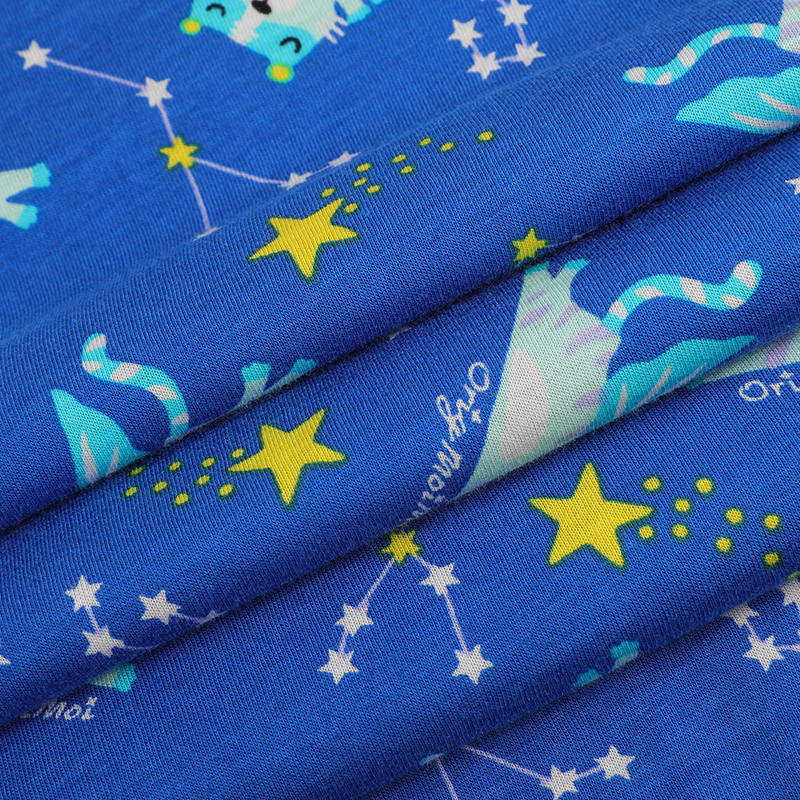 Custom 32s Bamboo-Cotton Single Jersey FabricA bamboo-cotton jersey at 70/30 with listed 172 width and 134 weight, supporting natural-knit appeal and sample-to-bulk specification checks.View Product →
Specifications to Agree Before the Order Is Confirmed
Verbal agreements on knit fabric cause more disputes than price does. The specification sheet should carry every number that can shift between sample and bulk, because most of them will shift at least slightly.
Typical weight bands by knit structure (gsm), midpoint shown as bar length
- Gram weight with a tolerance, normally plus or minus 5% inside one dye lot.
- Usable width measured after finishing, not on the greige roll.
- Courses and wales per centimetre, so the density is reproducible.
- Fibre composition in percentages, including spandex denier and any recycled content.
- Stretch and recovery targets measured at a stated load and after a stated number of cycles.
- Shrinkage limits after the agreed wash method, quoted for both length and width.
- Colour fastness to washing, rubbing, perspiration and light.
- Shade tolerance measured on a spectrophotometer, with an agreed colour difference limit.
- Finishing route: pre-set, compacted, stentered, mercerised, brushed, sheared or calendered.
- Packing, roll length, roll diameter and the acceptable number of joints per roll.
Testing and Quality Control on Knitted Fabric
Testing protects both sides. A mill that tests before shipment avoids claims it cannot win; a buyer that tests on arrival knows whether a bulk lot really matches the approved sample. The routine panel for apparel knits covers dimensional stability, appearance retention and colour performance.
Shrinkage is measured after a defined home-laundering cycle, and the result should be quoted separately for length and width because tubular knits rarely shrink evenly in both directions. Stretch and recovery are tested at a fixed load, with the residual growth recorded after relaxation, which is the number that predicts whether a neckline will stay put. Pilling and abrasion resistance are checked on a Martindale or equivalent instrument, and they matter most on fleece, terry and waffle surfaces where fibres can migrate to the surface.
Colour work uses a spectrophotometer against an approved standard, with a colour difference limit agreed in advance. Fastness testing covers washing, rubbing, perspiration, water and light, and it is worth specifying the exact test method rather than a generic requirement, because methods differ in severity between markets. Bursting strength and pH complete the panel and are usually requested together by international buyers.
A practical sample protocol is equally important. Keep a sealed bulk sample from each dye lot, and keep a retained piece from every shipment. When a complaint arrives six months later, those retained pieces settle the question faster than any argument.
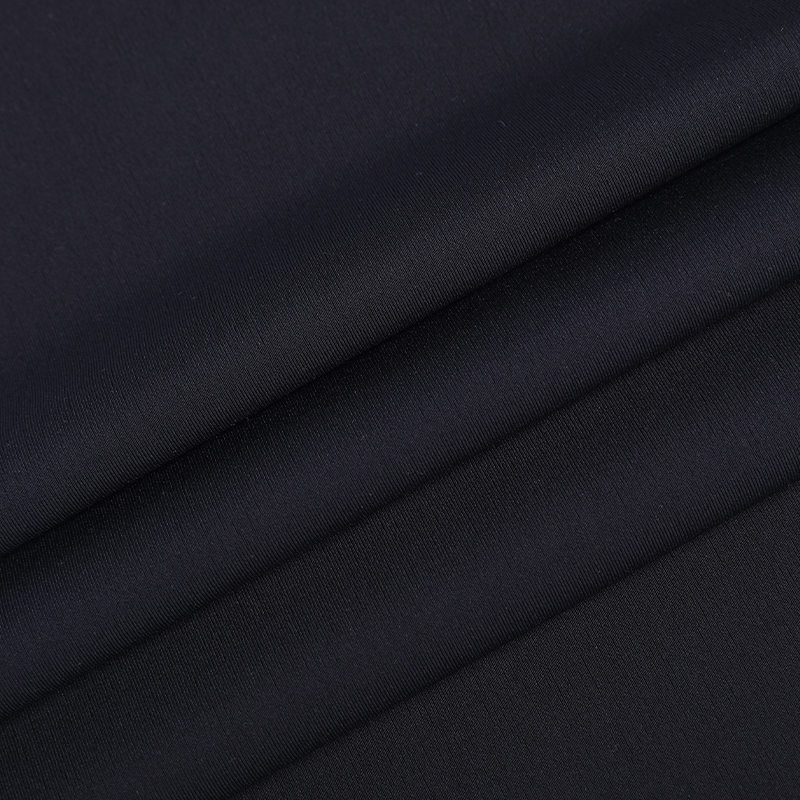 Functional Full-Plated Nylon Spandex Interlock FabricThis customizable 81% nylon, 19% spandex interlock lists odor-eliminating 40D nylon and Ausping mosquito-repellent 30D spandex, with 169 width and 179 weight.View Product →
Sourcing Risks and How to Reduce Them
Most knit fabric problems appear in predictable places. Knowing where they cluster is more useful than a general instruction to check quality carefully.
- Shade variation between lots. Insist on a retained standard and a measured tolerance, not a visual check under office lighting. Dark shades and cationic yarns are the most sensitive.
- Hand feel drift. Softener loading is easy to adjust and hard to detect. Ask for a retained bulk sample and compare it against the approved hand feel at every repeat order.
- Weight shortfall. Weight can be met by adding moisture or finish rather than yarn. Test after conditioning, and check the course and wale count at the same time.
- Recovery failure on elastane knits. The fabric measures correctly on arrival but relaxes in wear. Specify recovery after cycling, not just initial stretch.
- Shrinkage surprises. Tubular knits can shrink unevenly. Agree a wash method, then test before cutting, not after.
- Width instability. Rolls that arrive on spec can relax during storage. Confirm the usable width after a resting period rather than straight off the finishing line.
- Lead time slippage on dyed programmes. Dyeing is the bottleneck more often than knitting. Book dye capacity against the confirmed colour list rather than waiting for lab dips to close.
Matching Knit Structure to the End Product
The fastest way to choose correctly is to work backwards from the garment. Body contact, movement and laundering frequency decide which structures can survive the product's life.
Close-fitting and next-to-skin
Rib and jersey dominate here. A 1x1 or 2x2 spandex rib gives the required recovery, while a 40s combed cotton jersey with 30D spandex delivers a smooth surface at a weight that stays comfortable. Anything with more than 5% elastane needs a recovery specification, not just a stretch figure.
Active and outdoor
Bird's eye mesh and air layer cover two different needs. Mesh handles moisture transport and lightweight coverage; air layer handles warmth and structure. Technical constructions with odour control or repellence belong here, and they work best when the function comes from the yarn itself rather than a topical treatment that washes out.
Casual and everyday
Interlock, pique and single jersey carry most of this category. Interlock suits polo bodies that need a stable front placket, pique suits breathable uniform programmes, and jersey suits anything printed. Weight choice is usually the difference between a premium and a value product.
Loungewear and home textiles
Waffle, ponte de Roma and terry lead this group. Waffle adds visual texture with little cost, ponte adds structure and drape, and terry adds warmth with a soft back face. All three reward careful finishing more than careful knitting.
Frequently Asked Questions
What are the 10 types of knit fabric in simple terms?
Single jersey, rib, interlock, pique, terry and fleece, ponte de Roma, waffle, bird's eye mesh, air layer and jacquard. Each name describes how the loops are arranged, not what the fabric is made from, so the same name can cover cotton, polyester, viscose or a blend.
Which knit fabric type is the most durable?
Interlock and ponte de Roma hold their shape best over repeated washing because they use two needle beds. Fleece and terry resist thinning well but pill more easily. Light single jersey is the least stable and usually needs a higher yarn count or a spandex addition to survive long use.
Is 160 gsm a good weight for a T-shirt?
For a standard retail T-shirt, yes. A 32s CVC single jersey at 160 gsm gives a solid, opaque hand without feeling heavy. Below 140 gsm the fabric can turn transparent on light colours; above 180 gsm it starts to read as a heavier premium basic.
How can I tell whether knit fabric quality is good?
Check four things. Hold the fabric against light to see whether the loop density is even, stretch it and watch how quickly it returns, check the edges for curling and spirality, and ask for the shrinkage and colour fastness test reports from the same dye lot you are buying.
What is the difference between single jersey and rib?
Single jersey uses one set of needles, so the faces differ and stretch is moderate. Rib alternates face and reverse wales, so the surface shows vertical channels and widthwise stretch is much higher with better recovery. That is why rib is used on openings and jersey on bodies.
Do knitted fabrics shrink more than woven fabrics?
Generally yes, because the bent loops can relax and tighten during washing. Proper pre-setting and compacting reduce residual shrinkage dramatically, so the finishing route matters as much as the knitting itself. Always agree a wash method and test the finished fabric before cutting.
Can the same knit structure be made in different fibres?
Almost always. Single jersey knits equally well from 40s combed cotton, 32s Lenzing modal, 150D polyester or a bamboo-cotton blend. Changing the fibre changes the hand, drape, price and care requirements, but the machine settings and the loop geometry follow the structure.
The practical next step is a structure sample set: the same fibre and weight in three or four structures, cut into A4 swatches and sent with the specification sheet and the test report attached. That single envelope removes most of the guesswork from the sampling stage, because the buyer can feel the difference between jersey, rib and interlock in the hand before a single garment pattern is cut.