English
 中文简体
中文简体Content
- 1 Why "Cotton Knit" Works Like a Family Name, Not a Percentage
- 2 What Each Written Form Tells You About Fibre Content
- 3 The Five Blend Families You Will Meet Under the Cotton Knit Headline
- 4 What Each Added Fibre Actually Changes
- 5 Reading a Real Specification Line, Word by Word
- 6 How to Prove a Cotton Knit Is Genuinely 100% Cotton
- 7 Shrinkage, Weight and Color Fastness: Where Pure Cotton Surprises Buyers
- 8 Choosing Between Pure Cotton and a Blend by End Use
- 9 At a Glance: How Much Cotton Is Really in Common Cotton Knits
- 10 Seven Questions to Put in Every Enquiry
- 11 Frequently Asked Questions
- 11.1 Does cotton knit always mean 100% cotton?
- 11.2 Is CVC fabric 100% cotton?
- 11.3 If a fabric stretches, does that mean it contains polyester?
- 11.4 Can mercerized cotton still be 100% cotton?
- 11.5 What does the number before the letter s mean, such as 21s or 40s?
- 11.6 How can I check the composition before placing a bulk order?
- 11.7 Why do some pure cotton knits shrink more than blends?
- 11.8 What weight should cotton knit fabric be for t-shirts?
A sourcer opens a courier parcel and pulls out a swatch labeled cotton knit. The tech pack says 100% cotton. The lab report on the next page reads 94.6% cotton and 5.4% elastane. The color is right, the hand feel is right, and the order is still on hold because three words and one number do not agree with each other.
That disagreement shows up in knit fabric purchasing almost every week, and it always lands on the same question: does cotton knit mean 100% cotton?
The short answer is no. Cotton knit tells you two things at once. It names the fibre family that leads the blend, and it names the way the cloth is built, from knitted loops rather than woven crossings. It does not promise that cotton is the only fibre inside. A 21s 100% cotton single jersey and a 32s CVC 40D fullplated 1x1 spandex rib knit are both correctly called cotton knit, and only one of them is 100% cotton.
Everything that decides the answer lives in the specification line: yarn count, partner fibres, spandex decitex, and finishing route. Read that line properly and the question stops being ambiguous.
Why "Cotton Knit" Works Like a Family Name, Not a Percentage
Inside a knitting mill, one fabric usually carries two names. The structure name, such as single jersey, rib, pique, terry, interlock or air layer, describes how the yarns form loops and lock into each other. The fibre name, in this case cotton, describes what the yarn is spun from. The trade habitually compresses both names into the shortest possible label so it fits on a hangtag, a courier label and a purchase order line. That compression saves time, and it is exactly what creates the confusion.
Cotton itself is also a family, not a single product. Combed cotton, carded cotton, BCI cotton, long staple cotton and mercerized cotton are all 100% cotton, but they differ in yarn evenness, price and shrinkage behavior. A 40s JC BCI 30D mercerized interlock and a 21s JC slub single jersey both sit under the cotton headline, yet one is a smooth, luster-finished cloth for premium basics and the other is a textured, casual jersey.
Blending adds a second naming axis. CVC is short for chief value cotton, meaning cotton is the dominant fibre but not the whole story, typically at 60/40 or 65/35. When a specification shows 20D, 30D or 40D, that number almost always refers to elastane, the stretch yarn, often knitted in a fullplated structure so it appears on the technical face and the back of the fabric.
The practical consequence is straightforward. A fabric name cannot confirm fibre content, and neither can a hand feel. If 100% cotton is a commercial requirement, it has to be supported in three places: the supplier's composition declaration, the garment label, and a quantitative fibre analysis from a third-party laboratory. A word on a sample bag proves nothing. Buyers who treat the name as evidence end up arguing about claims after the goods are cut, which is the most expensive possible time to discover that a blend was always intended. For a broader look at how structure and fibre names interact, see this guide to the basics of knit fabric and jersey construction.
What Each Written Form Tells You About Fibre Content
The phrases below appear on knit fabric specification sheets, hangtags and purchase orders every day. Only the first group confirms 100% cotton. The rest describe blends, and the blend ratio is what a buyer has to negotiate, test and document.
| Text on the spec or label | What it actually means | 100% cotton? |
|---|---|---|
| 100% cotton / 100% combed cotton | A single fibre type, in the declared proportion | Yes |
| 21s JC BCI imported yarn | Combed cotton sourced through a traceable cotton programme | Yes |
| Cotton slub single jersey | Slub describes yarn appearance only; the fibre is still cotton | Yes |
| 40s JC BCI 30D mercerized interlock | Mercerizing is a wet finish, not an added fibre | Yes |
| 32s CVC interlock | Chief value cotton, commonly 60/40 or 65/35 with polyester | No |
| 40s JC 30D spandex single jersey | Cotton plus 30 denier elastane for stretch and recovery | No |
| 32s C-M 40D fullplated 2x2 rib | Cotton and modal blend with elastane knitted throughout | No |
| 30s Tencel BCI cotton mercerized jersey | A cellulosic fibre blended with cotton, often near 60/40 | No |
| Cotton linen 55/45 melange pique | Two natural fibres in roughly equal share | No |
One extra warning is worth stating plainly. Slub yarn, melange yarn, mercerized cotton and compact-spun cotton all change how the fabric looks and behaves without changing the fibre count. Buyers who reject a lot because it "does not look like 100% cotton" are often rejecting a finish or a yarn style, not a blend.
The Five Blend Families You Will Meet Under the Cotton Knit Headline
Sorting cotton knits by their partner fibre is faster than sorting by name. Each family carries a different cost structure, a different finishing route and a different set of risks.
1. Pure Cotton Knits
Typical references include 21s JC BCI single jersey, cotton interlock, cotton pique and cotton terry. These are single-fibre fabrics, and they are the only group that answers "yes" to the original question.
- Best for: t-shirts, babywear, neck rib, home textiles
- Strengths: breathability, moisture absorption, skin comfort, easy fiber story for the label
- Risks: shrinkage of 5% to 8% after washing if not pre-shrunk, batch-to-batch color drift, contamination with short staple fibre
- Verification: quantitative fibre analysis, combed yarn records, pre-shrunk finishing report
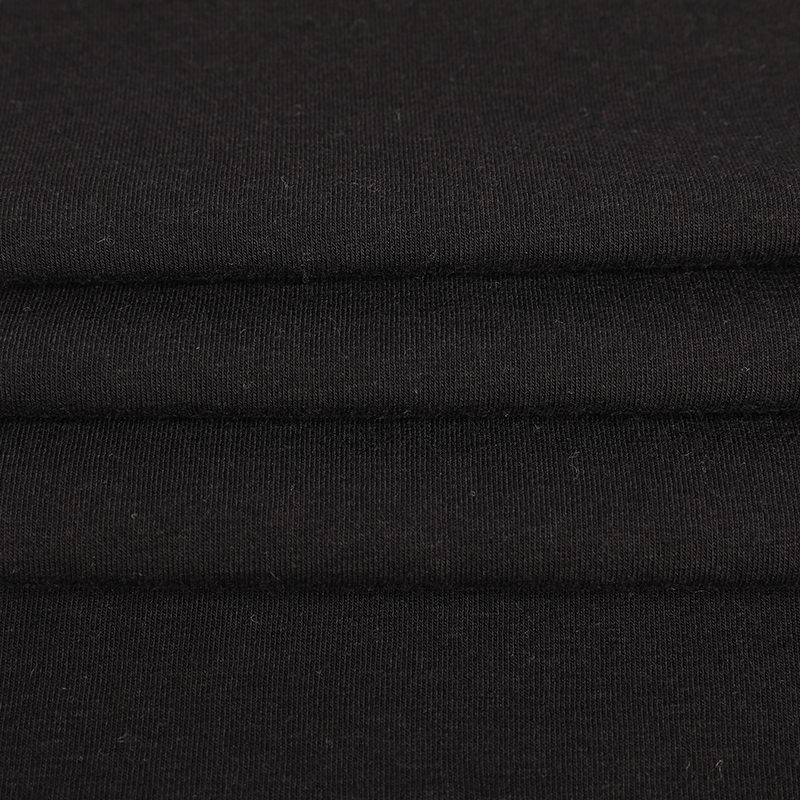
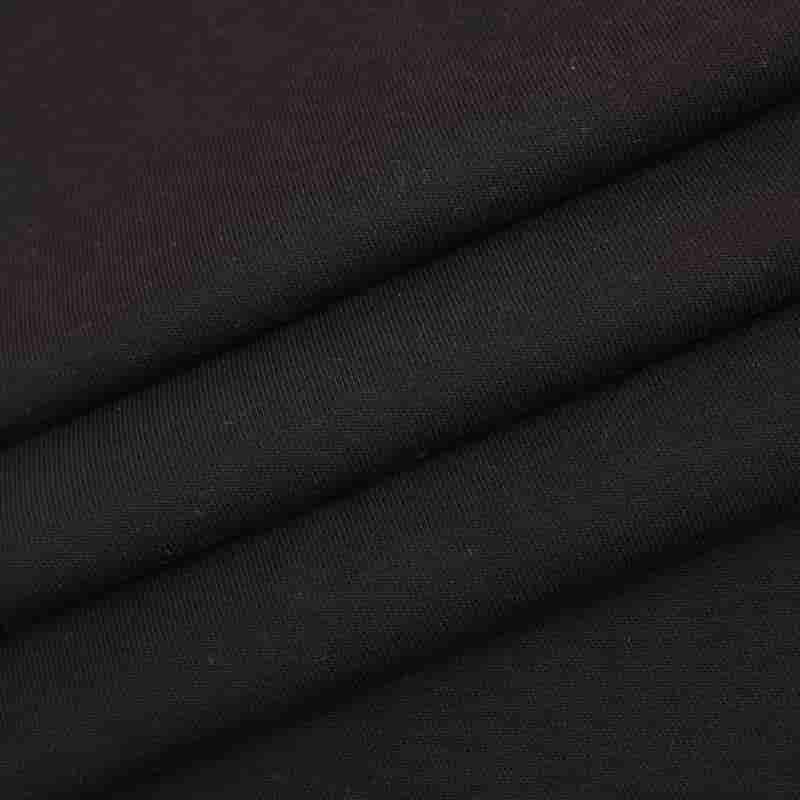 21s JC BCI Imported Yarn Single JerseyThis product is made of 100% cotton fiber and uses imported yarn certified by BCI. It meets the social responsibility standards of reducing environmental impact and im...View Product →
2. Cotton with Elastane
Common builds are 32s C-M 30D single jersey, 40s JC 30D spandex single jersey, and fullplated 1x1 or 2x2 spandex rib. Elastane usually runs between 3% and 8% of the total weight.
- Best for: fitted tops, cuffs, waistbands, shape-retaining garments
- Strengths: stretch, recovery, better fit retention after repeated washing
- Risks: narrow heat-setting window, elastane slippage at the cut edge, over-stretching during sewing
- Verification: recovery test after three washes, elastane content declaration, heat-setting temperature log
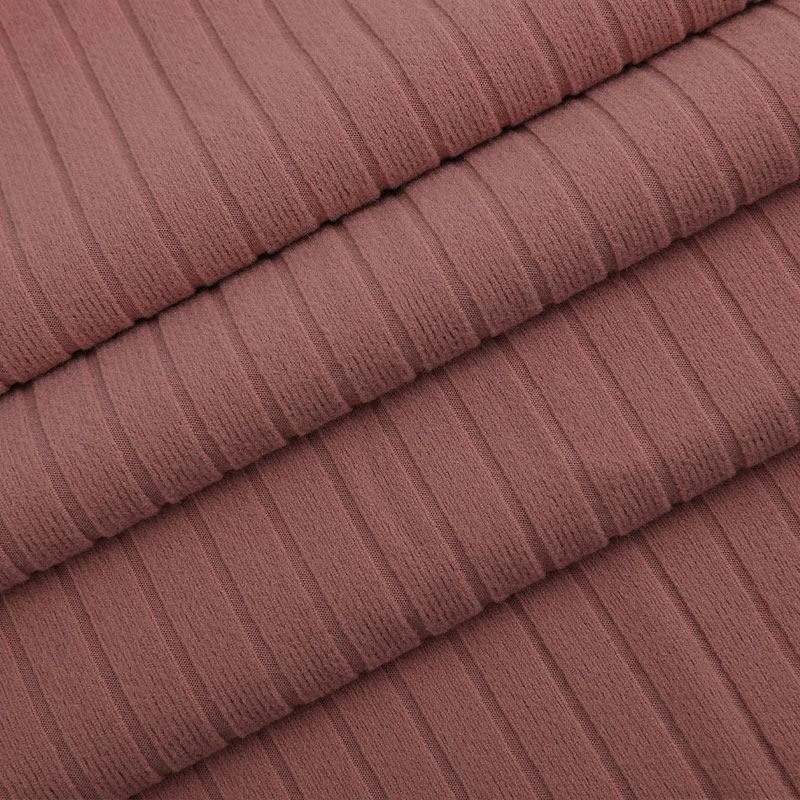
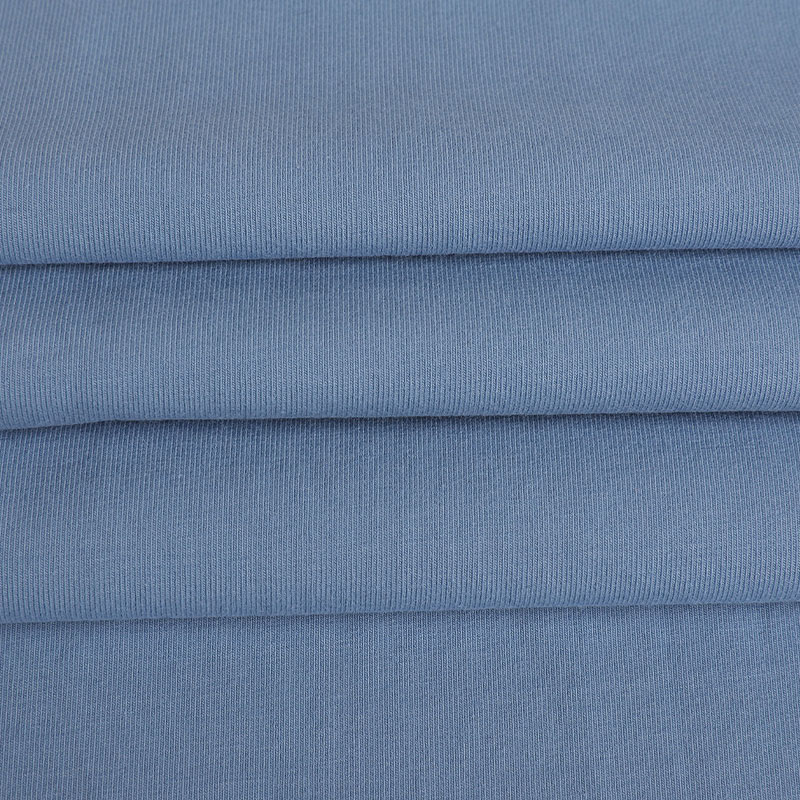 40s JC + 30D Spandex Single JerseyCotton spandex jersey combines the comfort of cotton and the elasticity of spandex, making the fabric not only have good breathability and moisture absorption, but als...View Product →
3. CVC and Cotton-Polyester Blends
References such as 32s CVC interlock, 32s CVC single jersey and CVC spandex rib are the workhorses of volume programs. The cotton share sits between 50% and 65% in most cases.
- Best for: high-volume basics, uniforms, garments that must hold shape through industrial laundering
- Strengths: dimensional stability, predictable dyeing, controlled cost, faster drying
- Risks: pilling, drier hand feel, and a gap between the "cotton" expectation of the end consumer and the actual composition
- Verification: declared blend ratio with tolerance, pilling test, shrinkage test
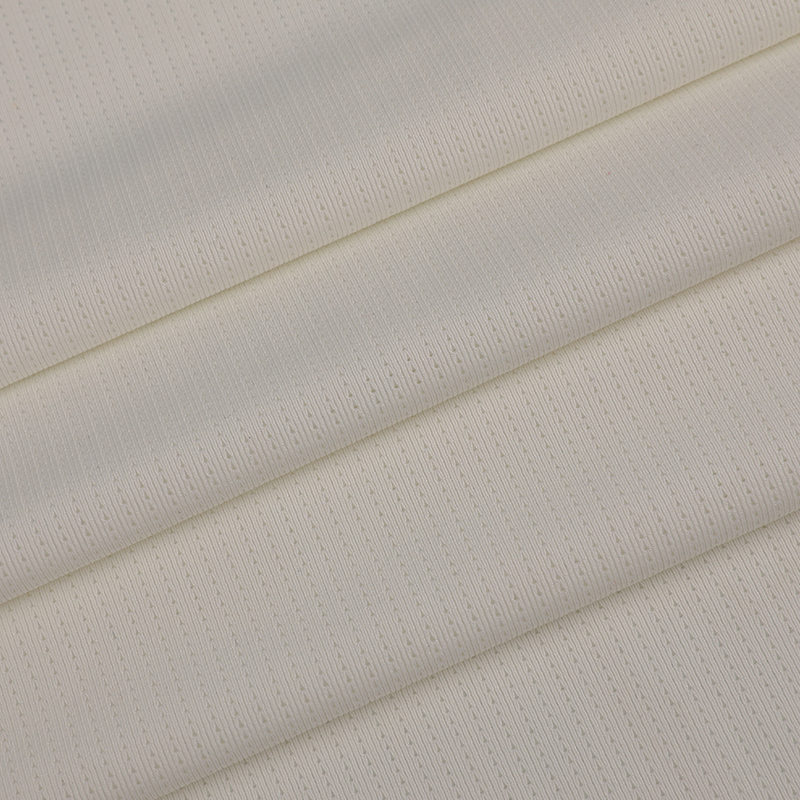
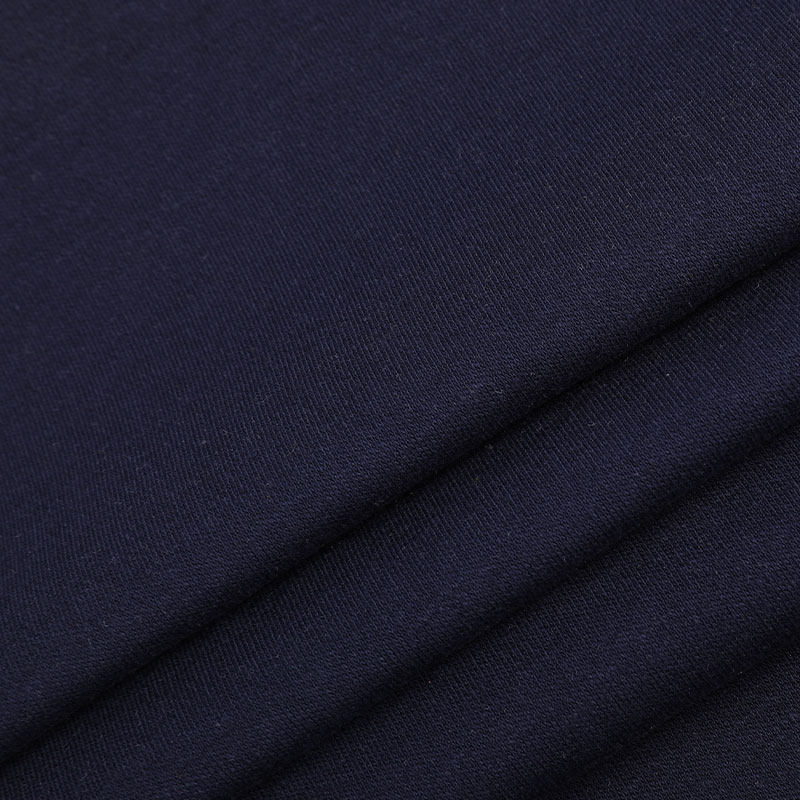 32s CVC Interlock FabricComing From China, Marketing To The World.View Product →
4. Cotton with Cellulosic Fibres
This family covers cotton modal, cotton bamboo and cotton Tencel blends, such as 40s C-M single jersey, 30s Tencel BCI cotton mercerized jersey and 32s bamboo cotton single jersey.
- Best for: soft-touch tops, sleepwear, premium basics, draping dresses
- Strengths: softer hand, cleaner drape, strong moisture management, good color depth
- Risks: fibrillation during wet processing, lower wet strength, shrinkage that behaves differently from pure cotton
- Verification: blend ratio per colour, enzyme treatment record, dimensional stability report
5. Cotton with Linen or Wool
Examples include 21s cotton linen single jersey and 40s modal wool 20D spandex single jersey. These are smaller-volume fabrics with a strong seasonal story.
- Best for: summer shirts, textured knit tops, lightweight thermal layers
- Strengths: visible surface character, temperature regulation, a natural-fibre story that photographs well
- Risks: high raw material price volatility, an uneven surface that some buyers misread as a defect, tighter blend tolerances
- Verification: fibre analysis, yarn lot records, shrinkage and appearance retention testing
What Each Added Fibre Actually Changes
Blend decisions are usually made for one of four reasons: cost, comfort, durability or a functional claim. The table below maps the common partner fibres to what they change on the production floor and in the finished garment.
| Added fibre | Typical share | Main effect | What to watch |
|---|---|---|---|
| Elastane, 20D to 40D | 3% to 8% | Stretch, recovery, shape retention | Heat sensitivity, setting window, edge curl |
| Polyester, DTY or FDY | 30% to 45% | Dimensional stability, quick drying, cost control | Pilling, drier hand, dye shade differences |
| Modal | 30% to 50% | Softer hand, better drape, reduced pilling | Shrinkage behavior, wet strength |
| Tencel | 30% to 50% | Moisture management, luster, cool touch | Fibrillation, need for controlled finishing |
| Linen | 30% to 55% | Texture, airflow, fast moisture release | Creasing, yarn irregularity, price swings |
| Bamboo | 30% to 50% | Smooth hand, absorption, soft drape | Confirm the exact fibre route and the real ratio |
| Wool | 10% to 30% | Warmth, resilience, natural elasticity | Felting, wash care limits, cost per kilogram |
Reading a Real Specification Line, Word by Word
Take one line that appears on many factory spec sheets: 32s CVC 40D fullplated 1x1 spandex rib knit.
- 32s is the yarn count, expressed in English cotton count. Higher numbers mean finer yarn. A 40s yarn is finer than a 21s yarn and usually costs more per kilogram.
- CVC says cotton is the dominant fibre but not the only one, most often 60/40 with polyester.
- 40D is 40 denier elastane, a fine stretch yarn.
- Fullplated means the elastane is knitted together with the cotton across the full width, so the fabric stretches in both directions and the technical face shows a slight sheen.
- 1x1 describes one knit stitch alternating with one purl stitch, the classic rib structure.
- Rib knit confirms the structure family rather than the fibre family.
The verdict on that line is simple: it is a cotton-dominant blend, not 100% cotton. Now compare it with a line such as 40s JC BCI imported yarn 30D mercerized interlock fabric. Here the yarn is combed cotton with a traceable sourcing programme, and mercerizing is a caustic treatment that improves luster, strength and dye uptake without adding any other fibre. The 30D still means elastane, so this fabric is cotton plus stretch. Only when every decitex figure and every second fibre name disappears does the answer become "yes".
A second check is structural. If the buyer only needs comfort and airflow, a 100% cotton single jersey at 21s or 32s is the natural answer. If the garment needs to keep its shape at the neckline and cuffs, a fullplated spandex rib is doing a job that pure cotton cannot do. Understanding why a blend exists is often faster than arguing about whether the blend is acceptable. For a side-by-side comparison of how knitted and woven constructions behave, this note on the difference between cotton knit and woven fabric is a useful reference point.
How to Prove a Cotton Knit Is Genuinely 100% Cotton
Verification is a document exercise, not a hand-feel exercise. The following evidence should be requested before bulk, not after.
- Quantitative fibre analysis. A laboratory test that dissolves or separates each fibre type and reports the percentage. It is the only objective proof of composition.
- Composition declaration on the order confirmation. The declared ratio should match the test report and the final garment label within the tolerances stated by the applicable labeling rules.
- Yarn purchase records. Combed cotton counts such as 21s, 32s, 40s or 50s appear in the mill's yarn intake records, which support the claim that no polyester was blended in.
- Programme certificates where relevant. Traceable cotton programmes issue transaction certificates per shipment. They prove sourcing, not composition, so they complement a fibre test rather than replacing it.
- Pre-shipment testing per colour. A blend ratio that drifts between dye lots is a real risk, especially with recycled or cellulosic partner fibres, so each colour should be verified.
A practical sequence for a first order is: approve the lab dip, run a bulk swatch, test the swatch, then release the bulk. Skipping the swatch test and testing only the final garment moves the discovery to a point where rework is nearly impossible.
Shrinkage, Weight and Color Fastness: Where Pure Cotton Surprises Buyers
Pure cotton behaves differently from a blend, and most claims originate there. Unfinished cotton single jersey can shrink considerably during the first home wash. A typical range is 5% to 8% in the length direction when the fabric has not been pre-shrunk, and 3% to 5% when it has been compacted or pre-shrunk in finishing.
Weight is the second variable. Fabric weight is usually quoted in grams per square meter, and the same structure name can cover a wide band. A 21s cotton single jersey and a 40s cotton single jersey are both single jersey, yet they sit at very different weights and price points. Quoting "cotton jersey" without a weight target is one of the most common reasons a first sample looks wrong to a buyer.
Color fastness is the third. Reactive-dyed cotton generally performs well in washing and rubbing, but blends with elastane or cellulosic fibres can behave differently because the dye classes and process conditions are not identical. If the garment will be washed with other cotton items at high temperature, that detail belongs in the test protocol, not in a footnote.
Choosing Between Pure Cotton and a Blend by End Use
The right question is rarely "which is better". It is "which composition does this garment need to survive its own use case".
| End use | Sensible starting composition | Why it fits |
|---|---|---|
| Everyday t-shirts | 21s to 32s 100% combed cotton single jersey | Balances cost, breathability and tactile comfort |
| Neck rib and cuffs | 32s CVC or cotton with 40D fullplated spandex rib | Holds shape after repeated wearing and washing |
| Active tops | 40s cotton 30D spandex jersey or functional birdseye mesh | Stretch plus moisture movement during activity |
| Babywear basics | 100% combed cotton interlock or bamboo cotton jersey | Simple composition, soft surface, easy labeling |
| Sleepwear and loungewear | 40s cotton modal single jersey | Drape and softness matter more than abrasion resistance |
| Summer shirts | 30s cotton linen single jersey | Texture and airflow with a natural fibre story |
| Light thermal layers | 40s modal wool 20D spandex single jersey | Warmth in a thin, stretchable construction |
At a Glance: How Much Cotton Is Really in Common Cotton Knits
The bars below show the cotton share in five fabrics that all trade under the cotton knit name. The differences are not marginal once a buyer is writing a fibre-content claim.
Two of these fabrics would pass a 100% cotton label. Three would not, and two of those three are routinely described in the market as cotton knits without any qualification at all. That is the gap a written specification has to close.
Seven Questions to Put in Every Enquiry
- What is the exact fibre composition by percentage, and what tolerance applies to each colour?
- Which yarn count and yarn type are used, and is the cotton combed, carded or mercerized?
- Is there any elastane content, and if so what decitex and what structure, fullplated or laid-in?
- What is the fabric weight in grams per square meter, and what is the acceptable tolerance?
- What shrinkage result should be expected after three home launderings, and has the fabric been pre-shrunk?
- Which test reports will be provided with bulk, and at what point in production are they issued?
- Can the mill supply the same construction in a genuine 100% cotton version if the labelling requirement changes?
Question seven is the one buyers forget. A specification that is cotton-dominant today can often be re-engineered as a pure cotton fabric, but the weight, stretch and drape will shift, and the garment pattern may need adjustment. Knowing that in advance keeps a late-stage fibre claim from turning into a redevelopment project.
Frequently Asked Questions
Does cotton knit always mean 100% cotton?
No. Cotton knit means the fabric is knitted and cotton is the leading or named fibre. It can be 100% cotton, or it can be a blend with elastane, polyester, modal, Tencel, linen, bamboo or wool. Only the fibre composition on the specification and test report confirms the actual percentage.
Is CVC fabric 100% cotton?
No. CVC stands for chief value cotton, which means cotton is the majority fibre but not the only one. A 60/40 or 65/35 cotton to polyester ratio is typical. The name is a useful shorthand, not a composition claim.
If a fabric stretches, does that mean it contains polyester?
Not necessarily. Stretch usually comes from elastane, which is added at a small percentage, often between 3% and 8%. Polyester can also add bulk and durability, but the stretch itself is normally the elastane.
Can mercerized cotton still be 100% cotton?
Yes. Mercerizing is a finishing treatment using a caustic solution that improves luster, strength and dye uptake. It changes the appearance and performance of the cotton but does not add another fibre.
What does the number before the letter s mean, such as 21s or 40s?
It is the yarn count in English cotton count. A higher number means a finer yarn. A 40s yarn produces a lighter, smoother fabric than a 21s yarn, and it usually costs more per kilogram because it requires better fibre and more spinning work.
How can I check the composition before placing a bulk order?
Ask for a bulk swatch and commission a quantitative fibre analysis on it, per colour. Compare the result with the declared composition on the order confirmation. Testing the bulk swatch rather than the final garment keeps the discovery point early enough to fix.
Why do some pure cotton knits shrink more than blends?
Cotton fibres relax and swell during wet processing and washing, so an untreated cotton jersey can shrink by 5% to 8% in the length direction. Pre-shrinking or compacting during finishing brings that down, often to 3% to 5%. Polyester-rich blends shrink less because the synthetic component is dimensionally stable.
What weight should cotton knit fabric be for t-shirts?
Most everyday t-shirts sit between roughly 140 and 190 grams per square meter, with heavier weights used for structured or oversized styles. Weight must be agreed with the yarn count, because a 21s and a 40s single jersey sit at very different points on that scale.
Cotton knit is a starting point, not a certificate. The word describes a construction and a fibre family, and the actual percentage lives in the specification line, the yarn record and the laboratory report. Buyers who treat those three documents as the real answer stop losing time on disputes about names, and they free up the conversation for the parts that genuinely change a garment: weight, stretch, shrinkage and the hand feel a consumer will notice in the first three seconds. When a supplier can quote a pure cotton single jersey and a cotton-dominant stretch rib in the same breath, with the composition of each one written down, the question "does cotton knit mean 100% cotton" has already been answered before the sample even leaves the mill.