

 English
 中文简体
中文简体 +86-13967368270
Contact Us for more details
Want to know more? Message Us Right Now!
A sourcer opens a courier parcel and pulls out a swatch labeled cotton knit. The tech pack says 100% cotton. The lab report on the next page reads 94.6% cotton and 5.4% elastane. The color is right, the hand feel is right, and the order is still on hold because three words and one number do not agree with each other. ...
Cotton knit is a soft, stretchy fabric made by looping cotton yarns together rather than weaving them over and under. That single structural fact explains most of what buyers, designers, and product developers notice in the material: it stretches, it breathes, it drapes, and it can be engineered into very different we...
A Portuguese buyer sends a 40-metre sample request with one line attached: what is jersey knit cotton fabric, and can you knit it at 180 gsm? That single question usually hides three more. How much will it shrink after three home washes? How much will it stretch across the width? Will the tenth container match the lab...
Want to know more? Message Us Right Now!
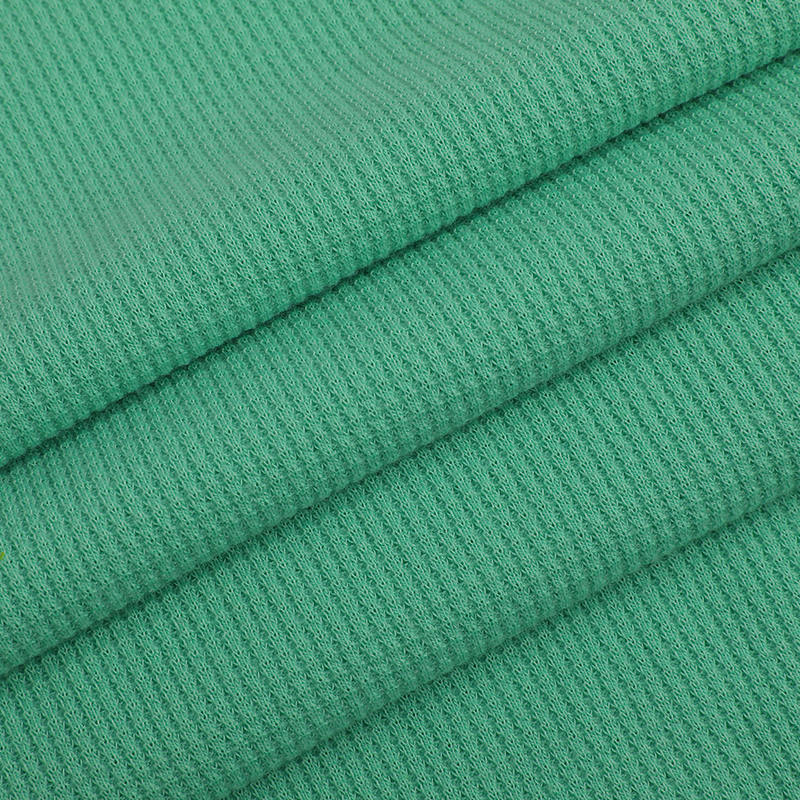
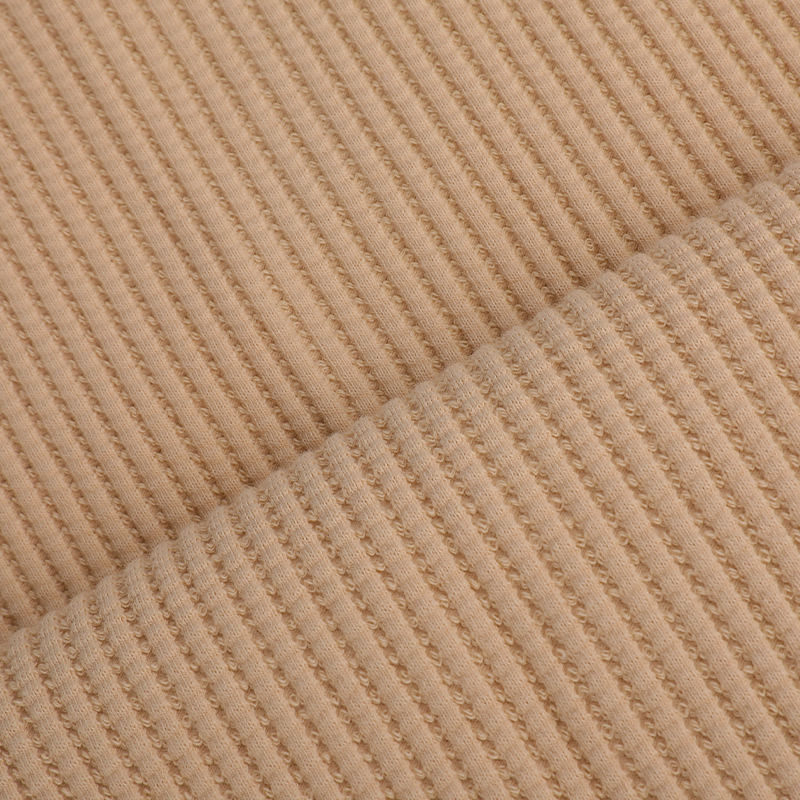
Waffle Knit is a knitted fabric characterized by a distinctive honeycomb-like textured structure. In modern textile manufacturing systems, it occupies an important niche segment. This type of fabric is formed through a specific knitting construction that creates a surface resembling a waffle grid, which is why it is commonly referred to as waffle knit or honeycomb knit fabric. Its structural characteristics provide strong performance in breathability, thermal insulation, elasticity recovery, and moisture absorption, making it widely applicable in apparel manufacturing, home textiles, and functional fabric development.
Within the global knitted fabric industry chain, the production of Waffle Knit typically involves coordinated efforts among suppliers, manufacturers, and factories. Each stage, from yarn selection and knitting production to finishing processes, relies on a mature supplier system and stable manufacturing capabilities. With increasing demand for both comfort and functionality, Waffle Knit has expanded from traditional apparel materials into high-end casual wear, sportswear, and base-layer garments, becoming a key development direction for many brands and manufacturing factories.
In China’s textile industrial cluster, particularly in the Yangtze River Delta region, Tongxiang Ruicheng Knitting Co., Ltd. serves as a representative knitting enterprise with continuous technical accumulation in Waffle Knit and related knitted structures. The company is located in Chongfu Town Industrial Zone, Tongxiang City, Zhejiang Province. This region is known for its strong reform and opening-up vitality and is one of the largest industrial and commercial towns in Tongxiang, with a relatively complete textile manufacturing and supply chain system.
Chongfu Town is situated in the central Hangjiahu Plain, with a superior geographical location. It is approximately 145 kilometers from Shanghai to the east, 110 kilometers from Suzhou to the north, and 45 kilometers from Hangzhou to the west. The transportation network integrates railways, highways, and waterways. The Shanghai-Hangzhou Expressway runs through the southern part of the town, only about 3 kilometers from the interchange. National Highway 320, Provincial Highway Hude, and the Beijing-Hangzhou Grand Canal collectively form an efficient logistics and raw material transportation system, making the region a highly concentrated industrial belt for knitting manufacturers and suppliers.
Against this industrial backdrop, the production of Waffle Knit is no longer limited to a single weaving process but has evolved into a systematic engineering chain. The collaboration among raw material suppliers, yarn manufacturers, fabric factories, and garment producers has become increasingly integrated. Manufacturers play a core transformation role, converting raw materials into structured functional fabrics through knitting equipment and process parameter control, while factories are responsible for large-scale production and stable quality control.
The structural essence of Waffle Knit lies in the alternating arrangement of tuck stitches and float stitches within the knitting construction, forming a three-dimensional textured surface. This structure creates an air layer at the micro level, giving the fabric natural thermal insulation and breathability. In actual production, manufacturers typically use circular knitting machines or double-knit jacquard equipment to produce Waffle Knit fabrics. By adjusting gauge, yarn tension, and structural settings, different thicknesses and densities can be achieved.
Within the supply chain system, yarn suppliers have a direct impact on final fabric performance. Common raw materials include cotton yarn, polyester yarn, viscose yarn, and functional blended yarns. Different combinations influence moisture absorption, elasticity, and abrasion resistance. During Waffle Knit production, manufacturers often customize yarn selection based on downstream requirements from apparel brands or factories to meet various application scenarios.
Knitting factories must maintain precise equipment management during production. Due to its structural nature, Waffle Knit requires high precision in knitting density and tension control. Even slight deviations may lead to uneven texture or unstable fabric weight. Therefore, mature factories are typically equipped with stable production lines and testing laboratories to evaluate metrics such as fabric weight, stretch recovery, and shrinkage performance.
Tongxiang Ruicheng Knitting Co., Ltd. continuously optimizes knitting stability and batch consistency through its production system and technical team. The company’s testing and R&D capabilities allow it to adjust processes according to different customer requirements, enabling adaptation to diverse end-use applications.
From an industry perspective, Waffle Knit production has evolved from standalone manufacturing into a system-based engineering model. The coordination among suppliers, manufacturers, and factories continues to deepen. Particularly with the growth of functional apparel demand, fabrics are expected not only to meet basic wearing requirements but also to provide comfort and environmental adaptability, placing higher demands on production systems.
Due to its structural advantages, Waffle Knit has established stable applications in both apparel and home textile sectors. In apparel applications, it is commonly used in casual sweatshirts, innerwear T-shirts, sportswear sets, and loungewear products. Its soft texture and air-layer structure allow it to perform well across different seasons. In home textiles, it is also used in towel fabrics, bathrobes, and partial structural designs in bedding products to enhance absorbency and comfort.
Within the industrial chain, suppliers are responsible for providing stable raw materials and yarn supply, ensuring manufacturers maintain continuous production capability. Manufacturers convert design requirements into knitting process parameters, while factories execute large-scale production. Factories also handle quality control, shipment inspection, and order delivery, making them a critical execution node in the entire chain.
In China’s knitting industry cluster, enterprises such as Tongxiang Ruicheng Knitting Co., Ltd. often function as both manufacturer and factory, enabling higher responsiveness within the supply chain. Located in Chongfu Town Industrial Zone, the company benefits from a well-developed textile support ecosystem, enabling efficient integration of raw material procurement, knitting production, and finished goods output.
With evolving market demand, Waffle Knit products are showing increasing diversification. Traditional cotton-based Waffle Knit still dominates the basic market, while functional blended structures are becoming an important direction in the premium segment. These include the addition of elastic fibers to improve stretchability or functional finishing treatments to enhance antibacterial and quick-dry properties. Such upgrades require deep collaboration between manufacturers and suppliers.
From a production equipment perspective, modern Waffle Knit factories widely adopt automated knitting systems combined with digital control platforms for real-time monitoring. Equipment stability directly affects fabric texture consistency, so factories invest heavily in maintenance and process optimization to ensure product quality stability.
In customer relationship management, Tongxiang Ruicheng Knitting Co., Ltd. emphasizes long-term cooperation with global clients. The company’s philosophy centers on customer satisfaction as a continuous pursuit, and the coexistence, mutual prosperity, and common development with customers as its core business principle. This approach is reflected not only in order cooperation but also in product development and process optimization, continuously adjusting production systems to meet market needs.
In international markets, demand for Waffle Knit varies by region. European and American markets place greater emphasis on functionality and design aesthetics, while Asian markets focus more on comfort and cost-effectiveness. Manufacturers and factories must adjust production strategies accordingly to ensure competitiveness across regions. This adaptation process relies heavily on coordination across the entire supply chain.
Finishing processes also play a critical role in Waffle Knit production. Through pre-shrinking, softening, and setting treatments, fabric handfeel and dimensional stability can be significantly improved. Factories often customize finishing processes based on customer requirements to meet the standards of different apparel brands.
As the global textile industry continues to evolve, Waffle Knit, as a structurally distinctive and functionally advantageous knitted fabric, continues to expand its industrial chain. From raw material suppliers to manufacturers and factories, each link contributes to improving product performance and application scope, while enterprises such as Tongxiang Ruicheng Knitting Co., Ltd. play an important role in integration and transformation.
Q1: What are the core structural characteristics of Waffle Knit fabric?
Waffle Knit is formed through a knitted structure that creates a honeycomb-like raised and recessed surface. This structure forms an air layer inside the fabric, improving warmth retention and breathability while enhancing moisture absorption and perspiration performance, making it suitable for various apparel applications.
Q2: What is the main role of manufacturers in Waffle Knit production?
Manufacturers are responsible for converting design requirements into production processes, including knitting structure design, yarn selection, equipment parameter adjustment, and production control, ensuring consistent quality across different batches.
Q3: What role do suppliers play in the Waffle Knit industrial chain?
Suppliers provide yarns and raw materials to ensure stable production support for manufacturers and factories. They also offer different functional yarn solutions based on market demand.
Q4: Why are factories important in Waffle Knit production?
Factories are responsible for large-scale production and quality control. Through equipment management and testing systems, they ensure stable fabric texture, consistent weight, and compliance with customer standards.
Q5: What is the positioning of Tongxiang Ruicheng Knitting Co., Ltd. in the industry?
Located in Chongfu Town Industrial Zone, Zhejiang Province, the company participates in Waffle Knit and knitted fabric production as both manufacturer and factory. It collaborates with global customers to promote product development and supply chain integration, guided by a customer-centric cooperation philosophy.
ALL RIGHTS RESERVED:Tongxiang Ruicheng Knitting Co., Ltd.
 Wholesale Waffle Knit Fabric Manufacturers

 CONTACT US