

 English
 中文简体
中文简体 +86-13967368270
Contact Us for more details
Want to know more? Message Us Right Now!
A sourcer opens a courier parcel and pulls out a swatch labeled cotton knit. The tech pack says 100% cotton. The lab report on the next page reads 94.6% cotton and 5.4% elastane. The color is right, the hand feel is right, and the order is still on hold because three words and one number do not agree with each other. ...
Cotton knit is a soft, stretchy fabric made by looping cotton yarns together rather than weaving them over and under. That single structural fact explains most of what buyers, designers, and product developers notice in the material: it stretches, it breathes, it drapes, and it can be engineered into very different we...
A Portuguese buyer sends a 40-metre sample request with one line attached: what is jersey knit cotton fabric, and can you knit it at 180 gsm? That single question usually hides three more. How much will it shrink after three home washes? How much will it stretch across the width? Will the tenth container match the lab...
Want to know more? Message Us Right Now!
The bamboo fibers used in bamboo rib knit fabrics are typically bamboo viscose—a type of regenerated cellulose fiber. While their molecular structure resembles that of cotton, they possess a lower degree of polymerization and lower crystallinity; consequently, their mechanical performance is characterized by softness but limited fatigue resistance. When these fibers are incorporated into a rib-knit structure, these fatigue characteristics are further amplified by the structure itself.
Rib-knit structures are characterized by alternating needle-bed knitting that creates vertical ridges (wales), resulting in exceptionally high lateral elasticity. Compared to single jersey fabrics, rib knits undergo significant loop opening and rearrangement during stretching. This subjects the yarn to frequent "stretch-recovery" stress cycles. Given that bamboo viscose features shorter internal microfibrillar structures and weaker inter-fiber hydrogen bonding, it is more susceptible to the accumulation of microscopic damage under repeated stress.
This process typically unfolds in three stages: the first is the normal elastic phase, where the fiber structure remains intact and recovery is excellent; the second is the fatigue accumulation phase, marked by the appearance of micro-cracks on the fiber surface and a slight decline in strength; the third is the structural degradation phase, where localized yarn breakage or increased fuzziness occurs, and the fabric's hand-feel becomes dry or harsh. These effects are particularly pronounced in high-frequency use or high-stretch applications, such as cuffs, hems, and form-fitting rib-knit garments.
However, it is important to emphasize that being "more prone to fatigue" does not render the material "unusable." In industrial practice, this issue can be significantly mitigated through systematic engineering. For instance, using high-twist yarns enhances inter-fiber cohesion, thereby improving overall fatigue resistance. Employing spandex core-spun yarns allows stress to be transferred to the elastic core, reducing the direct load on the bamboo fibers. Additionally, controlling the bamboo fiber ratio—such as by blending it with cotton, polyester, or modal—can effectively enhance the overall structural stability of the fabric. High-end knitting production systems often incorporate a heat-setting process, allowing the rib structure to undergo stress relief and dimensional stabilization at high temperatures, thereby minimizing fatigue accumulation during subsequent use. From an engineering perspective, therefore, the fatigue issue associated with bamboo rib knits is a matter of "material-structure synergistic control" rather than a defect inherent to the material alone.
"Relaxation widening" is a classic structural risk associated with rib-knit fabrics. Fundamentally, it involves the irreversible rearrangement of the loop structure under sustained transverse stretching or long-term wear stress, resulting in increased fabric width, reduced elasticity, and structural slackening.
In Bamboo Rib Knit Fabric, this phenomenon arises from the interplay of two key factors: first, the inherently high reversible deformation characteristic of the rib structure itself; and second, the limited elastic recovery and structural support provided by bamboo viscose fibers.
Structurally, rib constructions (such as 1x1 or 2x2 rib) rely on an "elastic framework" formed by alternating knit and purl stitches. Under transverse stretching, these loops shift from a vertical orientation to an inclined or even partially inverted position, enabling high extensibility. However, the trade-off is that, after prolonged stress, some loops fail to fully return to their original alignment, leading to "structural relaxation."
Bamboo viscose fibers possess relatively weak elastic recovery capabilities; their shorter molecular chains and lower crystallinity prevent them from providing robust restorative support. Under sustained external force, the fibers are more prone to "plastic deformation" rather than complete elastic recovery. Consequently, in applications involving high transverse stretching (such as fitted hems, waistbands, or cuffs), the fabric is more likely to exhibit the phenomenon of becoming progressively looser with wear.
Typical manifestations include increased fabric width, wider spacing between rib wales, reduced elasticity, and a compromised fit. This phenomenon is particularly pronounced in structures with low or no spandex content but is significantly mitigated in systems with high spandex content (5%–10%).
Industrial control strategies generally fall into three categories: first, increasing the spandex ratio and utilizing a core-spun yarn structure to shift the elastic recovery function from the bamboo fiber to the spandex core; second, employing heat setting to lock the loop structure at high temperatures, thereby minimizing the potential for subsequent relaxation; and third, increasing the knitting density (tight-gauge rib) to restrict the range of movement for the loops. Furthermore, pre-shrinking treatments applied during the finishing stage can effectively minimize structural changes during the initial period of use. Consequently, from an engineering perspective, this issue is classified as a challenge of "optimizing structural stability" rather than an unavoidable material defect.
The ribbed structure of bamboo rib knit fabric—characterized by distinct three-dimensional undulations (alternating raised wales and recessed courses)—does indeed exert a structural influence on uniform dye penetration and the final color appearance. This influence stems from two primary factors: uneven dye liquor flow caused by geometric structural differences, and variations in the dye uptake rate resulting from the high hygroscopicity of bamboo viscose fibers.
From a dyeing mechanism perspective, the fibers in the raised sections of the rib structure have a larger exposed surface area and make fuller contact with the dye liquor, resulting in a faster dye uptake rate; conversely, the recessed areas feature more tightly packed fibers and more complex flow paths for the dye liquor, leading to a relatively slower uptake rate. This "structurally induced variation in dye absorption" creates a subtle visual shading effect and, in some instances, can even result in a longitudinal "barré effect" (streaking). When combined with the high dye-absorbing nature of bamboo viscose fibers, these differences are further amplified, making dyeing uniformity a critical technical control point for ribbed fabrics.
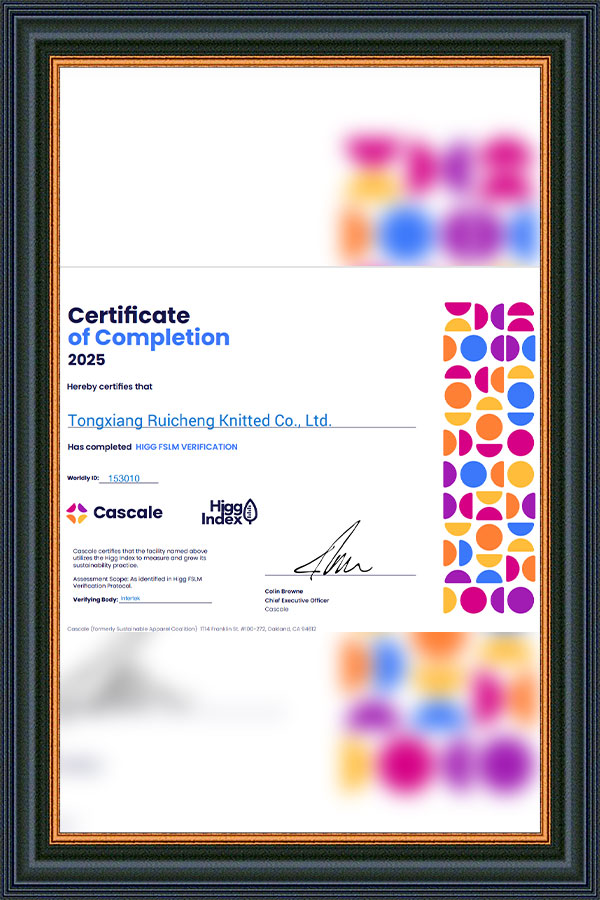
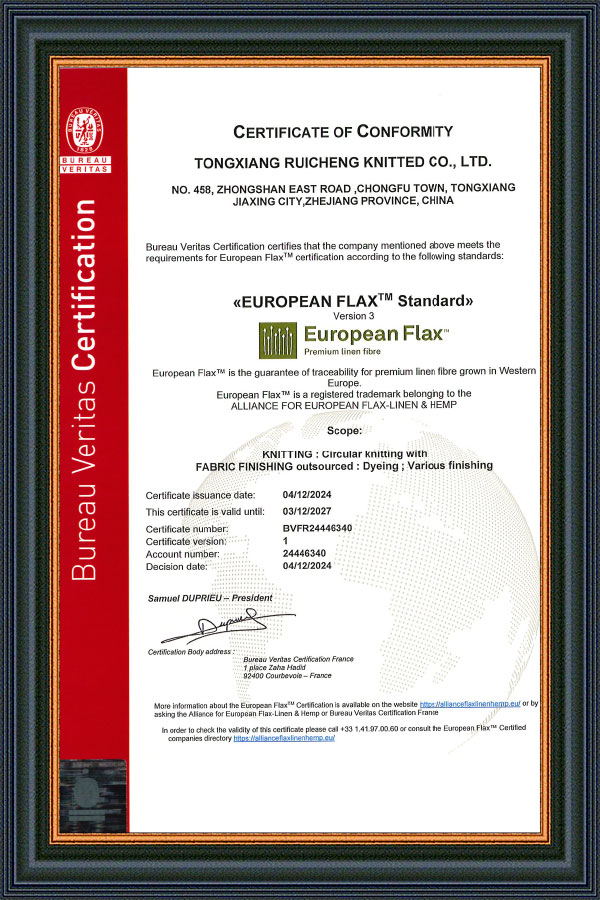
Against this technical backdrop, Tongxiang Ruicheng Knitting Co., Ltd. exemplifies a "systems engineering approach" to the stable production of such products.
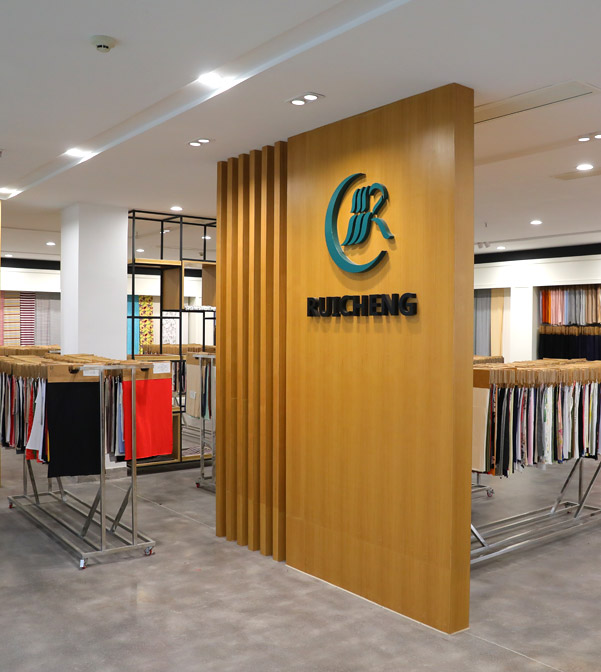
The company is located in the Industrial Zone of Chongfu Town, Tongxiang City, Zhejiang Province—an area situated within the core textile industrial cluster of the Yangtze River Delta. It enjoys a prime geographical location (145 km from Shanghai, 110 km from Suzhou, and 45 km from Hangzhou) and benefits from a multi-modal transportation network comprising the Shanghai-Hangzhou Expressway, National Highway 320, and the Beijing-Hangzhou Grand Canal. This infrastructure ensures exceptional logistics efficiency for raw material procurement, the supply of dyes and chemicals, and the delivery of finished goods. Such locational advantages are particularly crucial for knitting and dyeing operations that require frequent sampling, color adjustments, and multi-batch production, as ribbed bamboo fiber fabrics typically necessitate multiple rounds of color verification and process optimization. In terms of production capacity, Tongxiang Ruicheng Knitting Co., Ltd. operates a modern manufacturing system featuring over 50 large-diameter circular knitting machines and a workforce of more than 100 employees, generating an annual output value exceeding RMB 200 million. The company specializes in the development, design, production, and trade of knitted fabrics, offering a comprehensive product portfolio that includes single jersey, spandex jersey, interlock, rib, mesh, air layer, and jacquard fabrics. This extensive product range means the company can not only manufacture rib fabrics but also develop the corresponding structural configurations, thereby achieving superior control over structural stability during the knitting process.
Regarding Bamboo Rib Knit Fabric specifically, the strengths of Tongxiang Ruicheng Knitting Co., Ltd. are evident in several key areas of process control:
Control of Knitting Structure Stability
By precisely adjusting parameters such as gauge, stitch density, and yarn feed tension on large-diameter circular knitting machines, the company effectively mitigates uneven dyeing caused by excessive variations in the rib structure's relief (the difference between raised and recessed areas). A stable structure ensures more consistent dye penetration across different areas, thereby minimizing the risk of color variation at the source.
Yarn and Batch Consistency Management
As the company produces a wide range of fiber types—including 100% cotton, polyester-cotton blends, polyester, and functional blended materials—it possesses extensive experience in managing yarn batches. In the production of bamboo-spandex rib fabrics, strict control over the blend ratio of bamboo fiber to spandex and consistent yarn tension helps minimize batch-to-batch color discrepancies.
Collaborative Optimization Capabilities in Dyeing and Finishing
Leveraging years of experience in exporting knitted products (with markets spanning Europe, the US, and Southeast Asia), Tongxiang Ruicheng Knitting Co., Ltd. employs the following strategies for dyeing and finishing coordination:
These measures work in concert to ensure consistent color uniformity in the industrial production of Bamboo Rib Knit Fabric.
Product Development System Support
Beyond standard knitted fabrics, the company develops blends such as cotton-cashmere, cotton-wool, pure wool, and pure linen, as well as "memory" knit fabrics (based on PPT fiber systems, including waffle, mesh, and elastic plain weaves). This demonstrates expertise in dyeing and finishing across diverse fiber systems. Such experience is particularly crucial for bamboo fiber—a material characterized by high dye affinity and structural sensitivity—as it enables rapid adjustment of process parameters within complex dyeing systems.
In terms of material suitability, Bamboo Rib Knit Fabric is theoretically ideal for baby clothing and products worn against sensitive skin; however, its actual application must be grounded in strict adherence to safety standards, process controls, and appropriate functional design.
First, regarding fiber characteristics, bamboo viscose fibers are naturally soft and highly absorbent. Their smooth surface and fine fiber structure minimize friction against the skin, offering a distinct advantage in terms of skin-friendliness. For babies or individuals with sensitive skin, this low coefficient of friction helps reduce skin irritation, rashes, and discomfort. Additionally, the rib-knit structure offers excellent stretch, allowing the fabric to conform to body contours without exerting excessive pressure—making it highly suitable for the active movements typical of infants.
Second, moisture absorption and breathability are key advantages of this fabric for use in baby and children's products. Bamboo fibers rapidly absorb sweat and disperse moisture, thereby reducing localized heat and humidity, which helps lower the risk of diaper rash or heat rash. This performance characteristic is particularly important during summer or in warm climates.
However, there are specific risks associated with using this material for infants and children that require strict control. The primary concern is chemical safety; the production of bamboo viscose involves various processing aids and dyeing/finishing chemicals, posing a potential risk of residue if rigorous washing and standard controls are not applied. Consequently, the fabric must meet standards such as OEKO-TEX Standard 100 Class I (or equivalent infant-grade safety certifications), ensuring requirements like low formaldehyde levels, the absence of azo dyes, and no fluorescent whitening agents are met.
Another consideration is the use of spandex. While spandex enhances elasticity and structural stability, low-quality spandex may release trace chemicals when exposed to high temperatures or prolonged skin contact. Therefore, products for infants and children typically require high-grade (medical or skin-contact grade) spandex, with the usage ratio strictly controlled.
Furthermore, if the rib-knit structure is designed to be too tight, it may exert uncomfortable pressure on a baby's skin. Design efforts must therefore strike a balance between a snug fit and comfort, avoiding structures that are overly tight. In terms of application, the fabric is suitable for baby rompers, close-fitting undergarments, base layers for sensitive skin, and high-end loungewear for infants and children; however, it is not suitable for high-compression applications or enclosed, close-fitting systems worn for extended periods without changing.
ALL RIGHTS RESERVED:Tongxiang Ruicheng Knitting Co., Ltd.
 Wholesale Bamboo Rib Knit Fabric Manufacturers

 CONTACT US