

 English
 中文简体
中文简体 +86-13967368270
Contact Us for more details
Want to know more? Message Us Right Now!
A sourcer opens a courier parcel and pulls out a swatch labeled cotton knit. The tech pack says 100% cotton. The lab report on the next page reads 94.6% cotton and 5.4% elastane. The color is right, the hand feel is right, and the order is still on hold because three words and one number do not agree with each other. ...
Cotton knit is a soft, stretchy fabric made by looping cotton yarns together rather than weaving them over and under. That single structural fact explains most of what buyers, designers, and product developers notice in the material: it stretches, it breathes, it drapes, and it can be engineered into very different we...
A Portuguese buyer sends a 40-metre sample request with one line attached: what is jersey knit cotton fabric, and can you knit it at 180 gsm? That single question usually hides three more. How much will it shrink after three home washes? How much will it stretch across the width? Will the tenth container match the lab...
Want to know more? Message Us Right Now!
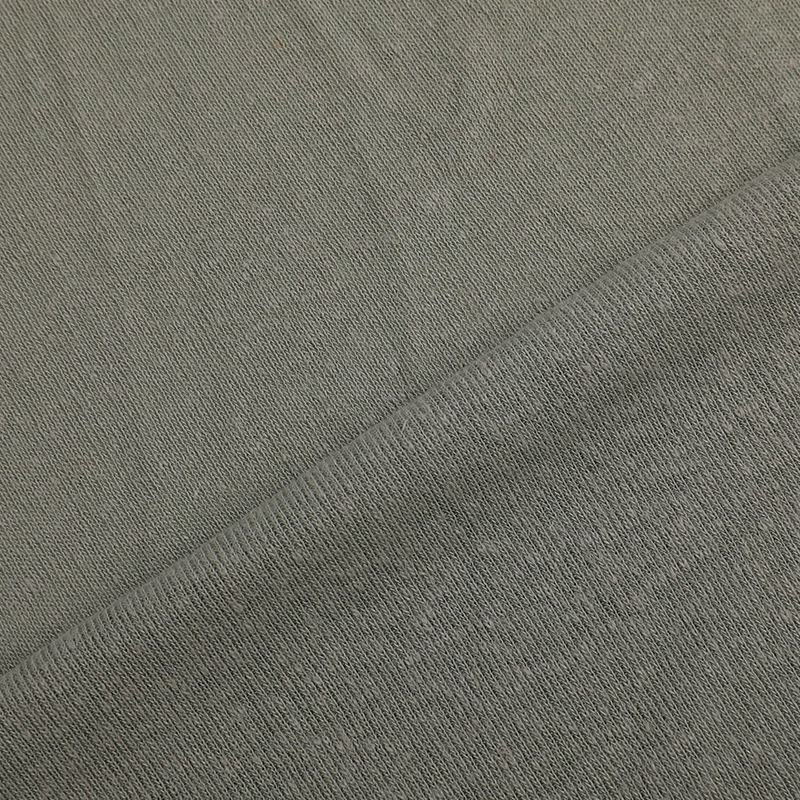
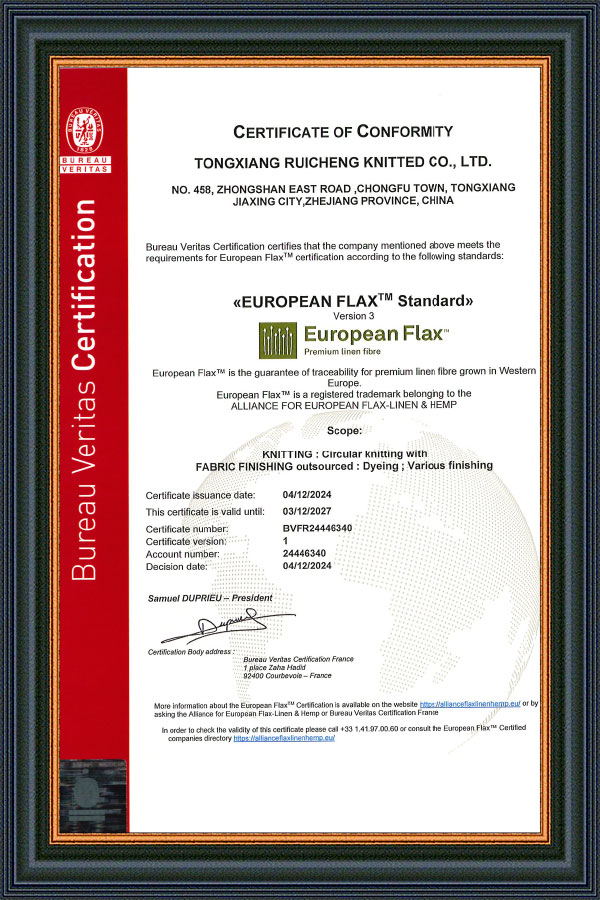
Linen Rib Knit has attracted continuous attention in the field of high-end knitted fabrics in recent years. With the natural breathability of linen fiber and the elasticity and fit provided by the rib structure, it is widely used in garment manufacturing, functional fabric development, and fashion design applications. This type of fabric not only emphasizes structural stability but also requires higher standards in yarn composition, weaving technology, and finishing processes. Therefore, in the entire industrial chain, the collaborative capability among suppliers, manufacturers, and factories becomes a key factor determining product quality and market adaptability.
In the knitting industry system, Linen Rib Knit is generally classified as a structural elastic knitted fabric. Its core feature lies in the rib structure that forms vertical textured ridges, allowing the fabric to maintain the dry and natural touch of linen while achieving good resilience. This structure makes it particularly outstanding in close-fitting garments and also suitable for clothing products that require high comfort and shape retention. With the increasing attention of the end market to natural fibers and environmentally friendly materials, Linen Rib Knit has shown a stable application trend in the overall knitted fabric system.
The basic composition of Linen Rib Knit comes from the combination of linen fibers and other fiber types, achieving performance balance through different yarn structures. Linen fiber itself has strong moisture absorption and breathability, but when used alone, it often lacks elasticity and may feel relatively stiff. Therefore, in modern knitting production, it is usually blended with cotton or elastic fibers to enhance wearing comfort.
During the weaving process, the rib structure forms elastic channels through interlaced needle bed arrangements, allowing the fabric to maintain good recovery ability under stretching conditions. This structure not only improves garment fit but also enhances stability after repeated stretching. In actual production, manufacturers must precisely control gauge, density, and yarn tension, as even minor deviations may affect the final texture and appearance consistency.
The production of Linen Rib Knit relies on factories equipped with advanced machinery to complete the full manufacturing process. From raw material entry into the production line, yarn pretreatment, weaving control, and finishing processes all require highly standardized operational systems. Suppliers provide stable-quality linen fibers and blended yarns at the raw material stage, while manufacturers optimize structural design and process parameters to ensure the final product meets diverse market requirements.
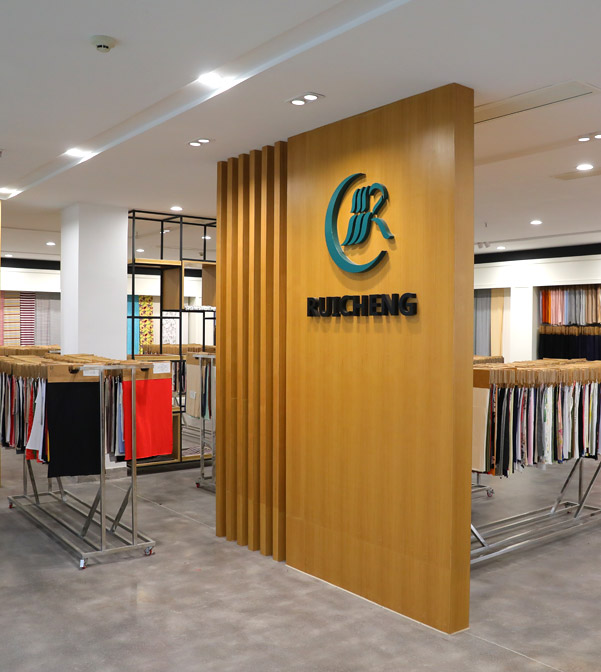
Tongxiang Ruicheng Knitting Co., Ltd. is a manufacturing enterprise specializing in knitted fabric R&D and production. In the Linen Rib Knit product system, the company has established a relatively complete technical pathway. Relying on its self-owned manufacturing plant equipped with advanced production equipment covering the entire production line, the company ensures that every stage from weaving to finishing operates under unified quality standards, improving overall product consistency and stability.
The industrial production of Linen Rib Knit depends not only on weaving technology but also on a complete quality control system and R&D capability. In modern knitting manufacturing systems, factories not only serve production functions but also act as important platforms for process validation and product optimization. Manufacturers continuously adjust processes to achieve a better balance among softness, elasticity retention, and dimensional stability.
In this process, the role of the R&D team is particularly important. A team with deep understanding of client needs can adjust Linen Rib Knit structures according to different application scenarios. For lightweight apparel applications, greater emphasis is placed on breathability and light texture, while for autumn and winter products, thermal performance and structural density are more important. This demand-driven development model strengthens the technical collaboration between suppliers and manufacturers.
Tongxiang Ruicheng Knitting Co., Ltd. has an independent R&D system. Through long-term production practice, its team has accumulated extensive experience in knitted structure design. With its self-owned factory advantages, the company can quickly transform R&D designs into actual products, shortening the cycle from development to mass production. In addition, the company’s three-coordinate laboratory provides precise dimensional and structural stability testing, ensuring consistency across different production batches.
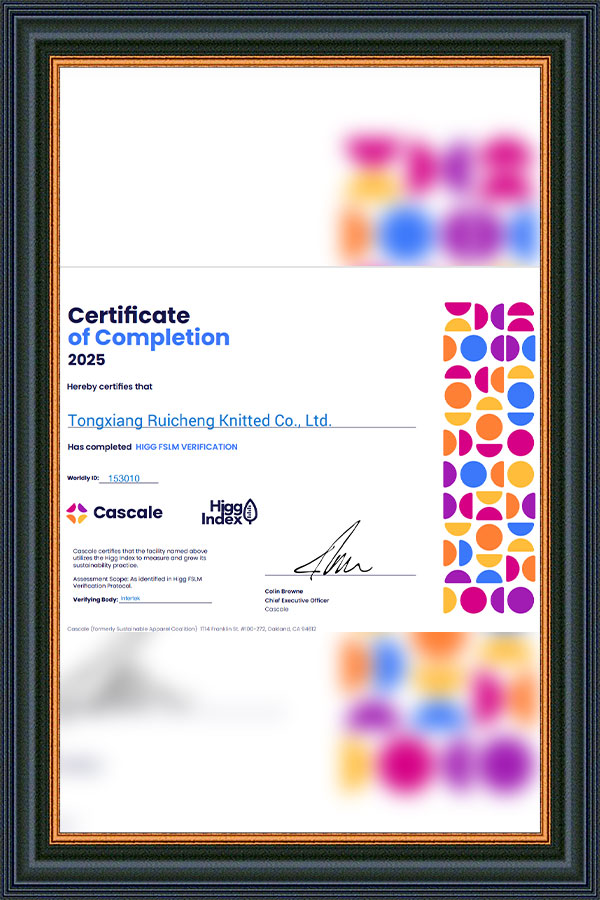
In terms of quality management, the ISO9001 system establishes a traceable quality control mechanism throughout the production process. From raw material procurement to finished product delivery, every step is managed under standardized procedures. This system supports not only large-scale production but also customized product requirements, enabling manufacturers to maintain strong adaptability in the global supply chain.
Within the supply chain structure, suppliers ensure raw material quality stability, manufacturers focus on process realization and product development, and factories serve as the core execution body for large-scale production and quality assurance. The collaboration among these roles determines the final market performance of Linen Rib Knit.
The expansion of Linen Rib Knit applications is driven by its high adaptability to various apparel categories. Due to the elasticity provided by the rib structure and the natural texture of linen fiber, this fabric is widely used in close-fitting garments, casual wear, and light functional clothing. During design and development, manufacturers adjust fabric weight, yarn combinations, and weaving density according to product positioning to meet different market requirements for comfort and appearance.
In the global supply chain system, collaboration between suppliers and manufacturers has a direct impact on market performance. A stable raw material supply system ensures production continuity, while advanced manufacturing processes determine final product quality. Factories, as execution units, must maintain process consistency in large-scale production, which requires high precision equipment and strong management systems.
Tongxiang Ruicheng Knitting Co., Ltd. integrates R&D, production, and testing resources to maintain stable output capability across multiple application directions. With a complete production line configuration, the company completes the entire process from yarn treatment to finished fabric finishing within its own system, effectively reducing quality fluctuations caused by external processing stages. Through continuous cooperation with international clients, the company optimizes product structures to meet differentiated global market demands.
In practical applications, Linen Rib Knit is not only a single fabric type but also a technical system that can be extended through different process paths. Manufacturers adjust weaving structures and finishing methods to maintain stable performance under different environmental conditions. This flexibility enables continuous application potential in the global knitted fabric market.
Within the entire industrial chain, the collaborative mechanism among suppliers, manufacturers, and factories enables Linen Rib Knit to maintain a balance between quality stability and market adaptability. This structure not only enhances industrial production capability but also supports continuous expansion in high-end apparel applications.
Q1: What are the main structural features of Linen Rib Knit?
It is based on a rib structure that forms vertical elasticity channels, providing good resilience while maintaining the natural breathability of linen fiber, achieving a balance between comfort and structural stability.
Q2: What requirements does this fabric place on manufacturers during production?
Manufacturers must have stable weaving equipment and mature process control capabilities, and adjust yarn composition and fabric density according to different product requirements to ensure consistent performance.
Q3: What role do suppliers play in the Linen Rib Knit industry chain?
Suppliers are responsible for providing stable-quality fiber and yarn materials. Their raw material quality directly affects fabric hand feel, strength, and overall performance, making them a fundamental part of the industrial chain.
Q4: How do factories ensure quality stability in mass production?
Through standardized production processes, precise equipment control, and an integrated quality inspection system, factories maintain consistency in structure and performance across different batches to meet large-scale order requirements.
ALL RIGHTS RESERVED:Tongxiang Ruicheng Knitting Co., Ltd.
 Wholesale Linen Rib Knit Fabric Manufacturers

 CONTACT US