English
 中文简体
中文简体Content
- 1 What Is 100% Cotton Knitted Fabric?
- 2 How Is 100% Cotton Knitted Fabric Made?
- 3 Common Types of 100% Cotton Knitted Fabric Structures
- 4 100% Cotton Knit vs. Cotton-Spandex vs. CVC Blends
- 5 Key Properties and Performance of 100% Cotton Knit
- 6 How to Choose and Verify Quality When Buying 100% Cotton Knitted Fabric
- 7 Conclusion
When a sourcing agent opens a fabric supplier's catalog and sees the words "cotton knit," the first question is almost always the same: is this fabric really 100% cotton, or does it contain hidden elastane or polyester? The question is fair, because in commercial reality many fabrics sold as "cotton knit" are blends. What is 100% cotton knitted fabric, exactly, and why does the distinction matter for your next order? This guide answers both questions and walks through manufacturing, common knit structures, performance limits, and the specifications to verify before bulk production.
What Is 100% Cotton Knitted Fabric?
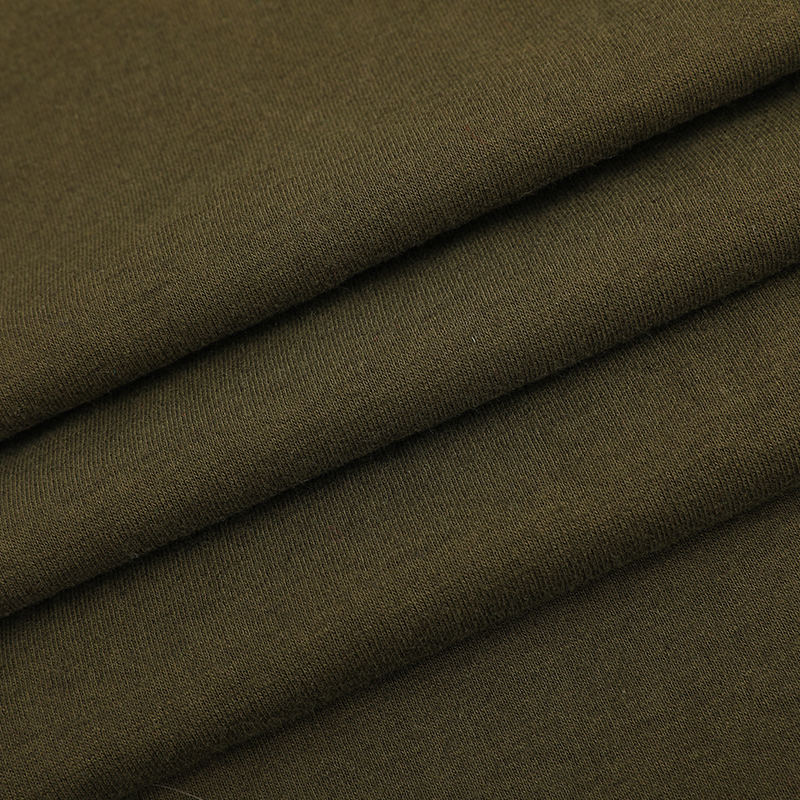
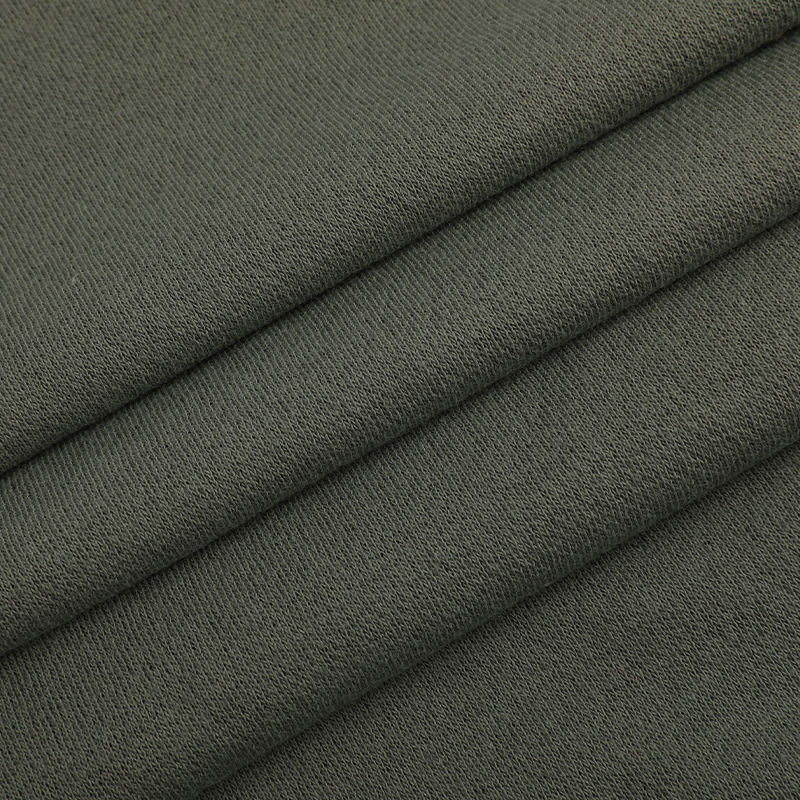
100% cotton knitted fabric is a textile made entirely from cotton yarns, with no other fiber content, and constructed by a knitting process that forms interlocking loops. Each loop is pulled through the loop before it, creating a chain-like network across the fabric. This loop structure is the fundamental difference from woven cotton: woven cloth crosses warp and weft threads at right angles, while knitted cloth is built from continuous yarns forming connected loops.
Because the loops flex and shift under tension, the fabric has built-in elasticity, but the stretch comes from the loop geometry, not from elastane. This point matters, because many garments labeled simply "cotton knit" actually contain spandex or polyester. When a supplier states "100% cotton knitted fabric," it is a precise purity claim, and verifying that claim is the first quality check any buyer should perform. For a broader introduction to knit structures, see our complete guide to jersey cotton knit fabric.
How Is 100% Cotton Knitted Fabric Made?
Four stages turn raw cotton into finished knitted cloth: spinning, knitting, dyeing or bleaching, and finishing.
- Spinning: cotton fibers are cleaned, carded, and twisted into continuous yarns.
- Knitting: yarns feed into circular knitting machines, where needles form the interlocking loops.
- Dyeing or bleaching: greige fabric is prepared and colored to reach the target shade.
- Finishing: compacting, brushing, or mercerization adjust shrinkage, hand feel, and luster.
Yarn count is the single most important specification for a buyer to understand. In the cotton industry, yarn thickness is expressed in the English cotton count (Ne): the higher the number, the finer the yarn. A 21s yarn is thick and sturdy, 32s is the mid-weight standard, 40s is fine and smooth, and 50s is ultra-fine with a silky touch.
| Yarn count (Ne) | Fabric character | Typical uses |
|---|---|---|
| 21s | Thicker, sturdy yarn with a casual hand feel | Heavyweight tees, sweatshirts, baby garments |
| 32s | Mid-weight standard used across most basic knits | Everyday t-shirts, underwear, base layers |
| 40s | Fine, smooth yarn with a softer drape | Lightweight tops, dresses, premium polo shirts |
| 50s | Ultra-fine yarn with a silky, luxury touch | High-end shirting, sleepwear, blouses |
Combed cotton, usually marked "JC" in product names, removes short fibers before spinning, producing a smoother, stronger yarn and a cleaner fabric surface. Carded-only cotton is less expensive but more prone to hairiness and pilling. For garments that will be laundered repeatedly, combed yarn is normally the safer choice.
Mercerization is another finishing treatment you will see in product descriptions. The yarn or fabric is treated under tension with caustic soda, which increases luster, improves dye uptake, and strengthens the fiber. A mercerized 40s cotton knit feels distinctly smoother and drapes better than the same fabric left untreated.
Raw material quality also shows up in product names. The initials "BCI" refer to Better Cotton Initiative cotton, a widely recognized sustainability program. For example, our 21s JC BCI imported yarn single jersey demonstrates how combed cotton yarn affects fabric quality, with the product name stating the yarn count, combing treatment, and cotton sourcing program in one line.
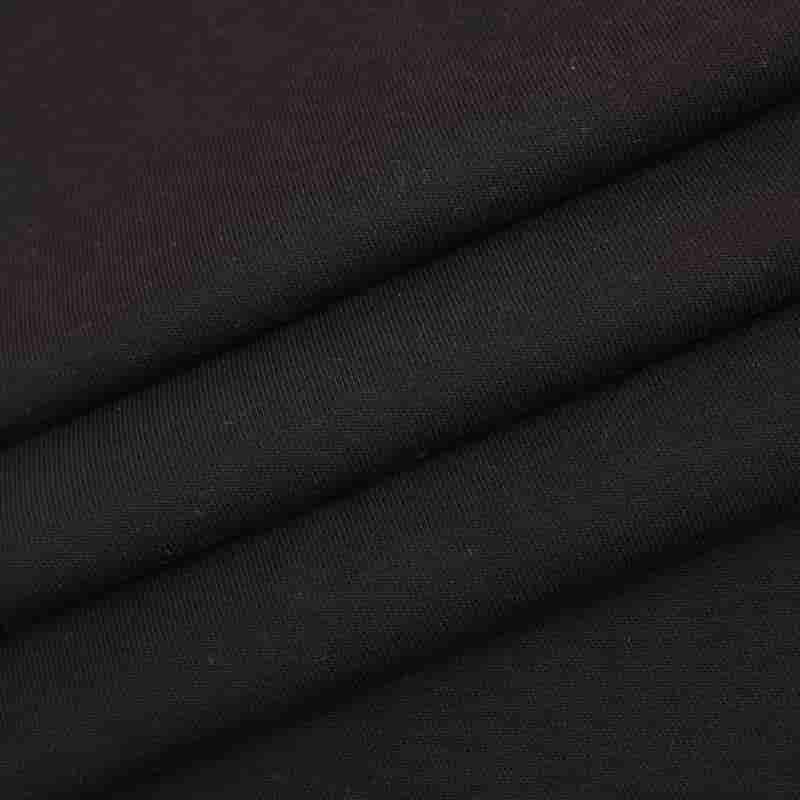 Custom 21s JC BCI Imported Yarn Single Jersey Fabric Suppliers, OEM/ODM Factory Tongxiang Ruicheng Knitting Co., Ltd. is China 21s JC BCI Imported Yarn Single Jersey Fabric Suppliers and OEM Factory, details:This prod...View Product →
Common Types of 100% Cotton Knitted Fabric Structures
100% cotton knitted fabric is not a single material but a family of structures. Different needle arrangements create different loop geometries, and each geometry behaves differently in stretch, thickness, breathability, and durability. Browse our complete cotton knit fabric collection to see these structures in production.
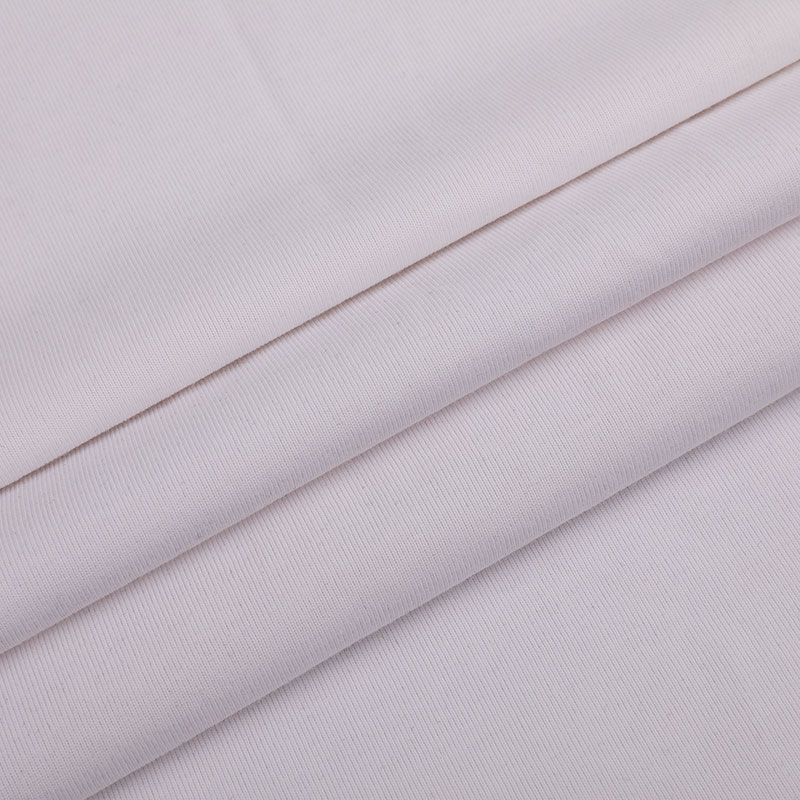 Custom Cotton Knit Fabrics Manufacturers, SuppliersTongxiang Ruicheng Knitted Co., Ltd. is China Cotton Knit Fabrics Manufacturers and Suppliers, offer Custom Cotton Knit Fabrics soft, bre...View Product →
Single Jersey
Single jersey is the most common and most economical knit construction. The face shows fine vertical V-shaped stitches, while the reverse shows horizontal loops. It is soft and drapes well, making it the default choice for everyday t-shirts, underwear, sleepwear, and casual dresses.
Typical weights run from 120 to 220 gsm. Two characteristics need attention in garment production: single jersey curls at cut edges, and it can ladder if a loop is broken. Both are manageable with proper cutting, stitching, and edge finishing. Our single jersey range covers 21s, 32s, and 40s yarn counts.
Cotton Rib Knit
Rib knit alternates face loops and reverse loops in each course, creating vertical ridges on both sides of the cloth. This arrangement gives rib outstanding transverse stretch and recovery, which is why it is used for collars, cuffs, and waistbands. Unlike single jersey, rib does not curl at the edges, so it also works well for close-fitting garments.
The most common configurations are 1x1 and 2x2 rib. A key point for buyers: pure cotton rib gets its elasticity from the loop structure itself, with no elastane required. Our 28s JC 1x1 rib knit shows how pure cotton achieves elasticity without elastane.
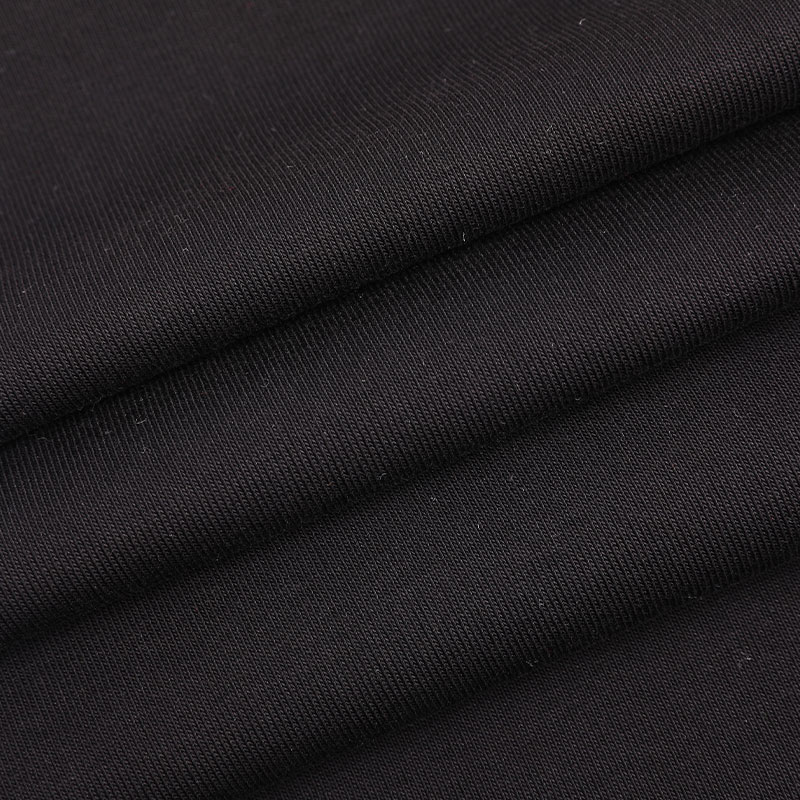 Custom 28s JC 1x1 Rib Knit Fabric Suppliers, OEM/ODM Factory - Tongxiang RuichenTongxiang Ruicheng Knitting Co., Ltd. is China 28s JC 1x1 Rib Knit Fabric Suppliers and OEM Factory, details:1*1 ribbing is composed of a...View Product →
Cotton Pique Knit
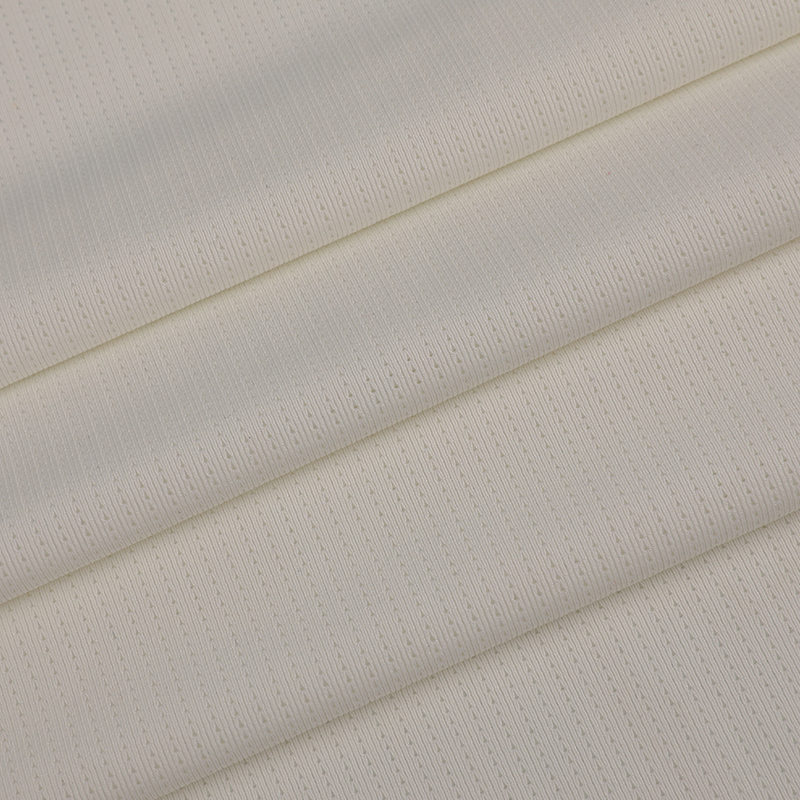
Pique is built with tuck stitches that create a honeycomb-like or grid-like texture on the face. The textured surface reduces contact with the skin, so pique feels cooler and less clingy in warm weather, while the tuck structure adds body. Classic applications are polo shirts, golf tops, and casual sports shirts, typically in the 180 to 240 gsm range. Our pique line includes 32s and 40s pique mesh fabrics, which add a fine mesh reverse for extra breathability.
Cotton Terry Knit
Terry is a loop-pile structure: the knitted ground carries uncut loops on one or both faces. The loops trap air, giving terry far better insulation than flat knits, and they add absorbency. Brushed or sheared loops become fleece, the standard material for hoodies, joggers, and casual jackets. Typical weights range from 220 to 400 gsm. Because of its softness and water absorption, terry is also widely used for bathrobes and baby products. Our terry assortment includes mini terry, two-thread, and three-thread fleece constructions.
Cotton Interlock Knit and Air Layer Fabric
Interlock is effectively two layers of single jersey knitted together so that the two faces lock. The result is a stable, double-faced fabric with the same appearance on both sides, no edge curling, and better shape retention than single jersey of similar weight. It is a common choice for high-quality polo shirts and garments that need a clean, structured look.
Air layer fabric goes a step further, creating a hollow internal structure whose trapped air adds warmth and cushioning while the outer surfaces stay smooth. This structure suits autumn and winter jackets, skirts, and dresses that need volume and shape rather than cling.
100% Cotton Knit vs. Cotton-Spandex vs. CVC Blends
Once you understand pure cotton, the practical question becomes when to use it and when a blend is objectively better. Many suppliers offer all three options, and the right answer depends on the garment.
| Attribute | 100% cotton | Cotton-spandex (roughly 90-95% cotton) | CVC (cotton-polyester, cotton usually above 50%) |
|---|---|---|---|
| Elasticity | Moderate, from loop structure | High, from spandex | Moderate |
| Elastic recovery | Low to moderate | Good | Moderate |
| Moisture absorption and breathability | Excellent | Good | Reduced |
| Wrinkle resistance | Low | Moderate | Good |
| Dimensional stability | Moderate; needs finishing control | Good | Good |
| Hand feel | Soft, natural | Soft with stretch | Less soft, slightly synthetic |
| Typical uses | T-shirts, underwear, babywear, dresses | Fitted sportswear, leggings, shapewear | Uniforms, workwear, everyday tees |
Choosing between 100% cotton knitted fabric and these blends is a specification decision, not a quality judgment. A basic t-shirt, a baby onesie, or a summer dress benefits from pure cotton's absorbency, softness, and skin compatibility. Fitted garments such as leggings and activewear need the recovery that spandex provides, and a cotton-spandex jersey keeps most of the natural hand feel while adding elastic performance. CVC blends trade some softness and moisture absorbency for wrinkle resistance, faster drying, and shape retention, which is often desirable in uniforms and travel apparel. Our catalog includes a 40s JC spandex single jersey with 30D elastic yarn as an example of how a small amount of spandex improves recovery without removing the cotton character. For many basic products, 100% cotton knit is the sensible default; blends are worth choosing only when the garment demands their specific performance.
Key Properties and Performance of 100% Cotton Knit
Knowing the material's real strengths and limits helps you set accurate expectations with your customers and avoid field failures.
- Moisture absorbency: cotton attracts and holds water, so the fabric absorbs perspiration and stays comfortable against the skin.
- Breathability: air moves easily through the loop structure, reducing heat buildup in warm conditions.
- Skin compatibility: cotton is naturally low-irritation and remains a standard choice for babies and people with sensitive skin.
- Renewable and biodegradable: as a plant fiber, cotton comes from a renewable source and decomposes far faster than synthetics.
- Durability when combed: combed or long-staple cotton yarns produce smoother, stronger surfaces that resist pilling.
Fiber length is the hidden variable in quality. Longer staple fibers twist into smoother, stronger yarns, which is why the same 40s single jersey from two suppliers can feel completely different. Product names that specify combed cotton or long-staple cotton are practical quality indicators.
The limitations matter just as much in product development:
- Elastic recovery is limited: pure cotton knits can stretch out permanently at cuffs, necklines, and knees.
- Wrinkling: cotton creases easily during washing and wear.
- Shrinkage: without controlled finishing, pure cotton knits can shrink noticeably; always confirm shrinkage limits before production.
- Wet strength: cotton is weaker when wet, so dyeing and washing processes must be handled carefully.
How to Choose and Verify Quality When Buying 100% Cotton Knitted Fabric
A reliable purchasing process starts with a specification sheet. The minimum set of parameters to confirm with any supplier:
- Yarn count and combing: confirm the Ne value (for example, 21s, 32s, or 40s) and whether the yarn is combed (JC).
- Fabric weight: specify grams per square meter (gsm) to match the garment type and season.
- Finished width: circular knits are sold in tubular or open-width form; confirm the finished width so your cutting plan works.
- Shrinkage: request washed-test results and agree on the maximum shrinkage rate in both directions before bulk production.
- Colorfastness: specify the required fastness to washing, perspiration, rubbing, and light according to your end use.
- Chemical safety: for garments worn against the skin, confirm pH and formaldehyde limits, with stricter requirements for infant wear.
- Fiber composition: ask for a test report that confirms the 100% cotton claim on paper.
After the paperwork, do physical checks. Wash sample swatches yourself: measure shrinkage, feel the surface, test stretch and recovery with your own hands. A data sheet cannot tell you how a fabric will behave on a sewing line.
Finally, evaluate the supplier rather than just the sample. A factory that actually produces knit fabric can adjust yarn count, machine gauge, and finishing to hit your target; a trader can only resell what exists. Product range is also informative: a supplier offering jersey, rib, pique, terry, interlock, and air layer demonstrates the technical breadth needed to discuss your requirements seriously.
Conclusion
The short answer to what 100% cotton knitted fabric is: a loop-structured textile made entirely from cotton yarns, valued for its absorbency, breathability, and skin comfort, and bounded by clear limits in elastic recovery and easy care. The quality you actually receive depends on four verifiable decisions: fiber purity, yarn count and combing, knitting structure, and finishing control.
Apply that framework in your next sourcing round. Define your garment type, choose the structure that matches its function, decide honestly between pure cotton, cotton-spandex, and CVC, and put the key specifications on paper before you contact suppliers. If you want to compare options directly, our cotton knit fabric collection lists each structure with its specification written into the product name, making it easy to start the conversation with a clear brief.