English
 中文简体
中文简体Content
- 1 Polyester Knit Fabric: Structure, Composition and Manufacturing Insights for Product Development
- 1.1 What Is Polyester Knit Fabric?
- 1.2 Is Knitted Fabric Polyester By Definition?
- 1.3 Is Polyester a Knit or Woven Fabric?
- 1.4 Knit Construction Versus Woven Construction: Side-by-Side Parameters
- 1.5 Polyester Double Knit Fabric and Its Sub-Structures
- 1.6 Ponte Roma
- 1.7 Interlock
- 1.8 Double Pique
- 1.9 What Are The 10 Knit Fabrics Used Across Product Categories?
- 1.10 Where Polyester Knit Fabric Is Actually Used
- 1.11 Apparel and Activewear
- 1.12 Home Textiles
- 1.13 Automotive Interior Panels
- 1.14 Medical and Compression Products
- 1.15 Bag Linings and Luggage
- 1.16 Outdoor and Protective Gear
- 1.17 Is 100% Polyester Knitted Fabric Good? Performance Checklist
- 1.18 Why Are People Avoiding Polyester? Addressing the Concerns Directly
- 1.19 Microfiber Shedding During Washing
- 1.20 Heat Retention and Breathability
- 1.21 Static Buildup
- 1.22 Raw Material Origin
- 1.23 Care and Handling Reference
- 1.24 Reading a Knit Fabric Specification Sheet Before Ordering
Polyester Knit Fabric: Structure, Composition and Manufacturing Insights for Product Development
Selecting the right polyester knit fabric for a production run involves far more than checking a fiber content label. Knit density, loop formation, yarn count, finishing treatment and end-use environment all interact to determine how a roll of fabric will actually perform once it leaves the cutting table. This section walks through the technical and practical questions that come up most often during fabric sourcing and product planning, from basic construction differences to testing parameters used on the production floor.
What Is Polyester Knit Fabric?
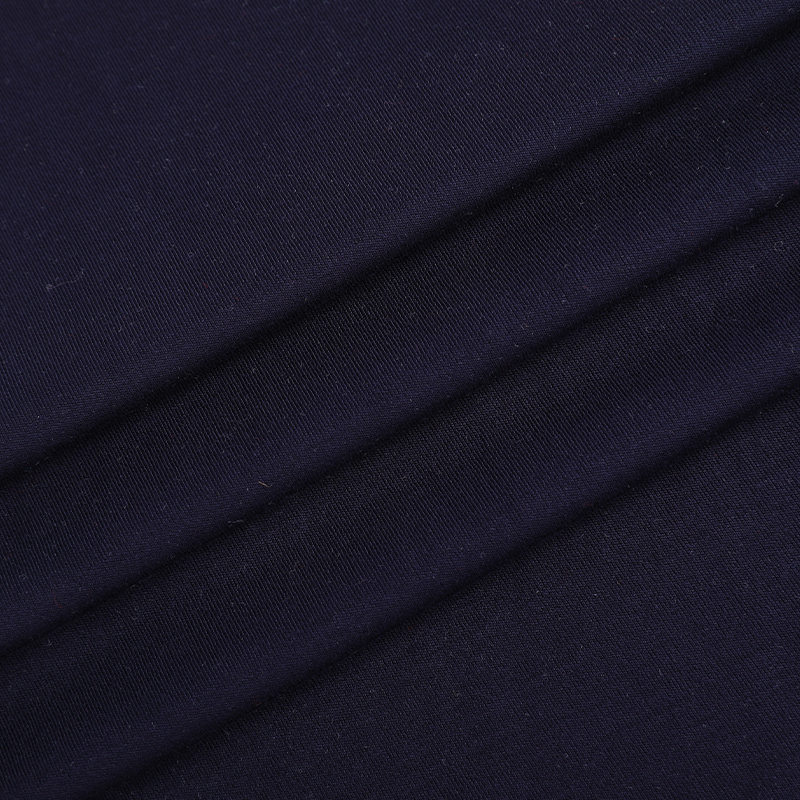
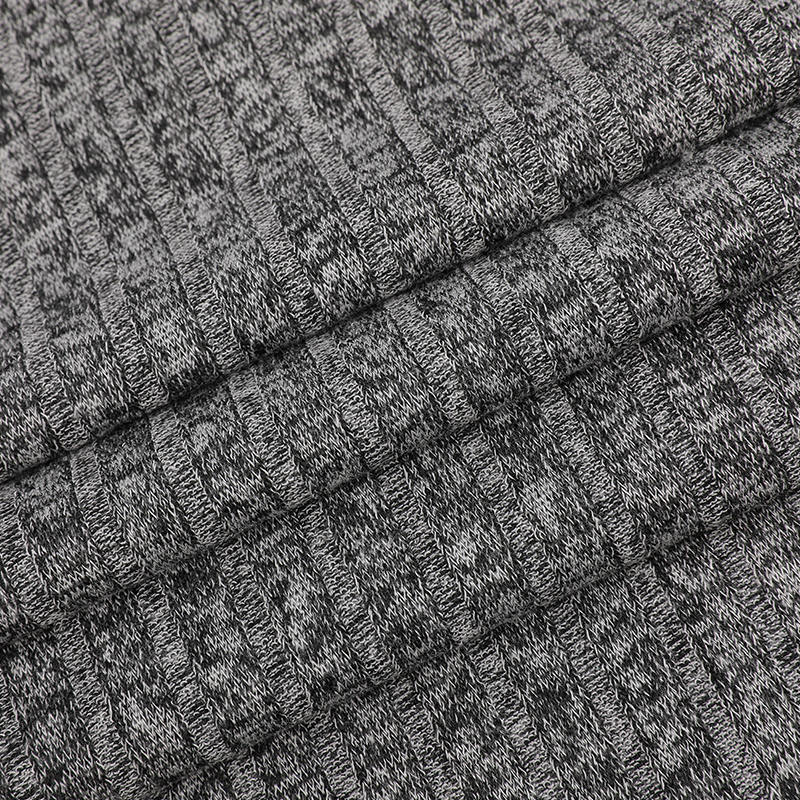
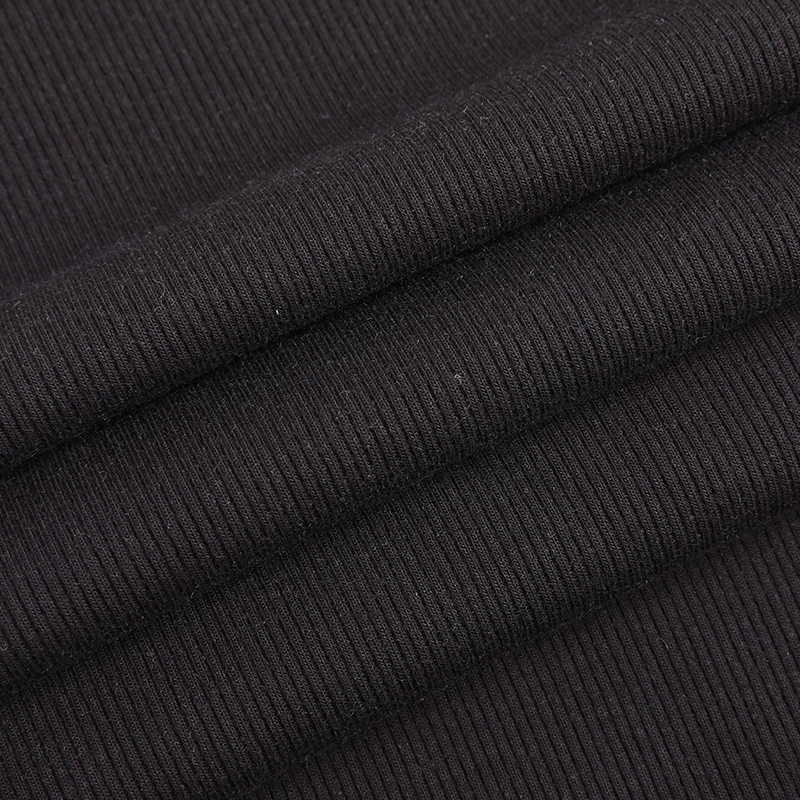
What is polyester knit fabric in practical terms comes down to a single mechanical process: continuous polyester yarn is looped and interlocked by knitting needles rather than woven over and under a second yarn set. Knitted fabric polyester relies on rows of interlocking loops that give the material its stretch, drape and recovery. Whether the yarn is textured, flat, or a blend with spandex, the loop-based structure is what separates a knit from a woven good.
Is Knitted Fabric Polyester By Definition?
Is knitted fabric polyester as a rule — not always. Knitting is a construction method that can be applied to cotton, nylon, viscose, wool or blended yarns. Polyester happens to be one of the most common fibers used in knit production because of its dimensional stability and low moisture regain, but knitted fabric material polyester is only one branch of a much larger knitting category.
Is Polyester a Knit or Woven Fabric?
Is polyester a knit or woven fabric depends entirely on how the yarn is processed downstream. The same polyester filament can be sent to a warp knitting machine, a weft knitting machine, or a shuttle loom. Is polyester a knit fabric or a woven one is not a question fiber chemistry can answer — it is a question of machine setup and fabric architecture chosen at the mill.
Knit Construction Versus Woven Construction: Side-by-Side Parameters
Buyers who are new to fabric sourcing frequently ask what is knitted polyester fabric supposed to feel and perform like compared with a woven alternative made from the same fiber. The table below lines up the two constructions across the parameters that matter most when writing a fabric specification sheet.
| Parameter | Polyester Knit Fabric | Polyester Woven Fabric |
|---|---|---|
| Loop / interlacement type | Interlocking loops, courses and wales | Perpendicular warp and weft yarns |
| Stretch and recovery | 30% to over 100% depending on structure | Typically under 15% without added elastane |
| Edge behavior | Can curl at cut edges, needs binding or interlock | Stable edge, minimal curling |
| Air permeability | Higher, due to open loop structure | Lower, tighter yarn packing |
| Typical weight range | 120 gsm to 350 gsm | 80 gsm to 280 gsm |
| Wrinkle recovery | Naturally springs back due to loop elasticity | Often needs a resin finish for wrinkle resistance |
| Common cutting approach | Requires stretch-friendly needles and lower tension | Standard cutting and sewing equipment |
Polyester Double Knit Fabric and Its Sub-Structures
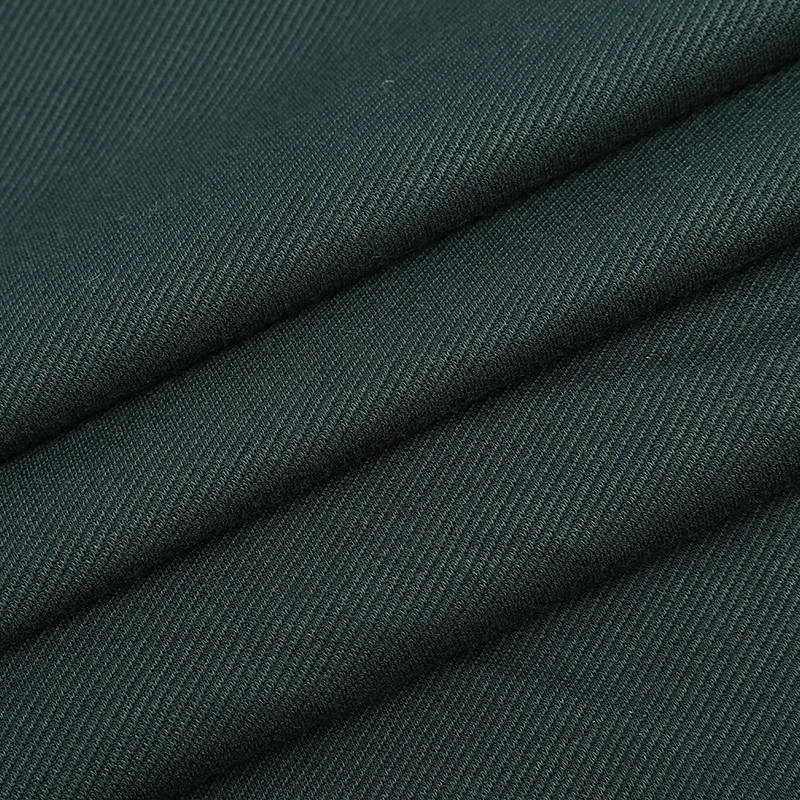
Polyester double knit fabric is produced on a double-needle-bed machine, which forms loops on both the face and back side of the cloth at the same time. Unlike single knit goods, a double knit does not show a distinct technical front and back, which is why it holds shape well and resists curling at the cut edge. Three sub-structures come up repeatedly in production discussions:
Ponte Roma
Built on a rib-derivative structure, ponte fabric has a fine horizontal rib on the surface, moderate weight, and firm hand feel. It holds a garment silhouette without needing a heavy interlining, which makes it a frequent choice for structured dresses and tailored jackets.
Interlock
Formed by combining two 1x1 rib structures, interlock knit is dense, smooth on both faces, and resistant to run or ladder damage. The tight loop packing gives it a heavier hand and better opacity than single jersey at a comparable yarn count.
Double Pique
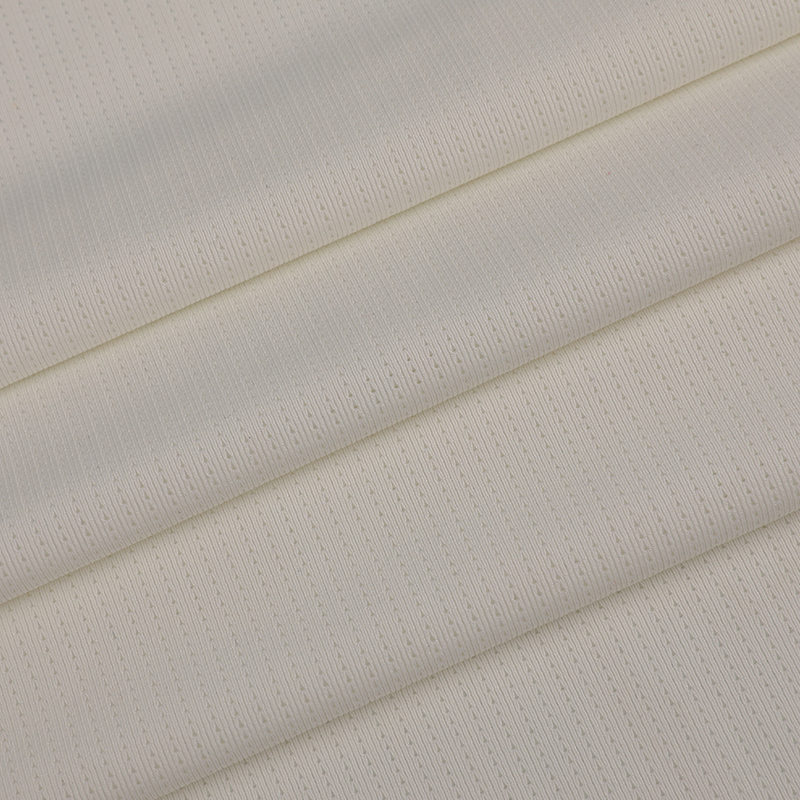
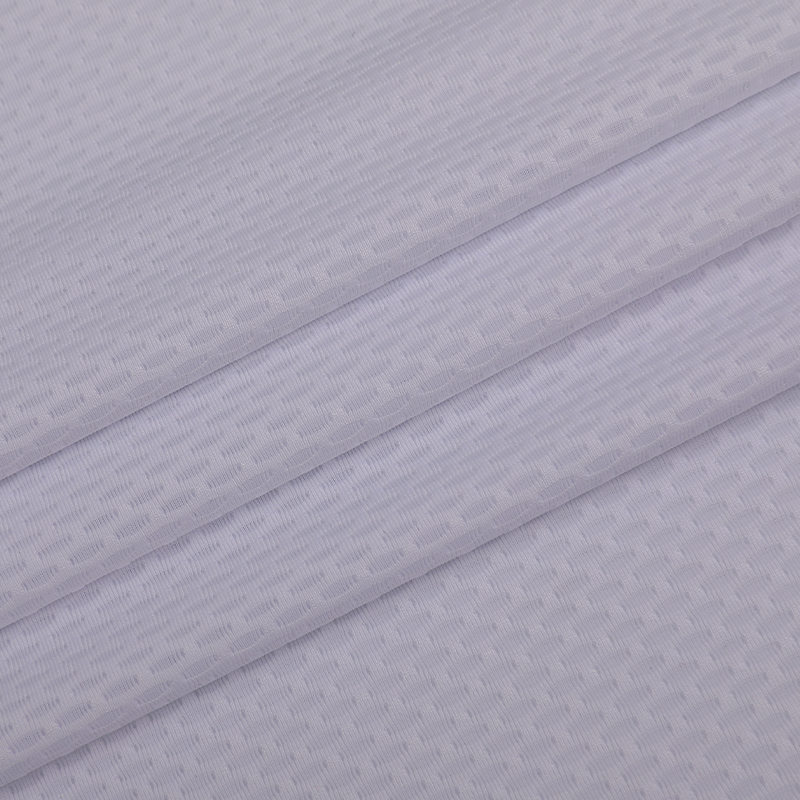
A textured double-face variant with a slightly raised surface pattern, double pique balances breathability with structure. It is commonly specified where a garment needs airflow but still requires enough body to hold a collar or placket shape.
What Are The 10 Knit Fabrics Used Across Product Categories?
What are the 10 knit fabrics that show up most often on a cutting room floor or a component specification sheet. The list below groups them by structure and typical role in a finished product.
| Knit Type | Structure Notes | Typical Role |
|---|---|---|
| Single Jersey | Plain loop, technical face/back difference | T-shirts, linings |
| Rib Knit | Alternating wales, high stretch | Cuffs, collars, waistbands |
| Interlock | Double 1x1 rib, run-resistant | Polo shirts, mid-weight tops |
| Purl / Links-Links | Reversible loop, both faces identical | Sweaters, textured trims |
| Ponte Roma | Rib-derived, firm hand | Structured apparel |
| Jacquard Double Knit | Patterned via needle selection | Decorative panels, seasonal prints |
| Terry Loop | Uncut protruding loops | Toweling, absorbent linings |
| Fleece Back | Brushed reverse side | Outerwear linings, cold-weather layers |
| Mesh / Pique Mesh | Open, ventilated loop structure | Sportswear, breathable panels |
| Warp Knit (Tricot / Raschel) | Loops formed lengthwise, run-proof | Technical textiles, automotive interior |
Where Polyester Knit Fabric Is Actually Used
Apparel and Activewear
Moisture-wicking finishes combined with a mesh or pique structure make polyester knit fabric a standard choice for training tops, base layers and lightweight jackets where sweat needs to move away from the skin quickly.
Home Textiles
Double knit and terry loop variants are used for cushion covers, mattress protectors and seasonal bedding accents where a soft hand and easy-care washing cycle are more important than a crisp woven finish.
Automotive Interior Panels
Warp knit tricot backing is laminated onto foam for door panels, headliners and seat trims because the run-resistant structure holds up under repeated flexing and long-term UV exposure inside a vehicle cabin.
Medical and Compression Products
Circular knit polyester blended with elastane yarn provides the graduated compression needed for support sleeves and orthopedic wraps, where consistent stretch recovery over hundreds of wash cycles is a hard requirement.
Bag Linings and Luggage
Lightweight tricot knit linings resist snagging better than some woven linings and add a small amount of cushioning against sharp interior edges without adding significant weight to the finished bag.
Outdoor and Protective Gear
Fleece-back polyester knit is brushed on the reverse face to trap air for insulation, then paired with a tighter face knit for wind resistance, a combination frequently used in cold-weather work gear.
Is 100% Polyester Knitted Fabric Good? Performance Checklist
Is 100% polyester knitted fabric good enough to specify without a fiber blend depends on the target application, but the following performance points come up consistently in lab testing and field feedback.
Tensile strength: Break strength generally exceeds cotton and viscose knit equivalents, which reduces seam failure during high-stress wear.
Dimensional stability: Low moisture regain, around 0.4%, keeps shrinkage after washing to a minimum compared with natural fiber knits.
Color retention: Disperse-dyed polyester holds saturation and resists fading under repeated laundering and UV exposure.
Abrasion resistance: Performs well in Martindale rub testing, which matters for upholstery-adjacent and heavy-use applications.
Quick-dry behavior: Low absorbency means the fabric releases moisture faster than cellulose-based knits, useful for active and outdoor use cases.
Why Are People Avoiding Polyester? Addressing the Concerns Directly
Why are people avoiding polyester is a question that comes up in consumer forums and occasionally reaches the sourcing table. The concerns are worth addressing directly rather than dismissing, since some of them reflect outdated assumptions and others point to real manufacturing variables.
Microfiber Shedding During Washing
Loosely knitted, low-twist yarns shed more fiber fragments during machine washing than tightly spun, high-twist yarns. Tighter loop density and higher yarn twist reduce shedding significantly, which is why construction detail matters more than fiber type alone.
Heat Retention and Breathability
Early low-cost polyester knits with tight, non-porous loop structures trapped heat against the skin. Mesh and pique variants with engineered open structures address this directly and are now standard in performance-oriented product lines.
Static Buildup
Static charge is more noticeable in dry climates and low-humidity seasons. Anti-static finishing treatments applied during dyeing and finishing reduce this effect considerably compared with untreated base cloth.
Raw Material Origin
Concerns about petroleum-based sourcing have driven increased use of recycled polyester, spun from post-consumer PET, as a feedstock alternative that reduces dependence on newly extracted raw material without changing the knitting process itself.
Care and Handling Reference
Cold to warm water below 40°C preserves loop structure and finish coatings applied for moisture management.
Low-heat tumble or line drying prevents heat-set distortion of the knit loops, especially on double knit and ribbed panels.
A cool iron setting or steam-only approach avoids glazing the fiber surface, which can happen at high direct heat.
Folding rather than hanging reduces long-term stretch distortion in loosely knitted or high-elastane blended panels.
Reading a Knit Fabric Specification Sheet Before Ordering
A complete specification for polyester knit fabric should list fiber composition, yarn count, knit gauge, finished weight in gsm, stretch percentage in both directions, and the finishing treatment applied. Gauge, measured in needles per inch on the knitting machine, has a direct effect on how fine or coarse the loop structure appears and how much the fabric will stretch under load. Finishing treatment matters just as much as the base knit — a raw grey knit and the same knit after heat-setting, dyeing and a moisture-wicking finish can behave like two different materials on the cutting table even though the loop structure is identical. Requesting a swatch card with gauge, weight and stretch percentage noted for each option shortens the back-and-forth during sampling and reduces the chance of a mismatch between the approved sample and the bulk production roll.