English
 中文简体
中文简体Content
- 1 Inside the Manufacturing of Linen Knit Fabrics: Process, Specifications and Real-World Performance
- 1.1 Fiber Sorting
- 1.2 Wet Spinning
- 1.3 Circular Knitting
- 1.4 Scouring & Bleaching
- 1.5 Dyeing & Fixation
- 1.6 Finishing & Calendaring
- 1.7 Reading the Specification Sheet
- 1.8 Quality Checks That Catch Defects Early
- 1.9 Turning Rolls Into Finished Goods: Lining Techniques Used Downstream
- 1.10 Caring for Linen Knit Fabric After Purchase
- 1.11 Why Flax Fiber Performs the Way It Does
- 1.12 The Environmental Profile of Flax Fiber
- 1.13 Matching Lining Weight to Shell Weight
- 1.14 Knitting Machine Types and What They Change
- 1.15 Circular Knit
- 1.16 Flat Knit
- 1.17 Warp Knit
- 1.18 Color, Yarn Count and Customization Range
- 1.19 Linen Knit Fabric Compared to Woven Linen
- 1.20 Seasonal and Cross-Category Uses
- 1.21 Packaging and Roll Handling Before Shipment
- 1.22 Common Questions From Workshops and Buyers
Inside the Manufacturing of Linen Knit Fabrics: Process, Specifications and Real-World Performance
Every roll of linen knit fabric leaving a knitting workshop carries the fingerprints of dozens of small decisions made on the production floor. Fiber selection, yarn tension, knitting gauge, dyeing temperature and finishing pressure all shape whether a batch of knit linen fabric ends up soft and even or stiff and uneven. This section walks through how linen knitted fabric is actually produced, what specification numbers mean in practice, how inspectors catch defects such as sinker lines in knitted fabrics before a roll ships, and how the finished material performs once it reaches a workshop bench or a sewing table.
Fiber Sorting
Raw flax fiber is graded by staple length and fineness before spinning. Longer, cleaner staple produces smoother yarn, which later translates into a linen knitted fabric surface with fewer slubs and a more even knit face.
Wet Spinning
Flax fibers are spun wet to soften the pectin binding the fiber bundles. This step controls yarn diameter consistency, which directly affects the final gauge of knit linen fabric and reduces the chance of thick-and-thin yarn defects.
Circular Knitting
Yarn is fed into circular or flat knitting machines where needles form interlocking loops. Needle timing and sinker plate alignment at this stage determine whether the roll will later show sinker lines in knitted fabrics.
Scouring & Bleaching
Greige linen knit fabric passes through a scouring bath to remove residual pectin, wax and impurities. Controlled bleaching evens out the natural fiber color before dyeing, giving 100 linen knit fabric a consistent base tone.
Dyeing & Fixation
Reactive or vat dyeing is applied at temperatures suited to flax cellulose. Fixation time is extended compared to cotton dyeing schedules, which helps linen knitted fabric hold color evenly across the whole width of the roll.
Finishing & Calendaring
Softening agents, mechanical calendaring or enzyme washing adjust the hand feel of the finished knit linen fabric, softening the naturally crisp texture of raw flax without stripping its structure.
Reading the Specification Sheet
A specification sheet for linen knit fabric usually lists more than fiber content. Gauge, weight, width and shrinkage rate together describe how the roll will behave once it is cut and sewn. The table below lists typical specification ranges seen across standard production runs of linen knitted fabric and knit linen fabric variants.
| Fiber Composition | 100% flax fiber for 100 linen knit fabric; blended options combine flax with cotton, modal or bamboo viscose |
| Knitting Gauge | 12 to 24 gauge depending on machine type, finer gauge produces a smoother knit linen fabric surface |
| Fabric Weight | 160 g/m² to 340 g/m², lighter weights suit apparel, heavier weights suit bags and home textile items |
| Roll Width | 150 cm to 180 cm standard tubular or open width |
| Shrinkage Rate | 3% to 6% before pre-washing treatment, reduced to under 2% after enzyme or compressive finishing |
| Color Fastness | Grade 3 to 4 on the grey scale for washing and rubbing fastness under standard testing conditions |
| Stretch Recovery | Moderate, linen fiber itself has low elasticity while the knit structure supplies most of the recovery |
Quality Checks That Catch Defects Early
Inspection happens at three points in the workflow: after knitting, after dyeing, and before packaging. Each stage targets a different category of fault, and catching an issue early prevents an entire batch of linen knit fabric from being downgraded.
Surface Uniformity
Rolls are unrolled under strong lighting and viewed at a low angle to spot sinker lines in knitted fabrics, needle drop marks or yarn tension bands running across the width.
Weight Consistency
Small squares are cut from the beginning, middle and end of a roll and weighed to confirm the linen knitted fabric stays within the declared g/m² tolerance across its full length.
Dye Penetration
A cross-section cut checks whether dye has penetrated the yarn core, not just the surface, which prevents patchy fading after repeated washing of knit linen fabric.
Edge Curling Test
Cut edges are left unsecured for a set period to measure natural curl tendency, information that sewing teams use when planning seam allowances for 100 linen knit fabric.
Turning Rolls Into Finished Goods: Lining Techniques Used Downstream
Once linen knit fabric leaves the mill, workshops making bags, blankets, hats and home accessories each apply their own approach to how to line knit fabric so the finished item holds its shape and feels comfortable against skin or hands.
Bags & Totes
When working out how to line a knitted bag with fabric, workshops typically choose a firmer cotton canvas or twill lining cut slightly undersized so the natural stretch of the knit linen fabric shell is not fought against. Interior pockets are stitched to the lining panel before it is inserted, keeping stitch lines away from the visible knit surface.
Throws & Blankets
For how to line a knitted blanket with fabric, a soft brushed cotton or muslin backing is basted along the center first, then worked outward toward the edges. This sequence keeps the linen knitted fabric top layer from bunching, and the edges are finished with a folded binding that encloses both layers cleanly.
Beanies & Hats
For how to line a knitted hat with fleece fabric, the fleece panel is cut on a slight bias so it moves with the stretch of the knit crown. Seams sit at the crown and band only, keeping the interior smooth against the forehead while the fleece traps warmth without adding bulk to the knit linen fabric shell.
Cushions & Home Textiles
Cushion covers made from linen knit fabric are usually paired with a plain-weave inner lining that holds the cushion form and stops loose fiber ends from working through the knit structure over time.
Caring for Linen Knit Fabric After Purchase
Proper care keeps linen knit fabric looking close to new for years. Machine washing in cold or lukewarm water on a gentle cycle protects the loop structure of the knit, while high heat in either the wash or the dryer accelerates fiber brittleness over time. Air drying flat, rather than on a hanger, prevents the natural weight of linen knitted fabric from stretching the garment or item out of shape. A cool iron with light steam restores crispness to knit linen fabric without flattening the loop texture that gives it breathability.
Flax fiber becomes softer with every wash cycle, so a slightly firmer hand feel straight off the roll is expected and is not a quality defect. This is one of the most common questions workshops ask when they first work with 100 linen knit fabric.
Why Flax Fiber Performs the Way It Does
Flax stems contain long bast fibers running the length of the plant, which is why linen yarn has higher tensile strength than many other natural fibers of similar thickness. This strength carries through into linen knit fabric, giving finished items durability that holds up to repeated folding, packing and daily handling. The hollow structure inside each flax fiber also explains the fabric's cooling feel, since air moves through the fiber core and pulls moisture away from the skin faster than solid fibers can manage. Combined with the loop structure of a knit, this airflow makes linen knitted fabric noticeably breathable for warm-weather garments, tote bags carried in summer heat, and lightweight throws used across seasons.
The Environmental Profile of Flax Fiber
Flax plants used to make linen knit fabric generally need less irrigation than cotton once established, and many flax varieties can grow in cooler climates without heavy fertilizer input. Nearly every part of the harvested plant can be put to use, with the shorter fibers left over from linen spinning going toward paper pulp or insulation material rather than being discarded as waste. Because flax fiber is cellulose-based, offcuts from cutting rooms working with linen knitted fabric break down under normal composting conditions far faster than synthetic knit offcuts, provided the fabric has not been blended with non-biodegradable fiber or coated with synthetic finishes. This natural breakdown profile is one reason knit linen fabric continues to appeal to workshops focused on lower-impact material sourcing, alongside the fiber's inherent strength and breathability.
Dyeing is the stage where environmental impact varies most between suppliers. Low-water dyeing methods and closed-loop water treatment reduce the runoff associated with coloring 100 linen knit fabric, and enzyme-based softening avoids some of the harsher chemical treatments historically used to soften raw flax. Workshops evaluating a new source of linen knit fabric often ask about water treatment and dye chemistry alongside the usual questions on weight and color, since these factors affect both the finished hand feel and the footprint of the material before it ever reaches a cutting table.
Matching Lining Weight to Shell Weight
One detail that gets overlooked when planning how to line knit fabric is the relationship between the weight of the shell and the weight of the lining. A lining fabric that is noticeably heavier than the linen knit fabric shell will pull at the seams over time and distort the outer knit, while a lining that is too lightweight fails to give a bag or cushion the structure it needs. As a general guide, lining weight should sit close to or slightly under the weight of the outer linen knitted fabric for garments and soft accessories, while structured items such as totes can carry a heavier lining without issue since the goal there is added firmness rather than drape. Testing a small sample panel before committing to a full production run remains the most reliable way to confirm a lining choice works with a specific batch of knit linen fabric, since fiber content, weave density and pre-treatment all shift how two layers behave once joined.
Knitting Machine Types and What They Change
Not every roll of linen knit fabric comes off the same type of machine, and the choice of equipment changes what the finished cloth can do. Circular knitting machines produce a continuous tube of linen knitted fabric, favored for garments and items that benefit from a seamless body. Flat knitting machines instead build fabric back and forth in rows, which allows width to be adjusted mid-run and makes it easier to knit in shaping for panels destined to become bag bodies or blanket edges. Warp knitting machines take a different approach entirely, interlocking multiple yarn ends in a zig-zag pattern that produces a knit linen fabric with less stretch in the crosswise direction but noticeably higher resistance to runs and laddering, a useful trait for items that see frequent handling.
Circular Knit
Produces seamless tubes, well suited to apparel and soft goods where a clean, uninterrupted surface of linen knit fabric matters most.
Flat Knit
Allows shaping and width changes within a single run, useful for panels that will later be cut for bags, hats or fitted cushion covers.
Warp Knit
Trades some stretch for higher run resistance, giving 100 linen knit fabric a more stable edge that holds up under repeated folding.
Color, Yarn Count and Customization Range
Beyond the base specification sheet, most workshops sourcing linen knit fabric also need to decide on yarn count, color depth and any blending ratio before a production run begins. Yarn count is expressed as Nm (metric number), where a higher number describes a finer yarn. Fine-count yarns in the Nm 20 to Nm 40 range produce a lightweight, almost airy linen knitted fabric suited to warm-weather clothing, while coarser counts below Nm 16 build a heavier knit linen fabric with more visual texture, often chosen for bags and floor cushions where structure matters more than drape.
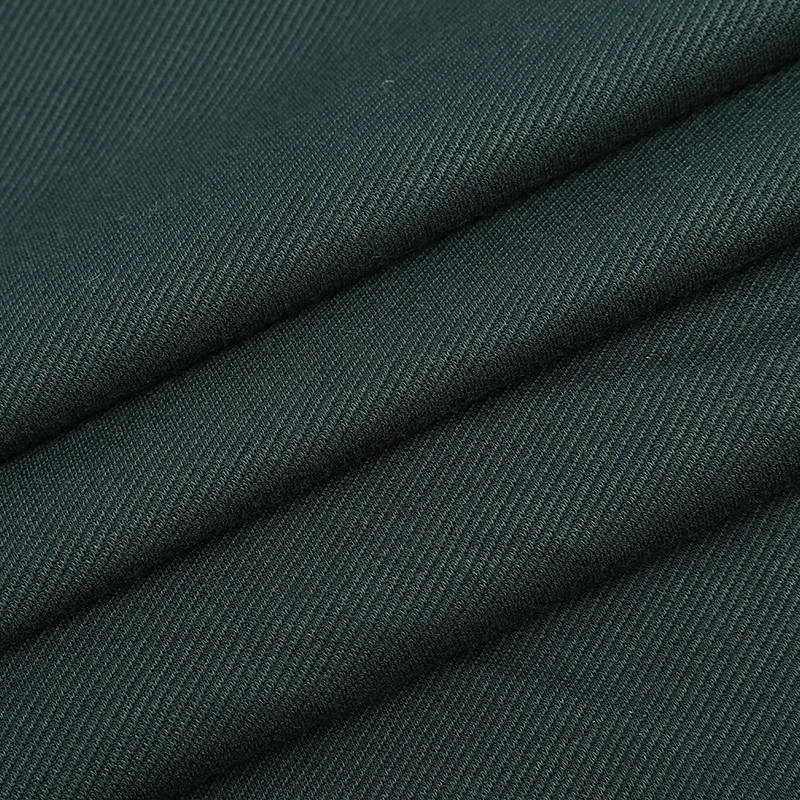
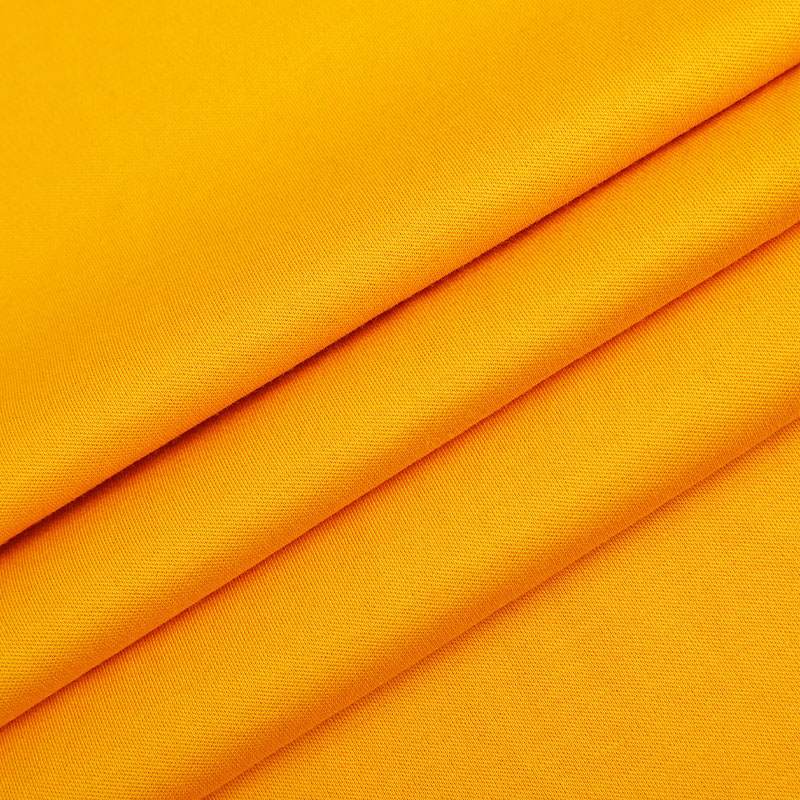
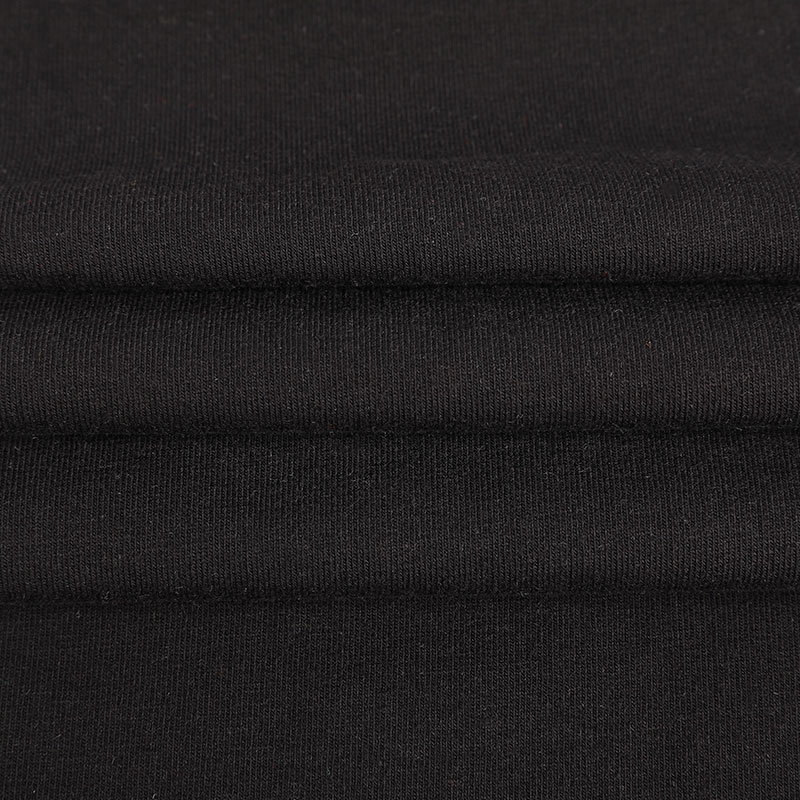
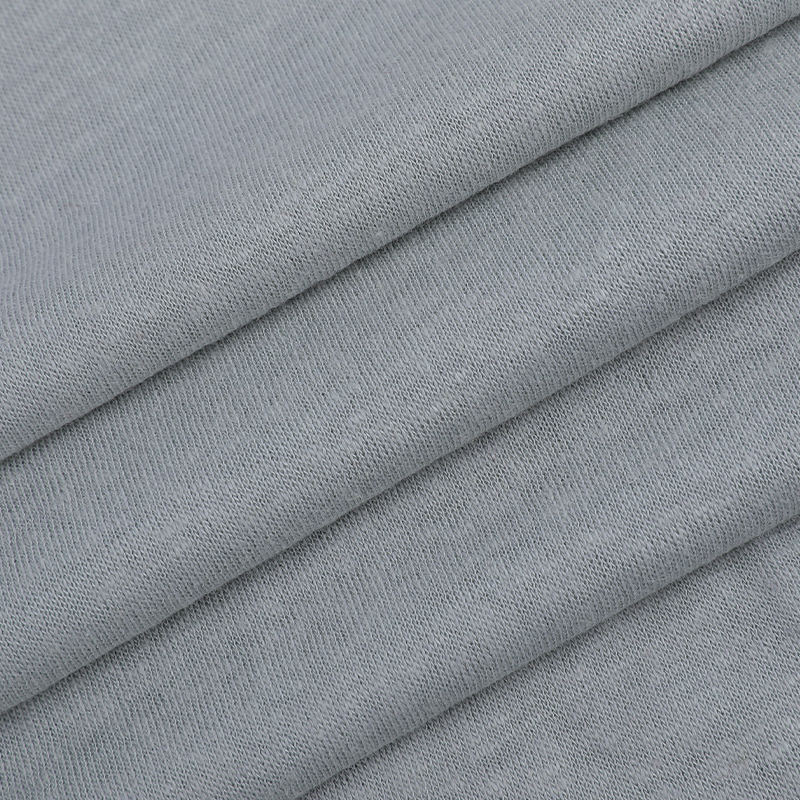
Color depth is another variable worth understanding before placing an order. Pale and pastel shades on 100 linen knit fabric require fewer dye passes and tend to show the natural slub texture of flax more clearly, while deep, saturated colors need extended dye baths and slightly longer fixation to avoid uneven patches once the fabric is washed. Piece-dyed rolls, where finished knit fabric is dyed after knitting, generally show more consistent color than yarn-dyed rolls, though yarn-dyed linen knit fabric allows for stripe, jacquard or two-tone patterns that piece dyeing cannot achieve.
| Yarn Count Range | Nm 12 to Nm 40, finer counts for apparel-weight linen knit fabric, coarser counts for structured bag and home textile fabric |
| Dyeing Method | Piece dyeing for solid, even tone; yarn dyeing for stripes, jacquard patterns and two-tone knit linen fabric |
| Blend Ratios Available | 100% flax, or blends such as 55% linen / 45% cotton and 70% linen / 30% modal for softer hand feel |
| Finish Options | Raw finish, enzyme-washed soft finish, calendared smooth finish, and brushed finish for added surface texture |
Linen Knit Fabric Compared to Woven Linen
Buyers new to linen knitted fabric sometimes assume it behaves the same way as the woven linen used in shirting or tablecloths, but the loop-based structure changes several practical properties. Woven linen holds a crease sharply and resists stretching in both directions, which suits tailored garments and flat-lay items. Linen knit fabric instead moves with the body or with whatever it wraps around, since the interlocking loops allow controlled give in at least one direction. This difference is why patterns cut for woven linen rarely transfer directly to knit linen fabric without adjustment, and why workshops switching between the two materials usually run a small test batch first to confirm seam allowances and lining choices still work as expected.
Drape Behavior
Knit linen fabric falls softly and follows contours, while woven linen holds a flatter, more architectural line.
Stretch Direction
Most linen knit fabric stretches across the width more than along the length, a detail that affects how panels are laid out before cutting.
Edge Behavior
Cut edges on linen knitted fabric curl rather than fray, changing how seams and hems are finished compared to woven linen.
Wrinkle Recovery
The knit structure of 100 linen knit fabric absorbs some crease impact through its loops, recovering slightly faster than tightly woven linen cloth.
Seasonal and Cross-Category Uses
Because linen knit fabric moves air well while still holding its shape, it shows up across a wider range of finished goods than many other knit materials. Warm-weather clothing lines lean on lightweight knit linen fabric for T-shirts, loose tops and layering pieces where breathability matters more than structure. Accessory lines built around totes, market bags and pouches favor a heavier gauge of linen knitted fabric, often finished with the canvas lining described earlier in this section to keep contents supported. Home textile lines use mid-weight 100 linen knit fabric for cushion covers, table runners and light throws, taking advantage of the fiber's natural texture to add visual interest without printed pattern work. Headwear producers reach for a fine, stable gauge when planning how to line a knitted hat with fleece fabric, since a looser gauge shell would stretch out of shape once a fleece lining is stitched inside it.
Warm-Weather Apparel
Lightweight knit linen fabric in the 160 to 220 g/m² range suits T-shirts, tanks and loose layering pieces where airflow matters most.
Scarves & Wraps
A fine-gauge linen knitted fabric drapes softly around the neck and shoulders, holding shape without adding noticeable weight.
Table Linens
Mid-weight 100 linen knit fabric brings natural texture to runners and placemats while resisting the stiff hand feel of heavy woven linen.
Storage Baskets & Bins
A firm, heavier gauge of linen knit fabric holds its shape well when paired with a stiffened lining, making it suitable for soft storage containers.
Packaging and Roll Handling Before Shipment
How a roll of linen knit fabric is packaged affects its condition on arrival just as much as how it was produced. Rolls are typically wound onto cardboard tubes and wrapped in moisture-resistant film to prevent the natural fiber from absorbing ambient humidity during transit, since flax is more hygroscopic than synthetic fibers and can pick up creasing if stored in damp conditions. Edge protectors placed at both ends of the tube prevent crushing when rolls are stacked, a detail that matters more for linen knitted fabric than for less structured synthetic knits because flax fiber holds a crease from pressure more readily. Workshops receiving a shipment are generally advised to unroll and rest the fabric flat for a few hours before cutting, allowing any travel creases in the knit linen fabric to relax naturally before patterns are laid out.
Common Questions From Workshops and Buyers
Does 100 linen knit fabric wrinkle more than blended versions?
Yes, pure flax has lower resilience against creasing than fiber blends. A light steam iron or a quick tumble on low heat relaxes most wrinkles without needing a full press.
Can sinker lines in knitted fabrics be removed after the fact?
Once a sinker line is knitted into the structure it cannot be removed by finishing, which is why inspection happens immediately after knitting rather than only at the final stage.
What lining works best across bags, blankets and hats at once?
There is no single lining for every project. How to line knit fabric depends on the end use: firm canvas for structure in bags, soft brushed cotton for comfort in blankets, and fleece for warmth in hats.
Does linen knit fabric hold dye as well as woven linen?
Knit structures generally absorb dye a little faster than tightly woven linen because loops expose more yarn surface, so dye recipes are adjusted slightly to match the target shade.
Is a lining always necessary on knit linen fabric projects?
Not always. Loosely draped scarves and light throws often stay unlined, while structured pieces like bags and hats benefit from a lining that supports shape and hides interior seams.
Why does 100 linen knit fabric feel different roll to roll?
Natural flax fiber varies slightly by harvest and batch, so small differences in hand feel and slub texture between rolls are expected rather than a sign of inconsistent production.
Does a heavier gauge always mean a stronger linen knitted fabric?
Weight and strength are related but not identical. Yarn quality and knit density both contribute, so a well-spun lighter gauge can outperform a poorly spun heavier one.