English
 中文简体
中文简体Content
- 1 What Linen Knit Fabric Is and Which Type You Need
- 2 Understanding Linen Knit Fabric: Construction, Fiber Properties, and Why It Outperforms Woven Linen for Many Applications
- 3 Linen Jersey Knit: The Most Versatile Linen Knit Construction
- 4 Linen Rib Knit: High Elasticity and Strong Vertical Structure
- 5 Linen Ponte Fabric: Structured Stability for Tailored Garments
- 6 Waffle Knit: Texture, Thermal Properties, and Linen Applications
- 7 Comparing All Five Linen Knit Fabric Types: A Practical Selection Guide
- 8 Care, Washing, and Longevity of Linen Knit Fabric
- 9 Frequently Asked Questions
- 9.1 1. What is Linen Knit Fabric and how does it differ from woven linen?
- 9.2 2. Which is softer: Linen Jersey Knit or Linen Ponte Fabric?
- 9.3 3. Can Waffle Knit fabric be made with linen content?
- 9.4 4. Does Linen Rib Knit need special sewing techniques?
- 9.5 5. How much will Linen Knit Fabric shrink on first washing?
- 9.6 6. Is Linen Ponte Fabric suitable for trousers that must hold a crease?
- 9.7 7. What fiber blends are most common in commercial Linen Knit Fabric?
- 9.8 8. How does Linen Jersey Knit compare to cotton jersey for summer garments?
- 9.9 9. What is the best Linen Knit Fabric for a structured blazer?
- 9.10 10. Where is Waffle Knit most commercially valuable as a linen-blend product?
What Linen Knit Fabric Is and Which Type You Need
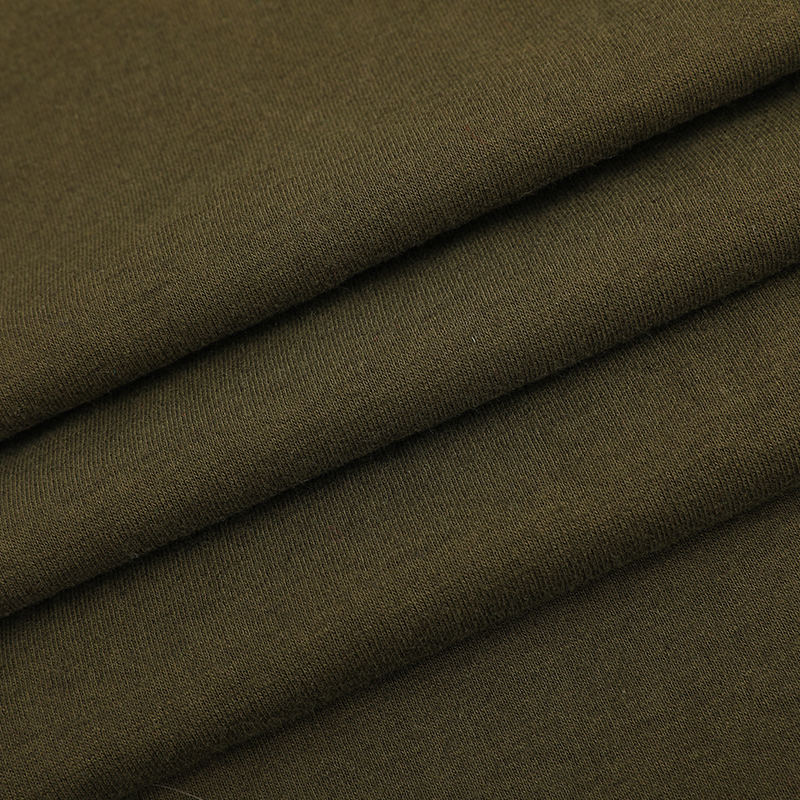
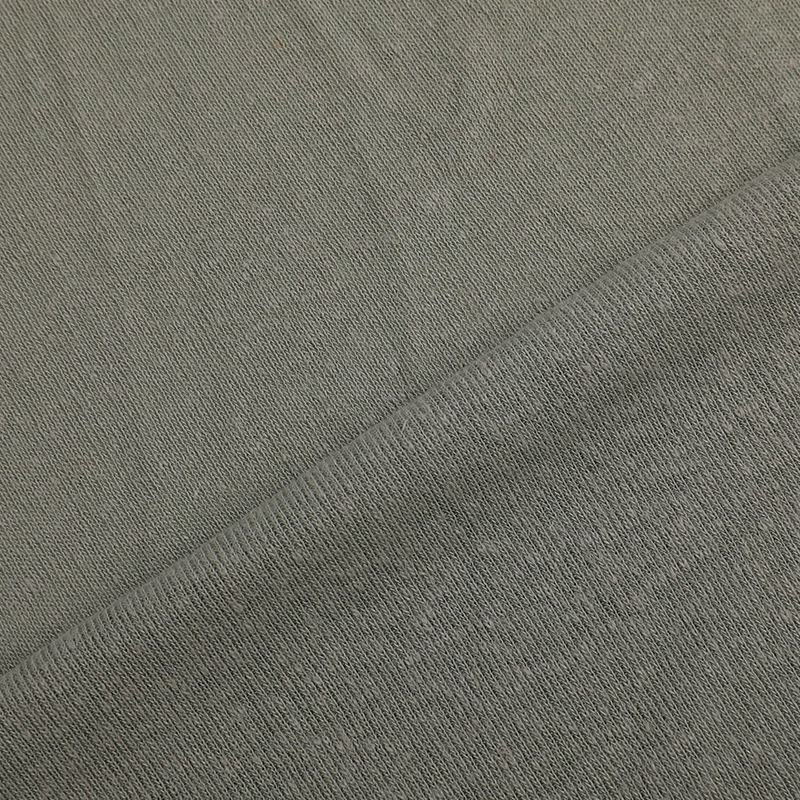
Linen Knit Fabric is a knitted textile constructed from linen yarn or linen-blend yarn, combining the breathability, thermoregulation, and natural texture of linen fiber with the stretch, drape, and ease of wear that knitted construction provides. Pure woven linen is stiff and has almost no stretch, making it challenging for fitted garments. Linen Knit Fabric solves this by using a knit loop structure that delivers 20% to 50% stretch in the crosswise direction, enabling body-skimming silhouettes, relaxed activewear, and comfortable everyday garments that pure woven linen cannot achieve.
The choice among Linen Jersey Knit, Linen Rib Knit, Linen Ponte Fabric, and Waffle Knit depends on the garment's intended structure and function:
- Linen Jersey Knit is the most versatile and widely available: soft, fluid, and suitable for T-shirts, tank tops, dresses, and casual separates.
- Linen Rib Knit has pronounced vertical ridges and strong elasticity, making it ideal for cuffs, neckbands, form-fitting tops, and body-conscious dresses.
- Linen Ponte Fabric is a stable double-knit with minimal stretch and excellent body, appropriate for structured pants, blazers, and tailored skirts where shape retention is the priority.
- Waffle Knit with linen content delivers a textured honeycomb surface that enhances the natural feel of linen, widely used in lounge sets, bathrobes, and home textiles.
Understanding Linen Knit Fabric: Construction, Fiber Properties, and Why It Outperforms Woven Linen for Many Applications
Linen fiber comes from the flax plant (Linum usitatissimum) and is one of the oldest textile fibers in human history. Its appeal lies in a combination of properties that very few other natural fibers share: it is stronger than cotton, absorbs moisture rapidly and releases it quickly (keeping the wearer cooler and dryer than cotton), and becomes softer and more supple with every wash without losing structural integrity. Linen is also naturally antibacterial, resists mildew, and has a characteristic dry, cool hand feel that is immediately recognizable and commercially desirable.
The traditional limitation of linen is its stiffness in woven construction and its tendency to crease sharply. Linen Knit Fabric addresses both limitations. The interlocking loop structure of knitted construction introduces inherent flexibility and stretch that a woven structure cannot replicate, and the softened spinning processes used to prepare linen yarn for knitting production produce yarns with a more relaxed, pliable character than loom-beam woven linen yarns. Most commercial Linen Knit Fabric contains 40% to 70% linen blended with cotton, modal, or viscose rather than 100% pure linen yarn, because high-count pure linen yarn is difficult to knit reliably on circular knitting machines without excessive yarn breakage. The blend preserves the linen properties while providing the smooth, consistent yarn character that knitting machines require.
Key Properties of Linen Knit Fabric Across All Construction Types
- Breathability: Linen fiber is hollow at the microscopic scale, creating air channels within the yarn structure that allow heat and moisture vapor to pass through the fabric rapidly. This makes all Linen Knit Fabric types significantly more breathable than equivalent-weight cotton or polyester knits, a property that is especially valued in warm-climate markets and summer seasonwear.
- Moisture management: Linen can absorb up to 20% of its own weight in moisture before it feels wet to the touch, compared to approximately 8% for cotton. This high moisture retention capacity, combined with rapid evaporation, keeps the skin dry during physical activity and in humid conditions.
- Thermoregulation: Linen conducts heat away from the skin more effectively than most other natural fibers, giving it the characteristic cool, crisp feel that makes it the preferred summer fiber across multiple continents.
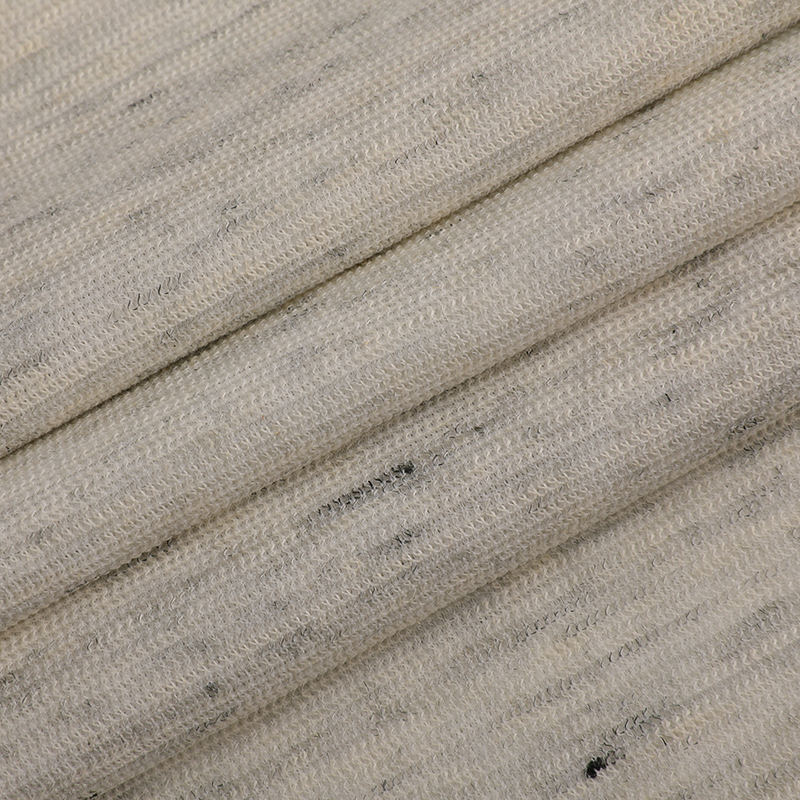
- Natural texture and appearance: The slubs (thick-thin variations) inherent in linen yarn construction give Linen Knit Fabric a characteristic irregular texture that distinguishes it visually from smooth cotton or synthetic knits and is regarded as a natural quality marker rather than a defect in premium linen products.
- Durability with softening: Unlike many fibers that weaken or pill with washing, linen becomes progressively softer and more comfortable with each laundering cycle while retaining its strength, giving Linen Knit Fabric garments long useful lives with improving comfort over time.
Linen Jersey Knit: The Most Versatile Linen Knit Construction
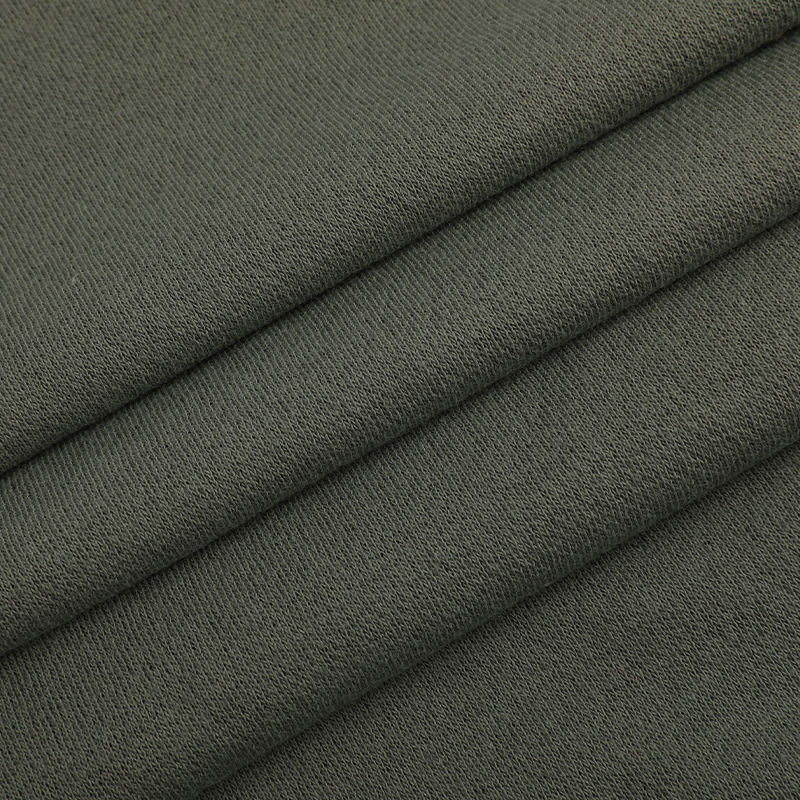
Linen Jersey Knit is produced on circular knitting machines using a single-bed knit stitch that creates a fabric with a smooth, flat face side and a looped back side. The term jersey refers to this specific construction type, named after the island of Jersey where fine wool jersey knit was historically produced. When linen or linen-blend yarn is used instead of wool, the result is Linen Jersey Knit: a fabric that retains the natural cool hand feel and breathability of linen while having the fluid drape and moderate two-way stretch that jersey construction provides.
Properties and Behavior of Linen Jersey Knit
Linen Jersey Knit typically has a weight of 140 to 220 gsm (grams per square meter) for apparel applications, with lighter weights (140 to 170 gsm) used for summer tanks and layering pieces and heavier weights (180 to 220 gsm) used for structured T-shirts and casual dresses with more body. The stretch characteristic of Linen Jersey Knit is primarily in the crosswise (width) direction at approximately 25% to 40% stretch with good recovery, while lengthwise stretch is minimal (5% to 15%). This asymmetric stretch behavior influences cutting and construction decisions: garment pieces should be cut with the crosswise stretch direction going around the body for fitted styles, or with the length parallel to the body length for relaxed boxy silhouettes that depend on fabric weight and drape rather than stretch for fit.
One important handling property of Linen Jersey Knit is its tendency to curl at cut edges. The knit loop structure releases tension when cut, causing the edges to curl toward the face side on the lengthwise cut edges and toward the back side on crosswise cut edges. This is a construction characteristic, not a quality defect, and it is managed in garment production by using ballpoint needles to avoid splitting the linen yarn loops, a narrow zigzag or overlocker stitch for seaming that accommodates the stretch, and washing and tumble drying the fabric before cutting to pre-shrink the linen content (which can shrink up to 5% in length and 3% in width on first washing).
Best Garment Applications for Linen Jersey Knit
- Summer T-shirts and casual tops: The breathability and moisture management of Linen Jersey Knit make it significantly more comfortable in hot weather than cotton jersey at equivalent weight, commanding a premium price point in the warm-climate casualwear market.
- Relaxed jersey dresses: The fluid drape of Linen Jersey Knit at 160 to 180 gsm produces the characteristic relaxed, elegant fall that is the defining aesthetic of current linen fashion trends in women's wear.
- Infant and children's wear: The combination of breathability, softness, and the improvement in softness with washing makes Linen Jersey Knit increasingly popular for premium infant garments, where the thermoregulation benefits reduce overheating risk.
- Activewear and yoga wear: Linen Jersey Knit with modal or bamboo blends (typically 40% to 50% linen with the remainder in softer fiber) provides performance attributes of moisture management and breathability alongside the aesthetic appeal of natural fiber construction for the premium activewear segment.
Linen Rib Knit: High Elasticity and Strong Vertical Structure
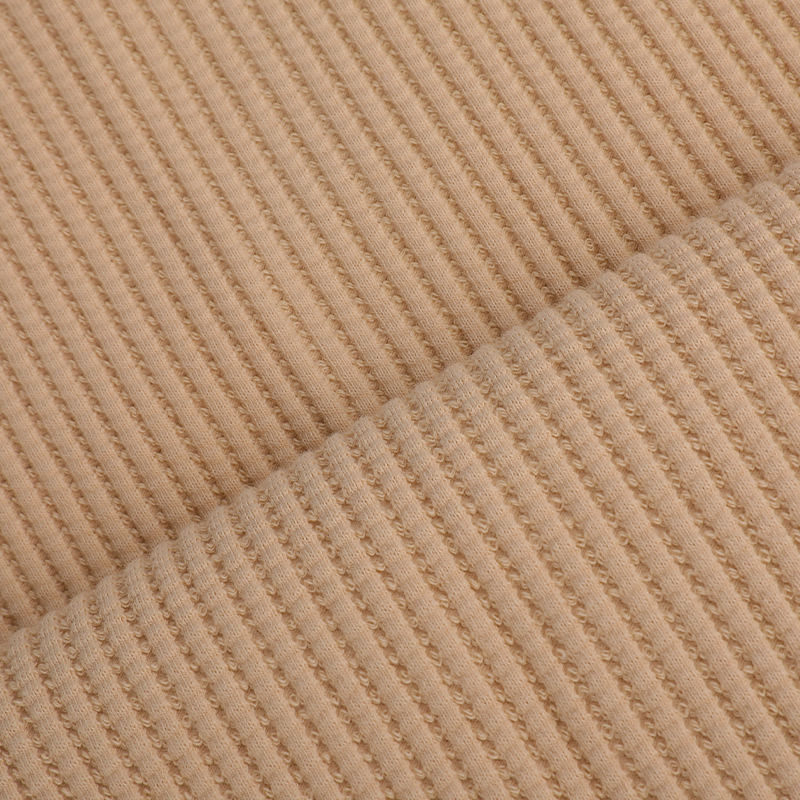
Linen Rib Knit is produced on a double-bed circular knitting machine that creates alternating columns of face-side and back-side loops in a 1x1, 2x1, or 2x2 rib configuration. The result is a fabric with a highly characteristic ribbed surface of pronounced vertical ridges and channels that is immediately distinguishable from the smooth flat surface of jersey. Rib knit construction gives the fabric significantly greater elasticity in the crosswise direction than jersey, with typical stretch values of 50% to 100% and excellent recovery back to the original width when the stretching force is released.
Why Linen Rib Knit Behaves Differently from Linen Jersey Knit
The structural difference between Linen Jersey Knit and Linen Rib Knit lies in the number of active knitting beds. Jersey uses a single needle bed, creating loops that all pull toward the same side of the fabric. Rib uses two opposing needle beds alternately, creating loops that pull to opposite sides simultaneously, locking the fabric in a balanced tension state that allows it to stretch much further in the width direction and spring back more powerfully than jersey. A typical Linen Rib Knit at 200 gsm will stretch to 150% to 200% of its relaxed width under moderate tension, whereas an equivalent Linen Jersey Knit at the same weight will stretch to only 125% to 140%. This extra elasticity is precisely what makes rib knit the structural choice for garment components that must hug the body closely or recover to a snug fit after stretching during wear.
Applications Where Linen Rib Knit Is the Correct Specification
- Neckbands, cuffs, and waistbands: The high elasticity and strong recovery of Linen Rib Knit makes it the standard trimming fabric for sweaters, cardigans, and knitwear where the edge must maintain a snug fit against the body through repeated wearing and washing.
- Body-conscious tube tops and bandeau tops: The combination of linen's breathability and rib knit's strong elastic recovery creates a fabric that can be constructed into strapless or minimal-coverage tops that stay in position through the fit of the fabric against the body without relying on boning, elastic inserts, or hardware.
- Form-fitting tank dresses: Linen Rib Knit at 220 to 280 gsm in a 2x2 rib configuration produces garments with strong vertical lines and excellent figure definition that the rib ridges create visually, enhanced by the natural texture and slight sheen of the linen yarn surface.
- Leggings and fitted pants: Heavier-weight Linen Rib Knit blended with cotton or modal provides enough elasticity for fitted lower-body garments while the natural fiber content delivers comfort and breathability superior to polyester-based rib knit alternatives in the same category.
Linen Ponte Fabric: Structured Stability for Tailored Garments
Linen Ponte Fabric is a double-knit construction that sandwiches a second loop layer between the face and back surfaces of the fabric, creating a heavier, more stable textile with significantly less stretch than jersey or rib knit. The term "ponte" (from the Italian for bridge) describes how this construction bridges the gap between knit fabrics and woven fabrics in terms of body and stability. Linen Ponte Fabric typically weighs 250 to 380 gsm and has a structured, firm hand feel that holds its shape during wear without requiring interfacing or lining, making it the Linen Knit Fabric of choice when tailored garment construction is the goal.
Linen Ponte Fabric Properties That Enable Tailored Construction
The double-knit structure of Linen Ponte Fabric gives it several properties that make it behave more like a woven fabric than a typical knit during construction and wear, while retaining enough residual stretch (typically 15% to 25% in the width) for comfort in motion:
- Minimal edge curl: Unlike jersey knit, which curls at cut edges and requires careful handling, Linen Ponte Fabric has a balanced double-knit structure that lies flat when cut, enabling the use of standard woven fabric sewing techniques including pattern marking with chalk or tracing wheel and pressing seams open on both sides.
- Shape retention: Linen Ponte Fabric holds its cut silhouette through wearing without sagging at the knees, bagging at the seat, or stretching at stress points, because the double-knit structure stabilizes the dimensional character of the fabric against the body's movements.
- Seam stability: The denser structure of Linen Ponte Fabric allows straight machine seams with standard presser feet rather than the zigzag or overlocker stitches required for single jersey fabrics, simplifying construction for sewists less experienced with knit fabrics.
- Clean pressing: Linen Ponte Fabric presses cleanly to sharp edges, crisp pleats, and flat seam allowances with a steam iron at medium-high heat settings, enabling the tailored finishing details (pressed creases, flat-felled seams, bound buttonholes) that define structured garments.
Linen Ponte Fabric vs Linen Jersey Knit: When to Choose Each
| Property | Linen Jersey Knit | Linen Ponte Fabric |
|---|---|---|
| Typical weight range | 140 to 220 gsm | 250 to 380 gsm |
| Crosswise stretch | 25% to 40% | 15% to 25% |
| Edge curl on cutting | Yes (requires careful handling) | Minimal (lies flat) |
| Seam technique | Zigzag or overlocker | Straight stitch acceptable |
| Drape character | Fluid and soft | Structured and stable |
| Best garment types | Casual tops, dresses, tanks | Blazers, tailored pants, skirts |
| Interfacing needed | Often required for structure | Rarely needed |
Waffle Knit: Texture, Thermal Properties, and Linen Applications
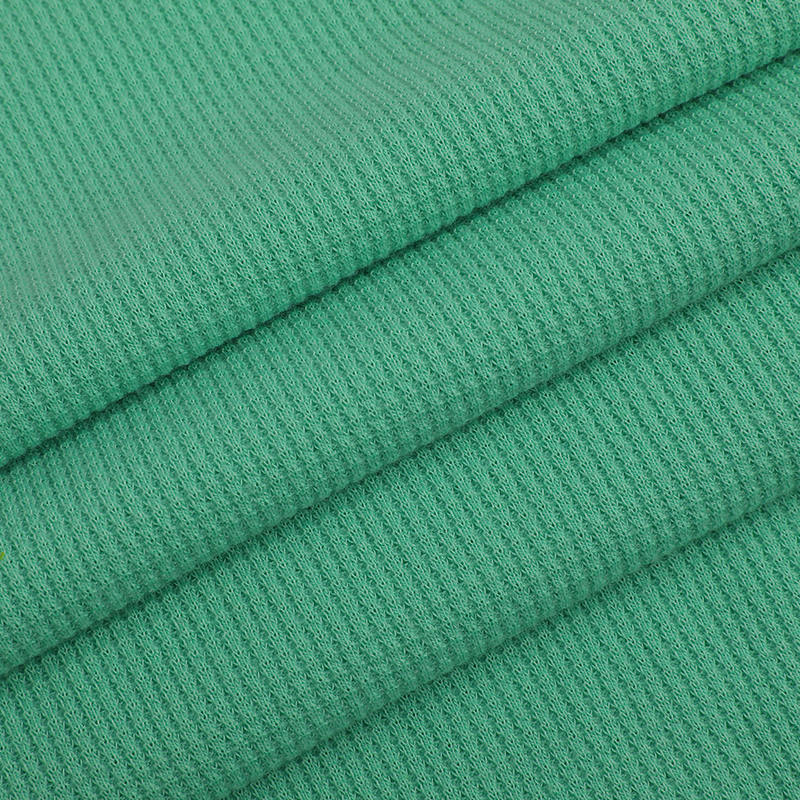
Waffle Knit is a knitted fabric construction that creates a three-dimensional grid surface of raised squares separated by recessed channels, visually and texturally similar to the surface of a waffle. This characteristic surface is produced by a specific knitting technique that uses tuck stitches at regular intervals to create the raised squares and drop stitches or float stitches at the intersections to create the recessed channels. The resulting fabric has a significantly greater surface area per unit of flat measurement than a smooth jersey, which is the key to two of its most valued properties: enhanced thermal insulation and superior moisture absorption and release.
Why Waffle Knit Performs Differently from Smooth Linen Knit Constructions
The three-dimensional structure of Waffle Knit creates air pockets within the fabric body that act as insulating chambers. In a cool environment, these air pockets trap warm air against the skin, providing better thermal insulation than smooth jersey of equivalent weight. In a warm environment, the raised surface maximizes the fabric's contact area with moving air, enhancing evaporative cooling. This dual thermal performance makes Waffle Knit an unusually versatile fabric: it is warmer than smooth jersey when the wearer is stationary and cooler when the wearer is active and ambient air is moving across the fabric surface.
When linen fiber is incorporated into a Waffle Knit construction, these properties are enhanced by linen's inherent moisture management capability. A linen-cotton Waffle Knit at 250 to 300 gsm absorbs and releases moisture approximately 30% to 40% faster than an equivalent cotton-only Waffle Knit, making it the preferred construction for towels, bathrobes, spa products, and lounge wear where quick drying is as commercially important as softness and absorption.
Waffle Knit in Fashion and Home Textiles
Waffle Knit occupies a distinct commercial niche that bridges fashion apparel, loungewear, and home textiles:
- Lounge sets and pajamas: The combination of tactile interest from the waffle texture and the comfort properties of linen-blend fiber makes Waffle Knit the dominant fabric in the premium loungewear market segment. A linen-cotton Waffle Knit lounge set at 260 to 280 gsm has the visual appeal of a textured garment with the comfort of a breathable natural fiber knit, justifying the higher price point of premium loungewear brands.
- Bathrobes and towel wraps: The enhanced absorption surface area of the waffle texture combined with linen's fast-drying properties addresses the main shortcoming of traditional terry cloth toweling: terry absorbs well but dries slowly and can develop a musty odor when damp. Linen Waffle Knit bathrobes and towels dry significantly faster than terry equivalents, resist bacterial growth more effectively due to linen's antibacterial properties, and become softer with each wash, making them premium products in the bathroom textile market.
- Seasonal home textiles: Waffle Knit throws, blankets, and cushion covers in natural linen tones (undyed, natural, stone, ecru) have become a defining aesthetic element of the Scandinavian-influenced interior design trend, combining tactile interest, natural fiber credentials, and muted natural color ranges in a product that photographs well for online retail and attracts the sustainability-conscious consumer segment.
- Oversized sweaters and pullovers: Heavier-weight Waffle Knit at 300 to 350 gsm in linen-cotton or linen-wool blends produces loose-fit knitwear with a textured surface that has high fashion credibility in autumn-winter seasonal collections, providing warmth from the cellular waffle structure without the visual heaviness of chunky cable knit constructions.
Comparing All Five Linen Knit Fabric Types: A Practical Selection Guide
Understanding the five Linen Knit Fabric types in relation to each other enables more confident design and procurement decisions. The following comparison covers the properties most relevant to garment design and home textile production decisions.
| Fabric Type | Typical Weight | Stretch Level | Drape | Surface Texture | Primary Uses |
|---|---|---|---|---|---|
| Linen Knit Fabric (general) | 140 to 380 gsm | Varies by construction | Varies | Natural linen texture | Broad apparel and home textile use |
| Linen Jersey Knit | 140 to 220 gsm | Medium (25% to 40%) | Soft and fluid | Smooth with linen slubs | T-shirts, dresses, casual tops |
| Linen Rib Knit | 180 to 280 gsm | High (50% to 100%) | Fitted and elastic | Vertical rib ridges | Cuffs, neckbands, form-fitting tops |
| Linen Ponte Fabric | 250 to 380 gsm | Low (15% to 25%) | Structured and stable | Dense and smooth | Blazers, trousers, tailored skirts |
| Waffle Knit | 230 to 350 gsm | Medium (20% to 35%) | Relaxed with body | Three-dimensional grid | Loungewear, bathrobes, home textiles |
Care, Washing, and Longevity of Linen Knit Fabric
Proper care of Linen Knit Fabric significantly affects both the garment's longevity and the comfort improvement that occurs as linen softens with repeated washing. The care requirements differ somewhat from both standard woven linen (which can be treated more assertively) and synthetic knits (which require cool temperatures to prevent heat damage).
Pre-Washing and Preparation Before Sewing
All Linen Knit Fabric should be pre-washed before cutting and sewing. Linen fiber shrinks on first washing, typically 3% to 7% in length and 2% to 4% in width depending on the specific fiber blend and knit construction. Pre-washing before cutting eliminates post-construction shrinkage that would distort the finished garment's fit. Wash the fabric in the same manner it will be cared for in service: if the garment will be machine washed at 30 to 40 degrees Celsius, pre-wash at 30 to 40 degrees Celsius. Tumble dry on a low or medium heat setting to replicate the thermal shrinkage that would occur during garment care, then press the fabric flat before cutting to restore the full width and length before pattern placement.
Washing, Drying, and Pressing Guidelines
- Machine washing: 30 to 40 degrees Celsius on a gentle or delicate cycle. Higher temperatures can cause excessive shrinkage in subsequent washes and may cause color fading in dyed linen knit fabrics. Use a mild detergent without brighteners, which can yellow the natural fiber component of linen blends over time.
- Tumble drying: Low to medium heat only. High heat tumble drying causes more shrinkage and can stiffen the linen component of the fabric, counteracting the softening that occurs naturally with washing. Remove from the dryer while slightly damp and reshape by hand, then lay flat or hang to complete drying for the best dimensional stability.
- Pressing: All Linen Knit Fabric types press well with a steam iron at medium to medium-high heat settings. Press from the reverse side to prevent surface glazing on smooth constructions. For Linen Ponte Fabric, firm pressing is needed to achieve the crisp seams and pressed creases of tailored garments. For Waffle Knit, press very lightly or not at all to preserve the raised three-dimensional waffle texture, which flattens under heavy pressing.
- Dry cleaning: Not generally necessary or recommended for Linen Knit Fabric. Dry cleaning solvents can strip the natural oils from linen fiber and counteract the softening process that makes linen garments more comfortable with age. Machine washing is appropriate for all the Linen Knit Fabric types described in this guide.
Frequently Asked Questions
1. What is Linen Knit Fabric and how does it differ from woven linen?
Linen Knit Fabric is produced by knitting linen yarn or linen-blend yarn into an interlocking loop structure, creating a fabric with inherent stretch in the crosswise direction. Woven linen is produced by interlacing warp and weft yarns at right angles, creating a fabric with minimal stretch and a stiffer hand feel. The key difference is stretch: Linen Knit Fabric stretches 15% to 100% crosswise depending on construction type, while woven linen typically stretches only 2% to 5% in either direction. This stretch makes Linen Knit Fabric suitable for fitted and semi-fitted garments that woven linen cannot produce without significant ease addition or elastic construction details.
2. Which is softer: Linen Jersey Knit or Linen Ponte Fabric?
Linen Jersey Knit is softer and more fluid than Linen Ponte Fabric because its single-knit construction creates a lighter, more flexible fabric with less internal tension and structure. Linen Ponte Fabric's double-knit construction creates a firmer, more stable fabric that holds its shape more assertively. For garments where softness and drape against the skin are the priority (underwear, casual dresses, baby clothing), Linen Jersey Knit is the better choice. For garments where structure and shape retention are the priority (blazers, tailored pants, structured skirts), Linen Ponte Fabric is the correct specification.
3. Can Waffle Knit fabric be made with linen content?
Yes. Waffle Knit is a knitting construction that can be applied to any yarn suitable for knitting, including linen, linen-cotton blends, and linen-modal blends. Linen-content Waffle Knit combines the three-dimensional textured surface of waffle construction with linen's superior moisture management and fast drying properties, making it the premium choice for spa textiles, bathrobes, and high-end loungewear. A typical linen Waffle Knit uses 50% to 60% linen blended with cotton or modal to balance linen's performance properties with the smoother yarn character needed for clean waffle texture formation on knitting machines.
4. Does Linen Rib Knit need special sewing techniques?
Linen Rib Knit requires the same knit-appropriate sewing techniques as other stretch knits: use a ballpoint or stretch needle to avoid piercing the yarn loops, use a zigzag stitch, serger/overlocker stitch, or stretch stitch on a conventional machine to accommodate the fabric's substantial stretch, and handle the cut pieces carefully to avoid stretching the fabric during construction. Because Linen Rib Knit has higher elasticity than jersey (50% to 100% stretch versus 25% to 40%), it requires more control during seaming to keep the cut edges aligned without stretching the fabric unevenly through the machine feed. Using a walking foot or differential feed serger setting helps manage this during production.
5. How much will Linen Knit Fabric shrink on first washing?
Linen Knit Fabric typically shrinks 3% to 7% in length and 2% to 4% in width on first washing at 30 to 40 degrees Celsius. The exact shrinkage depends on the linen percentage in the blend (higher linen content produces more shrinkage), the finishing applied by the mill, and whether the fabric was pre-washed before finishing. Always pre-wash Linen Knit Fabric before cutting garment pieces to eliminate first-wash shrinkage. Subsequent washes after the first typically produce minimal additional shrinkage, as the fiber's initial dimensional settling occurs primarily on the first washing.
6. Is Linen Ponte Fabric suitable for trousers that must hold a crease?
Yes. Linen Ponte Fabric is one of the most suitable Linen Knit Fabric constructions for tailored trousers requiring a pressed crease. Its stable double-knit structure holds a pressed crease well after ironing with a medium-high steam iron, and its minimal stretch (15% to 25% crosswise) maintains the trouser's shape through a full day of wearing without the knee-bagging or seat-stretching that would occur with a higher-stretch fabric. For the best crease retention, press the trouser leg crease firmly on both the face and reverse sides, using a damp pressing cloth to maximize steam penetration into the linen fiber structure, then allow the trouser to hang vertically for 30 minutes after pressing before wearing.
7. What fiber blends are most common in commercial Linen Knit Fabric?
The most common fiber blends in commercial Linen Knit Fabric are: 55% linen with 45% cotton (the standard blend for affordable jersey and rib constructions, balancing linen's performance properties with cotton's smoother knittability); 50% linen with 50% modal or viscose (for premium soft-touch jersey and loungewear applications where drape and softness are more important than crease resistance); and 40% linen with 55% cotton and 5% elastane (for Linen Rib Knit and form-fitting jersey applications where enhanced stretch and recovery are needed beyond what linen-cotton alone provides). Pure 100% linen knit is commercially rare because high-count linen yarn is brittle and prone to breakage on high-speed circular knitting machines.
8. How does Linen Jersey Knit compare to cotton jersey for summer garments?
Linen Jersey Knit is more breathable, faster-drying, and cooler to the touch than cotton jersey of equivalent weight, because linen fiber has superior heat conductivity (removes heat from the skin more effectively than cotton) and faster moisture release. Linen Jersey Knit garments feel cooler in hot weather and recover from sweating more quickly than cotton equivalents. The trade-off is that Linen Jersey Knit has more texture (the natural slubs in linen yarn create an irregular surface) and slightly less softness than high-quality combed cotton jersey. For workwear, casualwear, and premium summer apparel where cooling performance justifies the price premium, Linen Jersey Knit outperforms cotton jersey. For everyday basic T-shirts and garments where price and maximum softness are the priority, cotton jersey remains competitive.
9. What is the best Linen Knit Fabric for a structured blazer?
Linen Ponte Fabric at 300 to 350 gsm is the best Linen Knit Fabric construction for a structured blazer. Its dense double-knit construction provides the body and shape retention needed for a tailored jacket silhouette without requiring the extensive underlining and interfacing that lighter Linen Knit Fabrics would need to achieve the same structure. Linen Ponte Fabric blazers have a slightly relaxed, contemporary character compared to woven linen blazers because the residual 15% to 25% stretch provides comfort in motion that woven linen cannot deliver, while the fabric's weight and stability ensure that the blazer holds its shape through a full day of professional wear.
10. Where is Waffle Knit most commercially valuable as a linen-blend product?
Linen-blend Waffle Knit is most commercially valuable in three product categories: premium bath textiles (bathrobes, hand towels, and bath sheets where linen's fast-drying properties and antibacterial performance justify a significant price premium over conventional terry), high-end loungewear sets (where the waffle texture provides visual interest and tactile distinction that justifies the premium positioning of natural fiber lounge products in the USD 150 to USD 350 retail price range), and seasonal home textiles (throws, cushion covers, and lightweight bed coverings where the Waffle Knit texture and natural linen tones align with current interior design aesthetics). In all three categories, the combination of linen's functional properties and the Waffle Knit construction's textural appeal creates a product with a clear sensory and performance advantage over conventional alternatives that supports premium pricing and brand differentiation.