English
 中文简体
Content
- 1 Interlock vs Rib Knit: The Price and Quality Question, Answered Directly
- 2 How Interlock and Rib Knit Are Constructed
- 3 Price: Where the Extra Cost of Interlock Comes From
- 4 Quality: What the Price Difference Actually Buys You
- 5 Which Fabric Should You Use? Match the Structure to the End Use
- 6 Sourcing Advice: Price Only Makes Sense with a Complete Specification
- 7 Frequently Asked Questions
- 7.1 Is interlock more expensive than rib knit?
- 7.2 Does rib knit have better quality than interlock?
- 7.3 Which fabric shrinks more: rib knit or interlock?
- 7.4 Can interlock be used for cuffs and waistbands?
- 7.5 What is the best application for a 1x1 rib?
- 7.6 How can I avoid quality problems when buying interlock or rib knit?
Interlock vs Rib Knit: The Price and Quality Question, Answered Directly
For the same yarn count, same fibre composition, and a similar finishing route, interlock is normally the more expensive fabric. In our factory costing, a realistic starting expectation is that interlock will run about 10 to 25 percent higher than a comparable 1x1 rib fabric before spandex is added. That gap is not simply a commercial markup. It is caused by the structure itself: interlock uses more yarn per square metre, produces at a lower knitting output, and creates a heavier, more compact double-faced cloth. Rib knit uses less yarn for the same gauge settings, produces a lighter and more elastic fabric, but it can be less stable during cutting and sewing.
There is no single quality winner between the two. Rib knit gives you higher widthwise stretch and better snap-back in the width when spandex is controlled properly. Interlock gives you a smooth surface on both sides, low curl, high shape retention, and a cleaner canvas for printing and garment assembly. The right choice depends on the end use, the target fabric weight, and how much recovery the garment actually needs.
How Interlock and Rib Knit Are Constructed
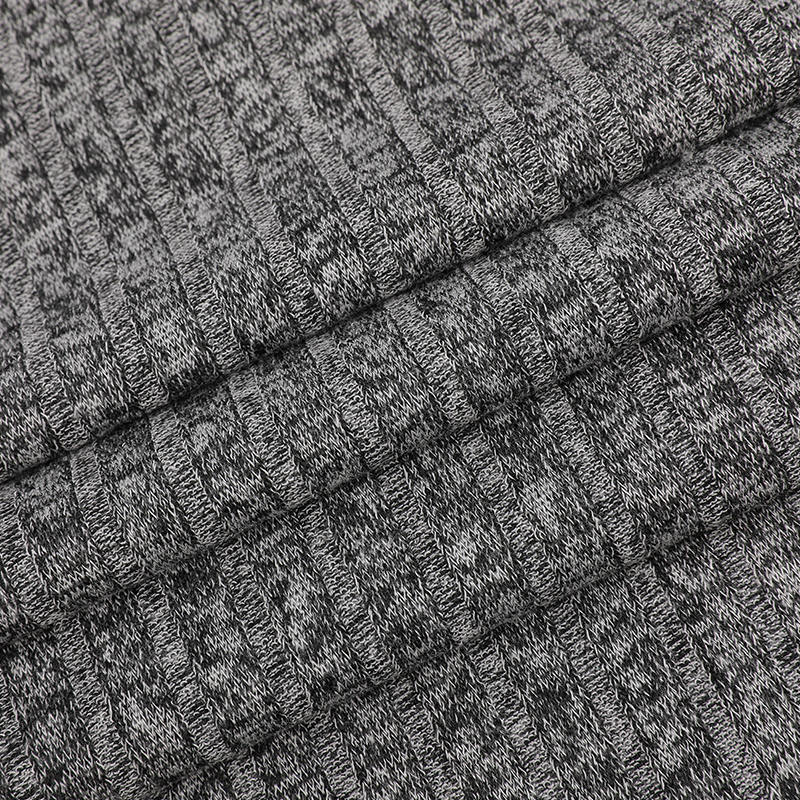
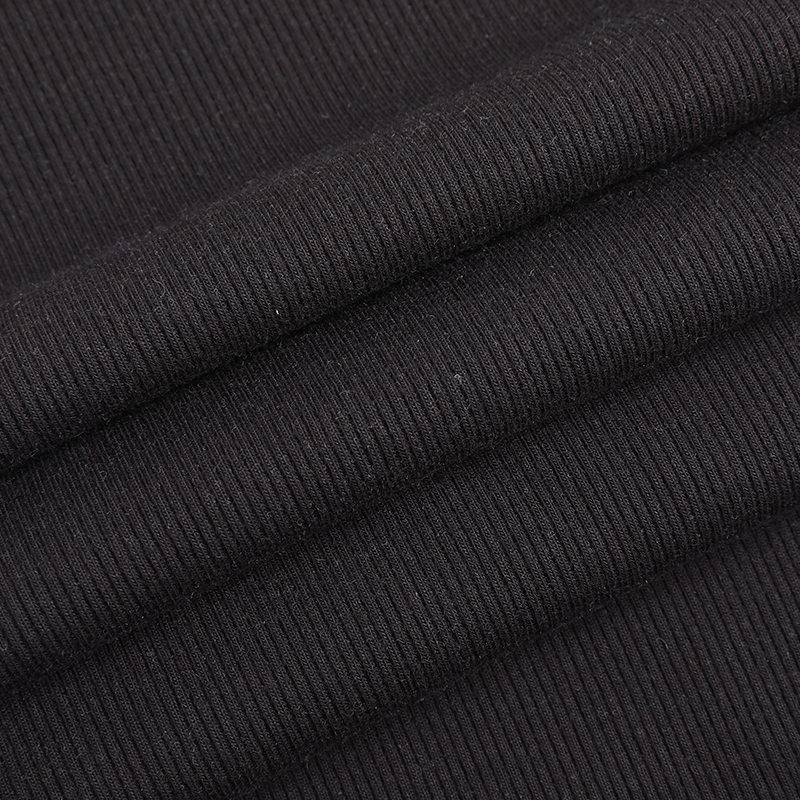
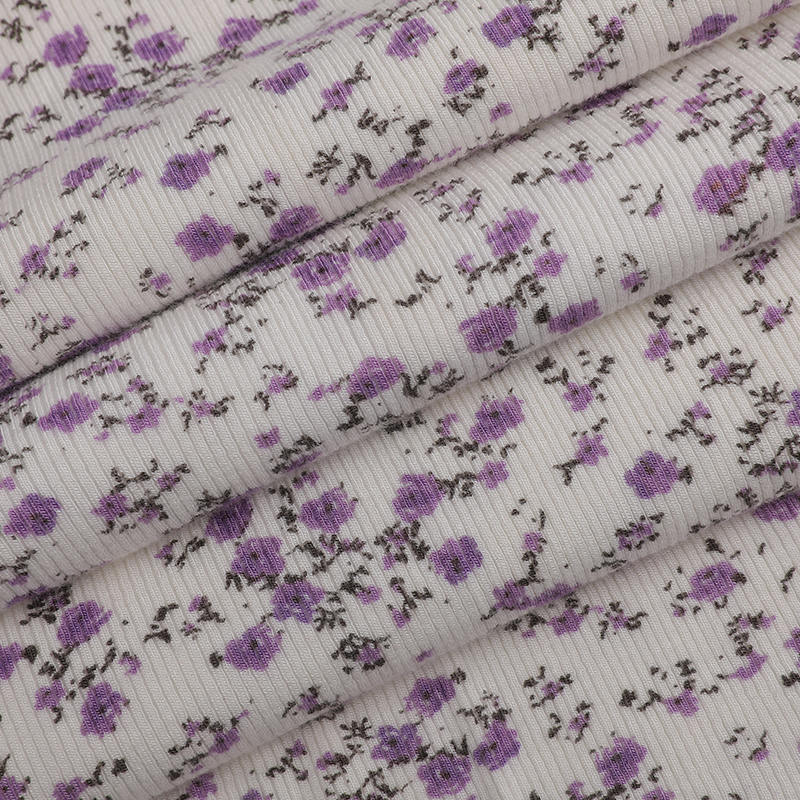
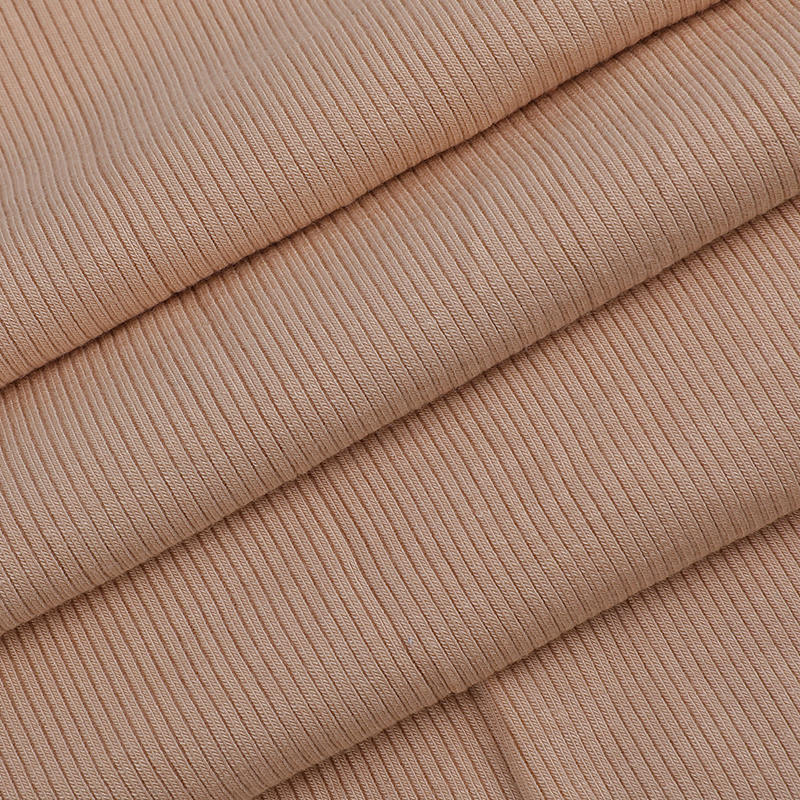
Rib knit is a double knit because it requires two sets of needles. In a 1x1 rib, face and reverse loops alternate, producing a fabric with vertical cords on both sides. This structure is naturally elastic in the width because the loops sit at an angle and open when the fabric is stretched. A 2x2 rib is built in a similar way but uses two wales on each side, giving it a coarser, more pronounced surface.
Interlock is also a double knit, but its construction is different. It is formed by causing two independent 1x1 rib structures to interlock with each other. The result looks like a plain jersey surface on both sides. Because the two layers are locked together, interlock is heavier, flatter, and less likely to curl after cutting. That makes it a very practical structure for T-shirts, dresses, sleepwear, and any garment where a stable body fabric is more important than extreme elasticity.
If you are comparing fabric families, you can use our review of knit fabric structures as a reference, but the practical difference for this price and quality question is simple: rib is built for stretch, while interlock is built for form.
Price: Where the Extra Cost of Interlock Comes From
To compare price fairly, you need to control four variables: yarn count, fibre composition, spandex content, and finishing route. When those variables are fixed, the structure itself decides most of the cost difference.
| Cost factor | Rib knit | Interlock knit | Why it matters |
|---|---|---|---|
| Yarn consumption | Lower per square metre | Higher per square metre | Interlock has more loops per area, so it uses more kilograms of yarn to produce the same width and length. |
| Knitting output | Higher machine output | Lower machine output | Interlock loop formation is slower, so a machine produces fewer kilograms per shift. |
| Fabric weight | Usually lighter for the same yarn count and gauge | Usually heavier | A heavier fabric carries more raw material cost and can also influence dyeing and finishing charges. |
| Spandex addition | Optional, often needed for recovery | Optional, often added for fit | Spandex can have a bigger impact on price than the structure difference. |
| Finishing route | Compacting and softening are common | Compacting is also important; mercerising adds cost and quality | Mercerised interlock is a premium product because it adds luster, strength, and dimensional stability. |
This is why a very cheap interlock quote should make you ask questions. If the fibre is said to be the same, a lower price usually means that another specification has changed. The yarn might be carded instead of combed, the fabric weight may be lighter than expected, the spandex denier may be lower, or the finishing may be shorter.
Relative Price Drivers at a Glance
Bars show directional comparison for similar cotton yarn and common finishing; actual values depend on yarn price, spandex content, order quantity, and production planning.
Quality: What the Price Difference Actually Buys You
Quality does not mean the same thing for every garment. A lightweight summer top might need a fabric that hangs smoothly and resists curling. A fitted cuff or waistband might need a fabric that stretches easily and returns to its original shape. The value of interlock and rib knit depends on which quality you are measuring.
| Performance point | Rib knit | Interlock knit |
|---|---|---|
| Surface appearance | Vertical rib texture on both sides | Smooth and jersey-like on both sides |
| Edge curl | Low curl | Very low curl |
| Widthwise stretch | High | Moderate |
| Elastic recovery | Stronger when spandex is present | Steadier but less stretchy |
| Dimensional stability | Can distort if not compacted well | Tends to hold its shape when compacted |
| Warmth | Moderate | Higher because it traps air between two layers |
| Hand feel | Firmer and more structured | Finer, flatter, and more premium in many styles |
| Printing and surface design | Print on rib is harder to control | Even surface suits printing and embroidery |
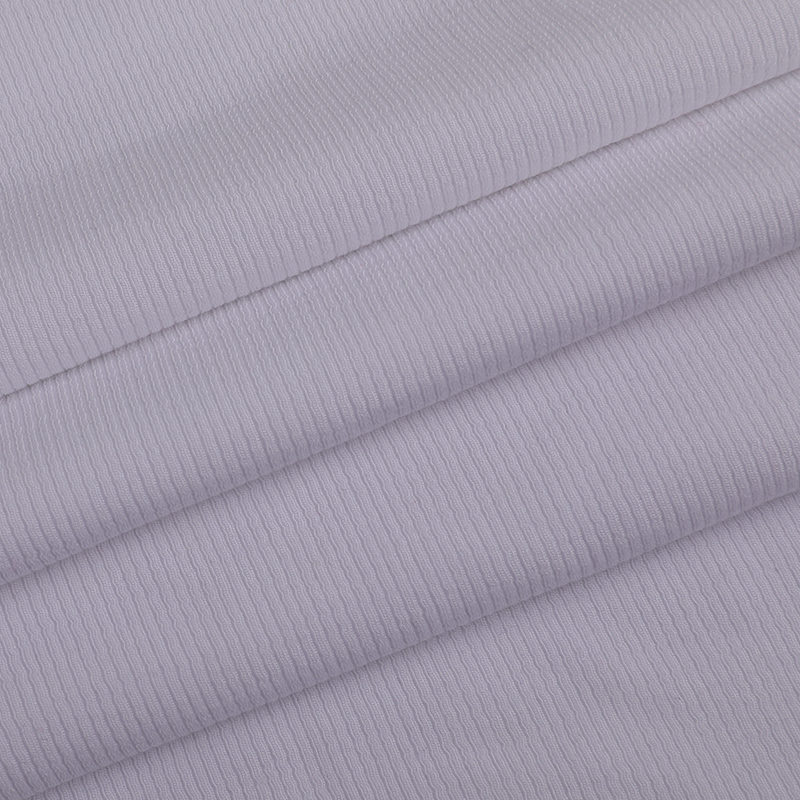
For the same yarn count, interlock is usually the more stable fabric. That stability is a real quality advantage when you are cutting large panels, printing graphics, or constructing a garment that must hold its silhouette. A 40s combed cotton interlock with 30d spandex and mercerised finishing is a good example of a high-quality interlock: the fine yarn gives a smooth face, the spandex adds recovery, and the mercerising makes the colour brighter and the surface more uniform.
 40s Combeds Cotton Interlock with Mercerized SpandexThis interlock fabric offers stable structure and smooth face, ideal for panels and prints. Its mercerized finish enhances color and uniformity, as discussed in the context.View Product →
Rib, on the other hand, is at its best when the requirement is stretch and recovery. A 28s combed 1x1 rib can be an excellent fabric for trims, bands, and knitwear details because it has the open structure to move with the body. But without the right spandex feed, a rib fabric can bag out at the elbows, knees, or waistband after repeated wear. The structure itself is elastic, but the quality of that elasticity depends on the yarn, stitch length, and finishing.
Which Fabric Should You Use? Match the Structure to the End Use
If you need a clean body fabric for a top, dress, polo, or shirt panel, choose interlock. It will lie flatter, resist curling at the cut edge, and give a more controlled hand. If you need a trim, cuff, collar, or band that must snap back into place, choose rib. Rib is also a natural choice for knitwear, loungewear, accessories, and any garment where vertical texture is part of the design.
Interlock for body panels
Best uses: T-shirts, dresses, skirts, bodysuits, pyjamas, and shirts with clean lines. Interlock provides a smooth surface on both sides, so it is comfortable next to the skin and easier to cut in multiples.
Rib for cuffs and trims
Best uses: sleeve cuffs, neckbands, waistbands, socks, and bottom trims. Rib has high widthwise stretch and can be sewn directly onto the edge of a woven or knitted garment without losing its function.
Spandex rib for fitted garments
Best uses: body-conscious tops, sports basics, leggings, underwear, and contour garments. Full-plated spandex rib adds recovery and keeps the cotton face cleaner, which is important when the garment is stretched often.
For fitted items, a full-plated spandex rib with a specification like 32s combed cotton and 40d spandex is often a better quality reference than a low-cost rib with no spandex coverage. The full-plated construction places the spandex on one side, which preserves the cotton hand on the outside and improves recovery on the inside.
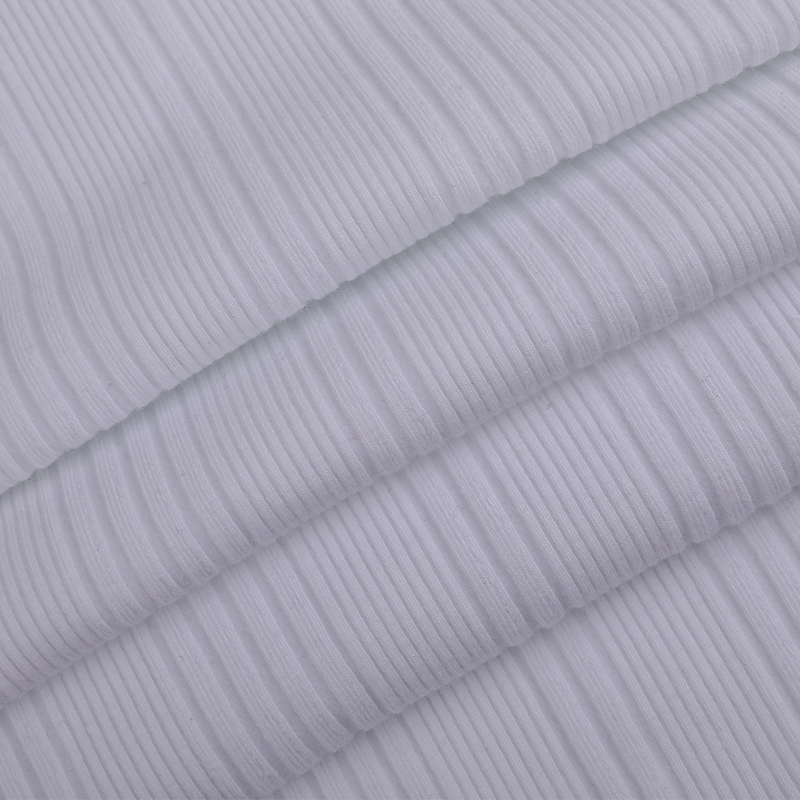 Full-Plated Irregular Drop Needle Rib Knit with SpandexDesigned for stretch and recovery, this rib features full-plating for cotton touch outside and spandex inside. The irregular drop needle adds decorative patterns, complementing the discussion on rib quality.View Product →
An irregular drop-needle rib is another useful option when the design calls for a surface with gaps or decorative stripe effects. It costs more than a basic 1x1 rib because the patterning changes the machine feed, but it adds a distinct design value that a plain rib cannot provide.
Sourcing Advice: Price Only Makes Sense with a Complete Specification
The first rule of comparing fabric prices is to compare like with like. The names “interlock” and “rib knit” describe a structure, not a quality grade. An interlock can be made from carded yarn or combed yarn, with or without spandex, in a range of weights, and with different finishing treatments. The same is true for rib knit. When a quote looks different from what you expected, the reason is almost always in the specification.
- State the yarn count and fibre composition. For example, 40s JC BCI, 32s CVC, or 100 percent cotton with 20d spandex.
- State the finished fabric weight and the tolerance. A common cotton knit reference is plus or minus three percent on fabric weight, but this should be confirmed before bulk production.
- State the spandex denier and how the spandex is fed. Full-plated spandex generally gives better recovery and a cleaner face than simple plaiting.
- State the finishing requirement: compacted, mercerised, anti-pilling, softened, or laminated. Finishing can change the hand feel, shrinkage, and surface appearance more than the knit structure itself.
- Request a shrinkage test after five washing cycles. The label “interlock” does not automatically mean low shrinkage; the fabric still needs proper compacting.
When you receive samples, do not judge quality only by thickness or price. Check the width consistency across rolls, the course count, the spandex exposure, and the way the fabric relaxes when laid flat. A very low-priced interlock may be made with a lighter yarn or a shorter finishing process that does not appear in the first sample. A good quotation should allow you to trace the price back to the raw material and finishing plan.
As a factory, we normally quote with a specification sheet showing yarn count, finished weight, width, composition, spandex type, and shrinkage target. That allows a buyer to compare interlock and rib on the same technical basis rather than on the fabric name alone. You can also see more about our production background and product range from our factory profile.
Frequently Asked Questions
Is interlock more expensive than rib knit?
For the same yarn count, fibre composition, and finishing route, interlock usually costs more than 1x1 rib knit. The main reasons are higher yarn consumption and lower knitting output. Spandex content and finishing can change the price gap, so the only reliable method is to compare complete specifications rather than fabric names.
Does rib knit have better quality than interlock?
No. Rib knit has better widthwise stretch and can provide stronger recovery when spandex is added. Interlock has better dimensional stability, a smoother surface, lower curl, and a more premium hand in many garment styles. Which one is better depends on the end use.
Which fabric shrinks more: rib knit or interlock?
Shrinkage is controlled by finishing, not by the knit structure alone. Both rib and interlock can be compacted to meet a reasonable shrinkage level. The safest way to compare them is to ask for wash-test data on the exact finished fabric weight and finishing route.
Can interlock be used for cuffs and waistbands?
Interlock is not the first choice for cuffs and waistbands because it has less widthwise stretch than rib. Rib knit is preferred for bands that need to stretch open and return to shape. Interlock works better as a stable body fabric.
What is the best application for a 1x1 rib?
A 1x1 rib is commonly used for cuffs, collars, waistbands, trims, and fitted knitwear. It can also be used as a full garment fabric in lightweight tops and dresses, especially when a pronounced vertical texture is desired.
How can I avoid quality problems when buying interlock or rib knit?
Define the yarn count, finished weight, spandex content, finishing route, and shrinkage limits before ordering. Then check bulk rolls for width consistency, shade, and residual spandex coverage. A detailed specification is the best protection against cost-driven quality cuts.